Hear the cool lapse of hours pass,
Until the centuries blend and blur…
– Rupert Brooke, The Old Vicarage, Grantchester.
Morning in Dymock. A fine mesh of drizzle drifts down from an opaque sky. It drips from the leaves of the maple tree outside the window and rustles in the gutters and downpipes of the house. Dinky and Bonnie bark as I enter the kitchen. I am new to them, a stranger in their home, but I say a few words and they become quiescent and friendly.
Outside, the damp air is warm. I walk down Kyrle Acre, cross the High Street — now prosaically renamed the B4251 — and up through the grassy triangle surrounding the War Memorial. Traceries of spiderwebs, shimmering with moisture, cling to the lychgate beneath the ancient yew guarding the entrance to the churchyard of St. Mary the Virgin. A path of flagstones, uneven and rough, curves between the headstones and tombs of long-dead Dymock residents. I enter the narthex and lift the latch on the door. It unlocks with a stolid click and the heavy door opens noiselessly on its wrought iron hinges. I step into the nave and into another world.

As well as serving as vital pillars of village life across the centuries, traditional English parish churches embody the storied evolution of ecclesiastical architectural design. Originally rooted in the Norman architectural period, parish churches began as stolid, robust structures with thick walls and rounded arches that reflected the era’s defensive architectural mentality.
The Normans weren’t stupid. They knew that a large proportion of the country that they had conquered in 1066 did not appreciate their presence. Accordingly, their structures were built to withstand attack by disgruntled peasantry — and, in many cases, nobility — and to provide sanctuary when things got uncomfortably violent.
But as things settled down, and societal needs and aesthetic preferences changed, so too did the design of ecclesiastical buildings. By the early English Gothic period (circa 1180-1520), the architecture of parish churches had transformed significantly. Pointed arches, vaulted roofs, slimmer walls supported by buttresses, large windows, and graceful spires emphasised verticality, space, and light. This shift not only enhanced the decorative appeal of churches but also aimed to create an atmosphere of ascendancy and divinity. The vertical spaces of churches drew the eyes of the congregants upwards, lifting their spirits and giving the impression that this, indeed, was the direction in which heaven lay.
The introduction of the Decorated Gothic style in the late 13th century further enriched church design. Features such as complex window traceries, elaborate stone carvings, and the extensive use of stained glass were hallmarks of the Decorated Gothic style. Windows, especially, were designed not only to let in light but to tell stories through colourful and intricate stained glass that depicted biblical scenes and the lives of saints.
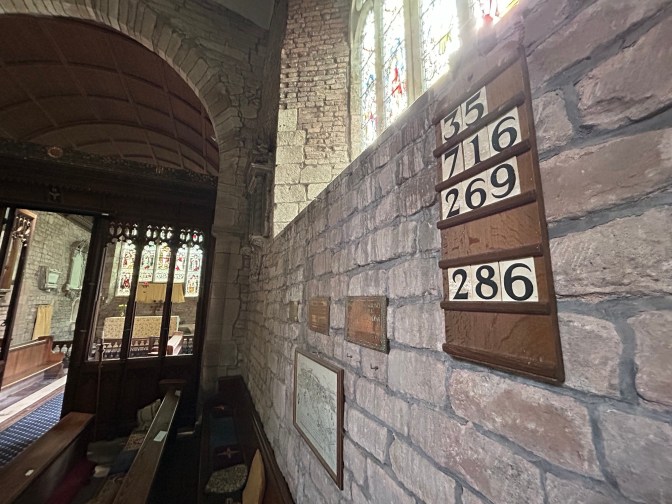
I sit in a pew halfway along the nave and imagine the countless lives that have passed through the doors of the church. Generations of Dymock villagers have walked the flagstone path leading from the gate to the narthex, their footsteps lost in time. Each person brought their own stories, hopes, and prayers to this sacred space. Weddings, christenings, funerals, and Sunday services have filled the church with laughter, tears, heavy sermons and uplifting hymns.
Young couples exchanging vows, their hands trembling with nervous excitement as they start their life together. A newborn being christened, oblivious to the solemnity of the occasion, her cries mingling with the murmured prayers of the congregation. An elderly woman lighting a candle for her departed loved ones, her face a map of a life lived through joys and sorrows. The farmer, hands calloused and rough, kneeling in prayer, seeking solace and strength for the hard days ahead.

In the rear of the nave, I find a shrine to the Dymock Poets. This church, with its stone walls and stained glass windows, was a central pillar in the lives of these early 20th-century literary figures. The Dymock Poets, a group that included luminaries such as Robert Frost, Edward Thomas, and Rupert Brooke, found inspiration both within these hallowed walls and in the surrounding Gloucestershire landscapes.
There are samples of their verses pinned to cork boards and a selection of biographies about them. As I read their poems, the cadence of their words resonates with the tranquility of the church and the natural beauty I can sense beyond its doors. The words seem to be weaving a seamless mosaic of art, faith, and nature, blending the history and serenity of the church, and its place in the spiritual world, with a profound connection to the bucolic, temporal world outside.

As I step out of the church, the air seems to be filled with the same sense of timelessness that I felt inside. The churchyard, with its ancient yews and moss-covered headstones, feels like a place where the past and present coexist. Walking through the churchyard, I can almost hear the whispers of those who have been laid to rest here: their lives buried deep into the living soil.
I follow a path down through the churchyard and step into the Gloucestershire countryside. The drizzle has stopped, and the sky is beginning to clear. The fields stretch out before me: a patchwork of green and gold, harvest-bare and poised for the coming autumn. Birds sing in the hedgerows. The distant sound of a tractor working the land hangs in the air. There is a sense of peace and continuity here, a feeling that life, in all its forms, carries on.
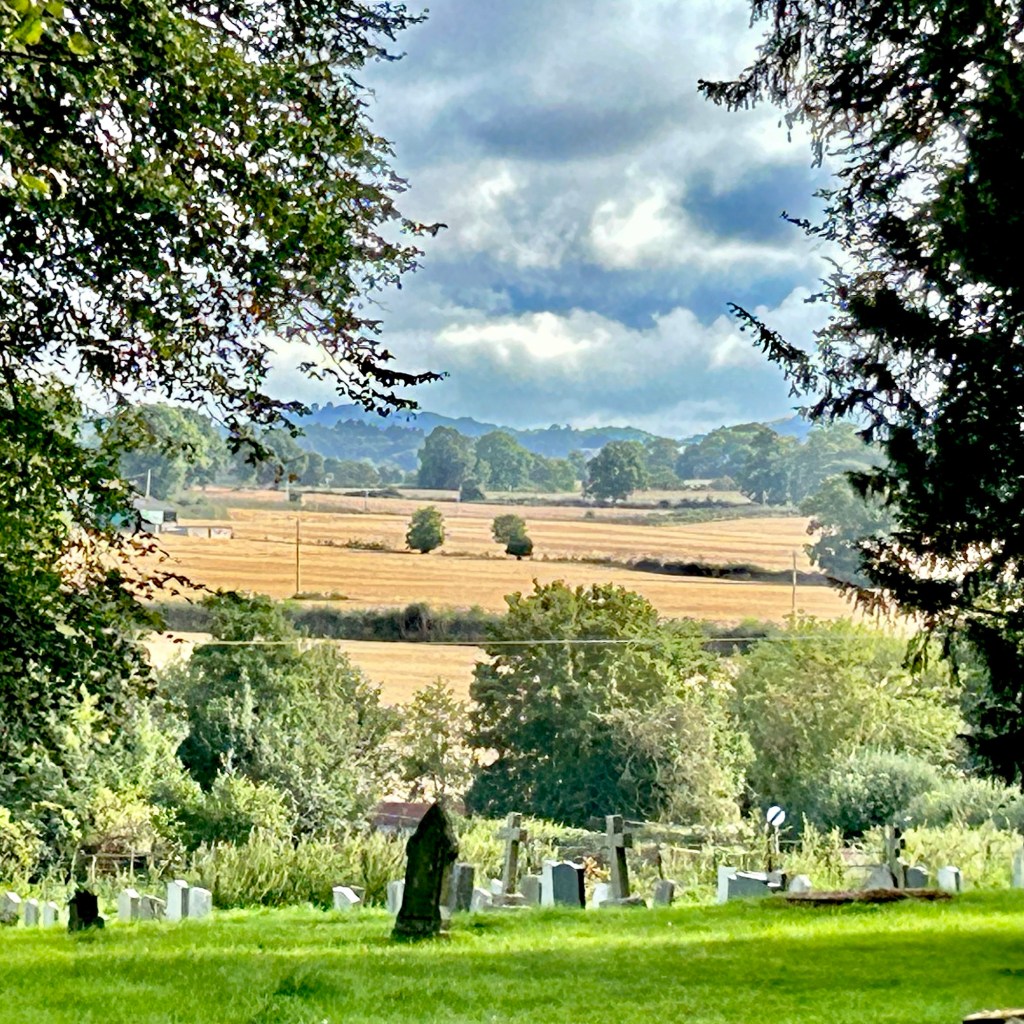
The countryside before me, just like the church, is a testament to the enduring nature of this place. The rolling hills and meadows have seen centuries of change, yet they remain a constant, grounding presence. Looking out over this gentle landscape, I feel a deep connection to this land and the people who have called it home. The stories of the villagers, past and present, are etched into the very soil.
And I am now a part of that ongoing narrative. Even though I am a stranger here, the threads that bind this small community together are the same ones that reach out across time and across the world to my own place. Amidst the quiet beauty of the Gloucestershire countryside, I feel the centuries blend and blur. Life is here, all around me, the timeless nature of human experience, the joys, the sorrows, and the simple, profound act of living, all distilled into this glorious morning in a country churchyard.


 TravelWriterLife