There’s a white road that descends from the hills of Andalusia to the village of Arriate. At this hour—just after six-thirty AM—the landscape lingers in a kind of half-light: not quite night, not quite day. It’s that in-between hour, when the shadows are soft and time walks slowly.

Skylarks and sparrows trill in the cool, pale air. Across the valley, dogs bark messages to each other. Barley rustles beside the road. There’s a sweet, nutty sharpness to the air: dry grass, newly baled hay, and the dust rising from the white road smells like history: dry and chalky, tinged with the faint mineral smell of limestone and sun-baked earth.
This road, like so many in Andalusia, isn’t just a path but a ribbon of memory. Dry, white as bleached bone, ribbed with the impressions of cartwheels, hooves, tractor tyres and footprints, it descends, through countless olive groves and fields, to a sky that carries the breath of Africa. These white roads—these caminos blancos—connect not only villages, but centuries.
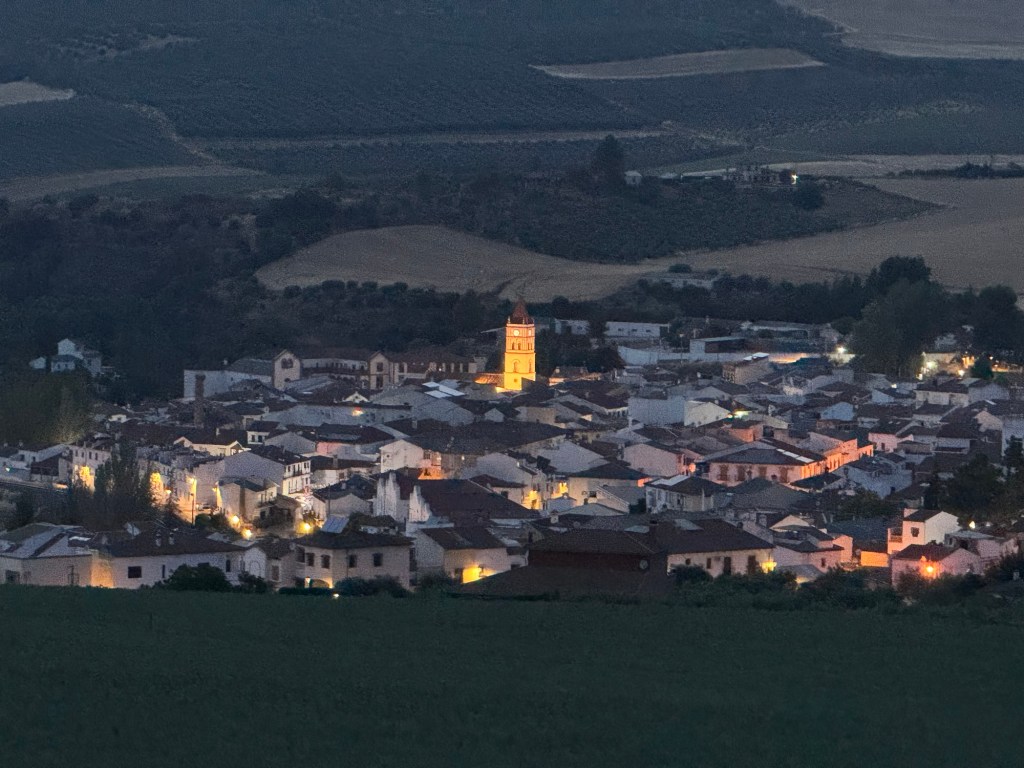
Far below, the church tower glows like a lantern lit for returning travellers. In my pocket, a few coins jingle with each stride. It’s a sound I seldom hear—a small metallic chorus in rhythm with my steps. In these days of digital payments and contactless cards, there’s something wonderfully old school about the clink and chime of coins. It’s an echo of simpler times, when coffee was paid for in coins and morning could begin without a screen.
There is a poetry to the white roads of Andalusia. They are quiet without silence, alive without bustle. There is quiet colour in the wildflowers and lemon trees, the pale green olive trees and the yellow barley. And through it all runs this white road, leading me downhill to Arriate, just beyond the bend.


 TravelWriterLife