Northeast of Abergavenny, the A465 climbs steadily through the soft hills of South Wales. It is a road of smooth curves and sudden views: a sinuous strip of tarmac threading through a landscape where England and Wales have long jousted for elbow room.

We are heading for Dymock this afternoon on a practical mission: to collect a car and a dog. Lydia is driving; Linda is in the passenger seat. I am in the back, watching the hedgerows—fat with summer growth—roll past as the road dips and rises like lazy breath. Above the hedgerows, fields of corn (barley, wheat, oats too) are stitched neatly into the landscape. Tiny side roads lead to places with names that sound like legends: Pandy, Llanvihangel Crucorney, Capel-y-ffin.
For these are The Marches: green areas where borders blur and where England softens into Wales and Wales leans back with steady resolve. The division is not a line but a zone: porous, shifting, alive with history. One moment we are in Monmouthshire, the next, Herefordshire. The only clue to the change is the sudden disappearance of Welsh names on the road signs.
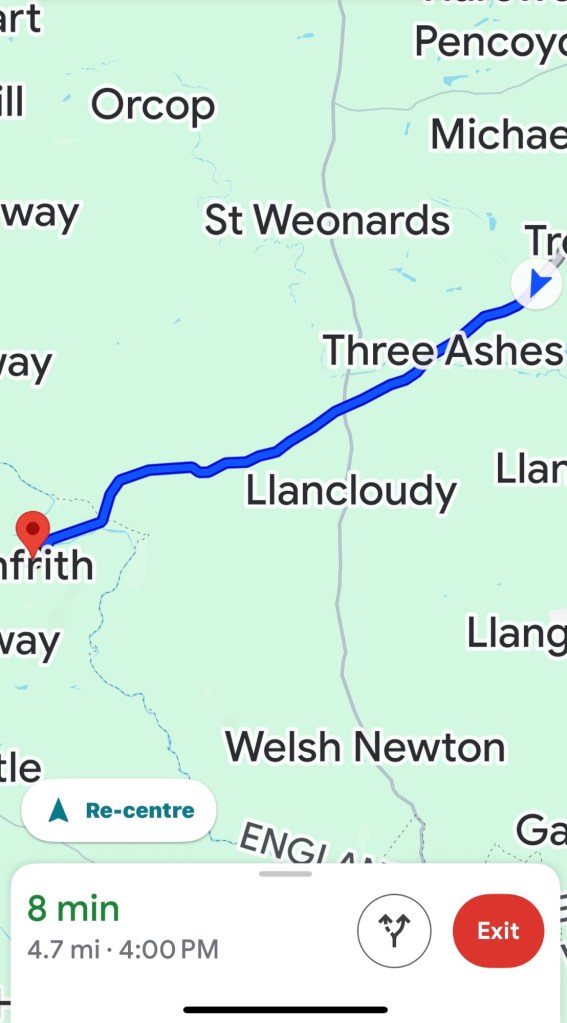
Borders are strange constructs: man-made dimensions overlaid on physical reality. In the last 12 hours, I reflect, I’ve been in Spain, England, Wales, and now, England again. And in an hour or so I will be driving back into Wales: me, a car and a dog.
Dymock. Sleepy under the hot sun of a June afternoon. A quick cup of tea with Lydia’s in-laws, and I am back on the road. The Church of St. Mary rests amid its screen of trees. The Beachamp Arms is open. A quick pint of Butty Bach would be nice but I have a long drive ahead, back into Wales; back through the borderlands.

West of Ross-on-Wye, we turn off the A4137 onto the B4521. Tui is asleep on the back seat. I have figured out the car’s controls—the indicator is on the opposite side of the steering column to what I’m used to—and have my Spotify playing via Bluetooth through the stereo: Jethro Tull, Songs From the Wood. Appropriate.
The lane is so narrow the hedgerows touch both mirrors. The GPS guides me like a monk whispering scriptures: calm, inevitable, only slightly off-key in this most British of rural landscapes. The road descends into the tree-filled valley: the Valley of the River Wye. A few more bends, a flash of the river on the left and then the ruins appear.
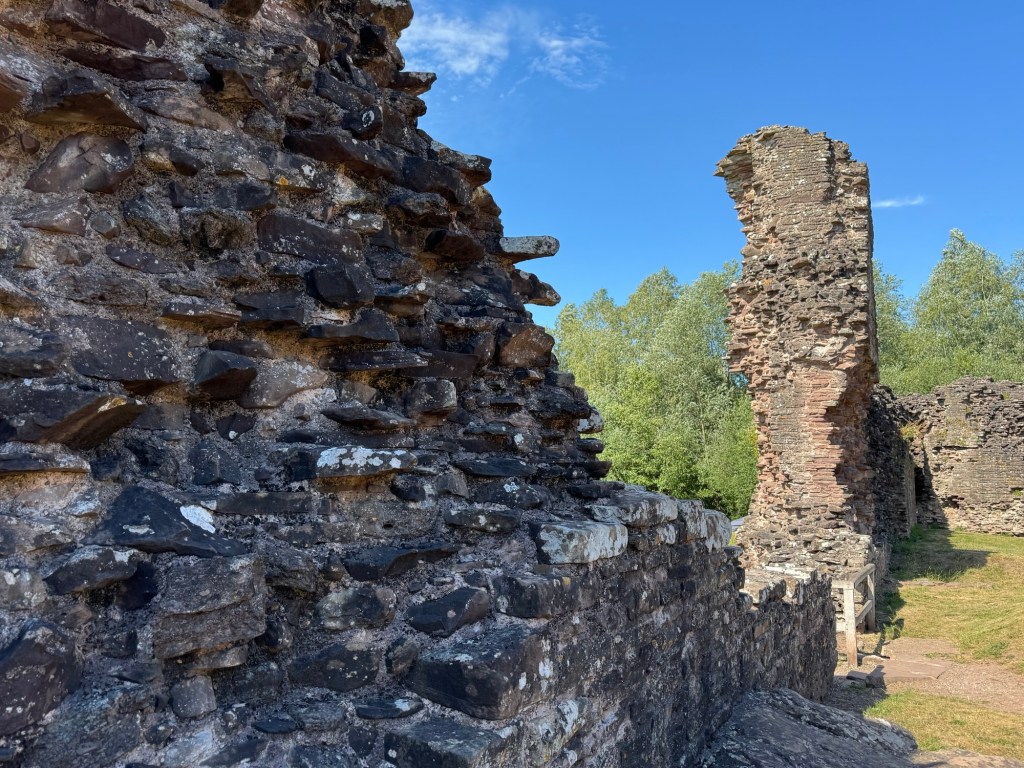
Skenfrith Castle. It rises blunt and squat from the turf, its round tower split open like an overripe fruit, exposing the dark interior to the bright Welsh sun. The curtain walls have sagged and crumbled under the weight of centuries, their mortar crumbling like memories into the grass. But the bones are still here, enough to see the outline of a once-formidable stronghold. This was not a place of ceremony or leisure. It was a place of warning, of watchers, of weaponry and walls.
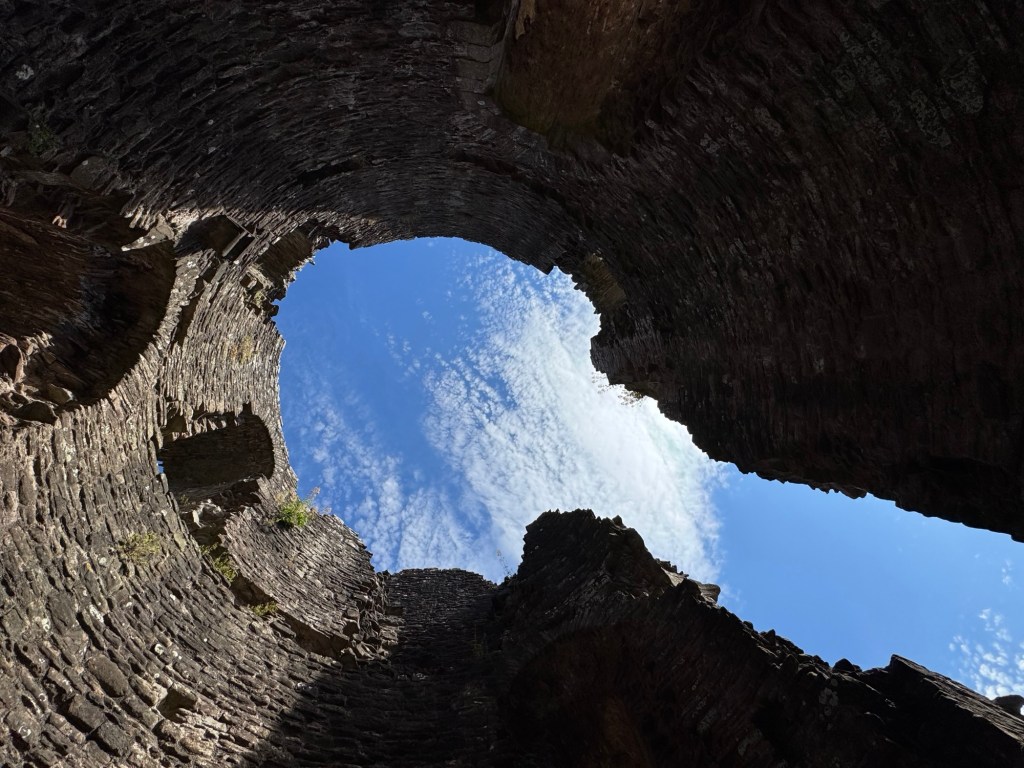
Once, this castle stood guard over the border, a sentinel in a chain of three—Grosmont, White Castle, Skenfrith—each one within a day’s ride of the next. Together, these three fortresses held the valley of the Wye in a Norman grip, watching for Welsh incursions, cattle raiders, resistance and retorts from the hills.
These lands were never quiet. The border was porous. All borders are. Armies moved through here like weather: knights, outlaws, war parties, messengers, all threading the same routes people drive for leisure now.
These days, the only invaders are wasps and dogs off the leash. The only swords are selfie sticks. The bodies, sprawled around the keep and along the riverbank, aren’t fallen soldiers. They are all sunbathers: legs akimbo, arms flung over their faces, toes pointed skyward in surrender to the sun.

The moat is dry. The tower casts no shadow of fear. Children climb the walls like goats.
“Where are your mummy and daddy?” a sunbather shouts like a sentry.
They ignore him.
“Halt…who goes there?”
Only the past.
There is something almost comic in the contrast: this place of former violence and suppression, now peaceful, domesticated; claimed not by warlords but by day-trippers, dogs, and the drifting scent of sunblock.
The rogues, reivers and marauders of these borderlands have been replaced by picnickers. The walls, once bristling with tension, now wear the softness of sunlight and time.
Tui sniffs at a tuft of grass as though searching for a trace of ancient mischief: of war dogs long gone. I lean against the curtain wall, warm from the summer sun, and look up at the hills. The border is still here. But it is no longer a line of power. It’s just another fold in the land.

 TravelWriterLife