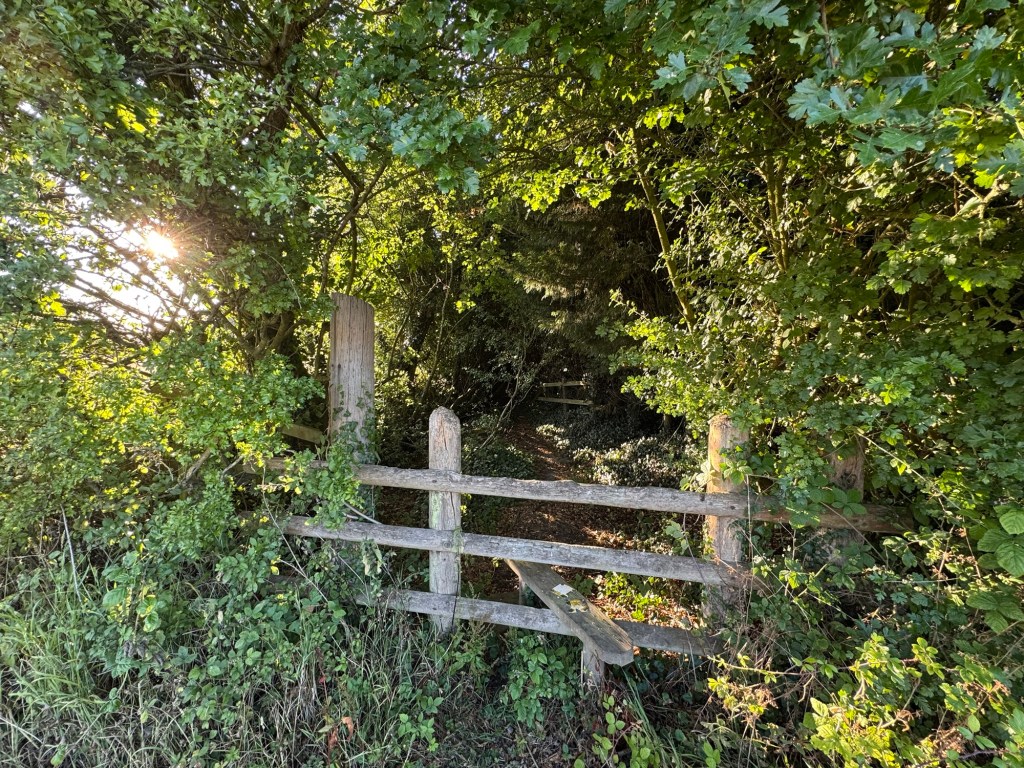
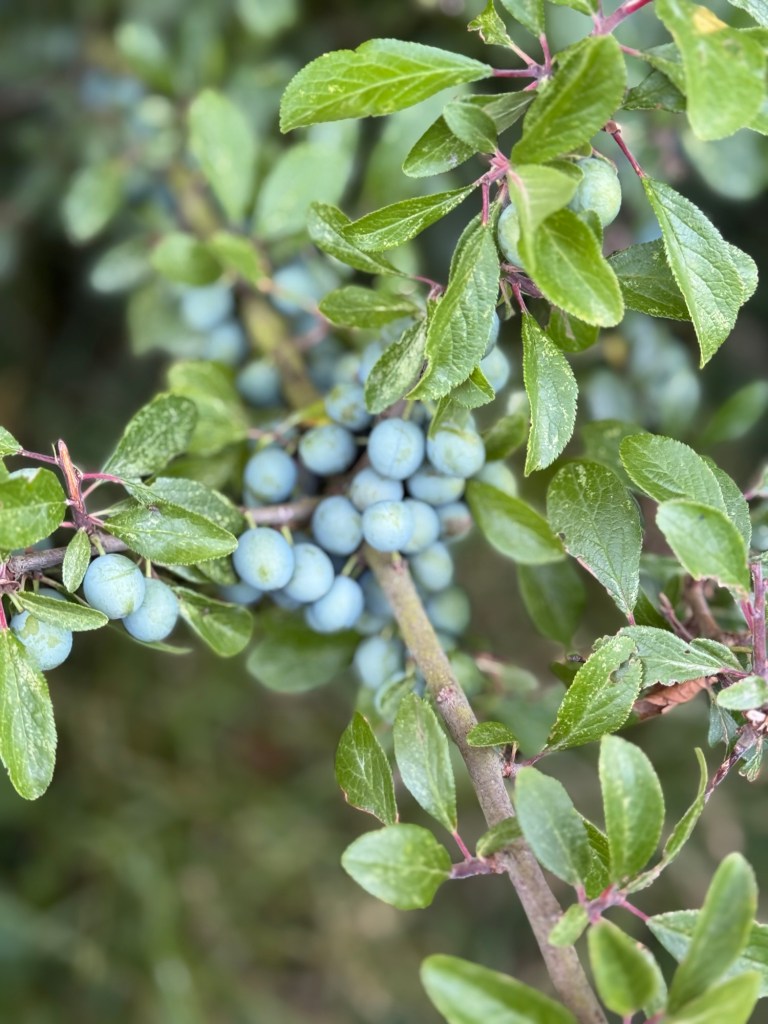
There’s nothing quite like a Wiltshire morning. It is Tuesday, high summer, just after six. I step over a stile and into a field of maize, the stalks shoulder-high and tipped with pollen. The hedgerows are thick with hawthorn and blackthorn, tangled with bramble and sloes. A raven wheels overhead, its call sharp and ancient. Out on Lydiard Green, the dull roar of traffic builds as the county wakes.
I follow the public footpath sign where it disappears into the trees at the far side of the paddock. The green and yellow badge of the Ramblers’ Association is nailed to a fencepost: a promise and a reminder. The path skirts a dry stone wall, crosses a sheep pasture, then disappears into a copse of hazel and oak. A muntjac startles from cover and vanishes with a crash into the undergrowth. The air is thick with the hum of insects and the resinous scent of summer.
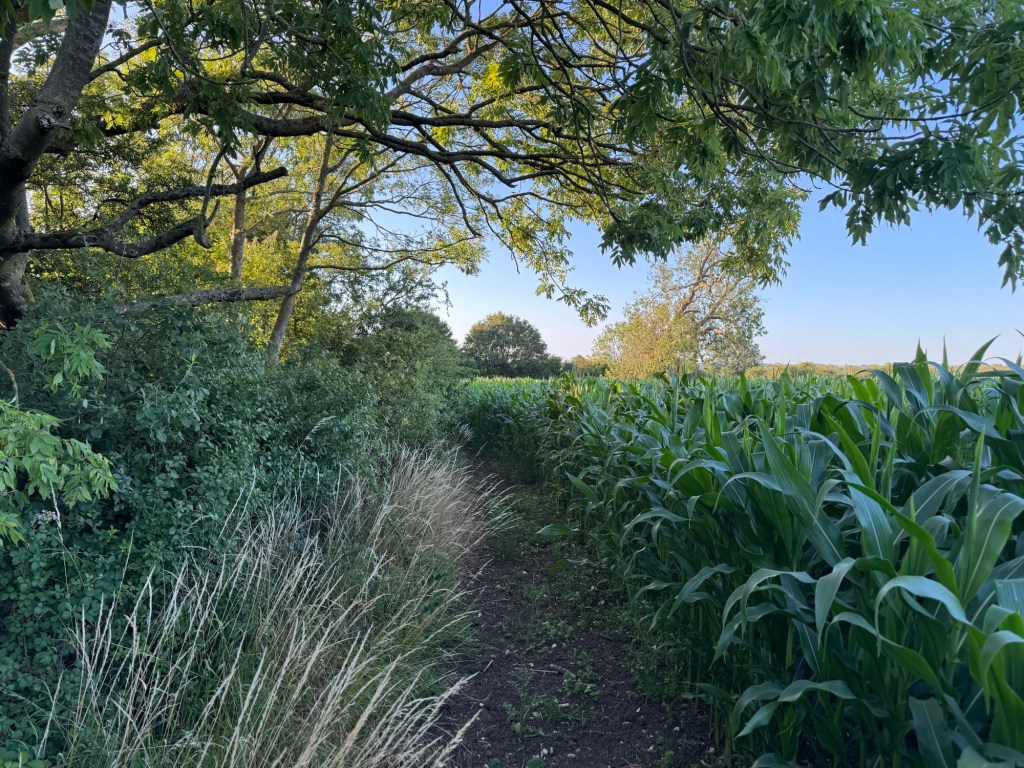
These public footpaths are one of the great joys of the English countryside. To a New Zealander, the idea that you can walk — legally — through someone else’s land is still a little astonishing. Back home, fences mark absolute boundaries. Private land is private. But here in England, thanks to centuries of custom and dogged perseverance, these ancient rights-of-way are open to all. I can walk from here to the next village, or all the way to Scotland, theoretically, without ever stepping off a public path.
There’s a kind of deep time under my feet. These paths are older than roads, older than parishes, older, perhaps, than the very hedgerows that line them. They are the fossilised movements of generations — farmers, monks, drovers, smugglers, poets — pressed into the landscape by countless footsteps. Some follow Roman routes. Others meander from church to manor, from common to croft. They carry stories in their stones.
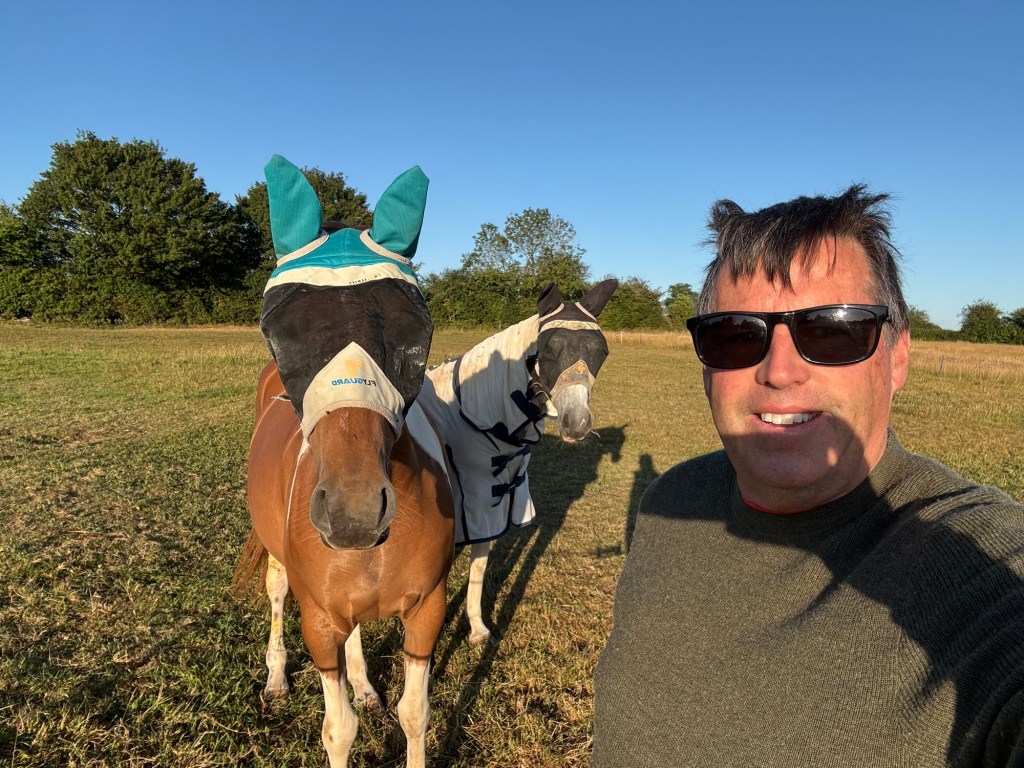
Ahead of me, two ponies stand watchful by the fence. Their ears twitch; one stamps and tosses its head. But curiosity soon outweighs suspicion, and they begin to follow me — close, firm, steady — through the field. I talk to them quietly, reassuring them with nonsense chatter. They stay with me all the way to the far side where I unhook the wire of the electric gate and slip through. They pause, as if waiting for a goodbye, then turn back into the paddock.
A flash of movement in the sunlight. A deer bolts from the hedgerow and vanishes into the tree line. Just a heartbeat of wildness, sudden and pure, then gone. My cousin’s house is visible now: a handsome Georgian in mellow Cotswold stone, its eight tall chimneys like exclamation mar ks against the sky. Ravens nest there. They swoop and croak from the rooftop, calling across the fields like sentinels.
Another style and I am in a copse of trees beside village backyards. I pass a garden with a trampoline, a plastic digger overturned on the lawn. A climbing frame. A sagging football net. A glimpse of childhood caught in the early light.
A line of thatched cottages appears behind a thicket gate. Washing lines are strung like prayer flags across small patios. Roses tumble over garden walls. Somewhere, a kettle whistles.
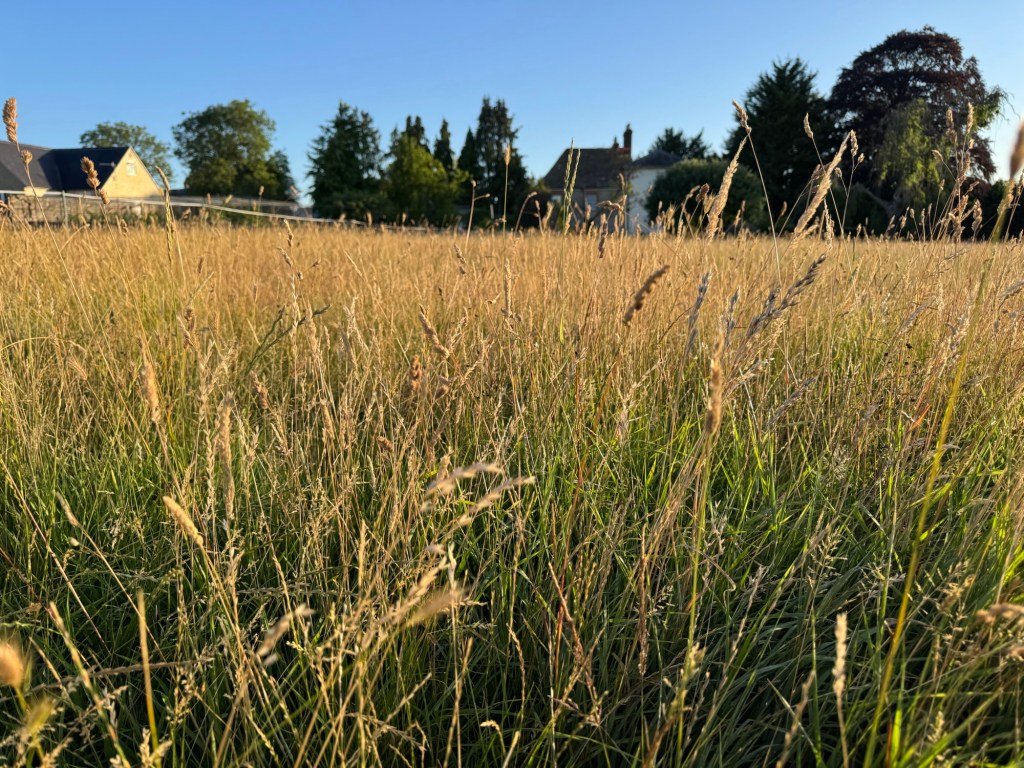
I take a side path that leads into a hay field. The hay is thick and fragrant. I stoop, pick up a handful, and lift it to my nose. Its scent is sharp with memory. It smells like the summers of my youth, when I too worked these Wiltshire fields, stacking bales under a hot sun, driving tractors across golden acres, my arms scratched raw by straw, my shirt always damp with sweat. Back then, I lived the life of a Wiltshire farm boy. And for a moment, holding the hay in my hands, I am that boy again.
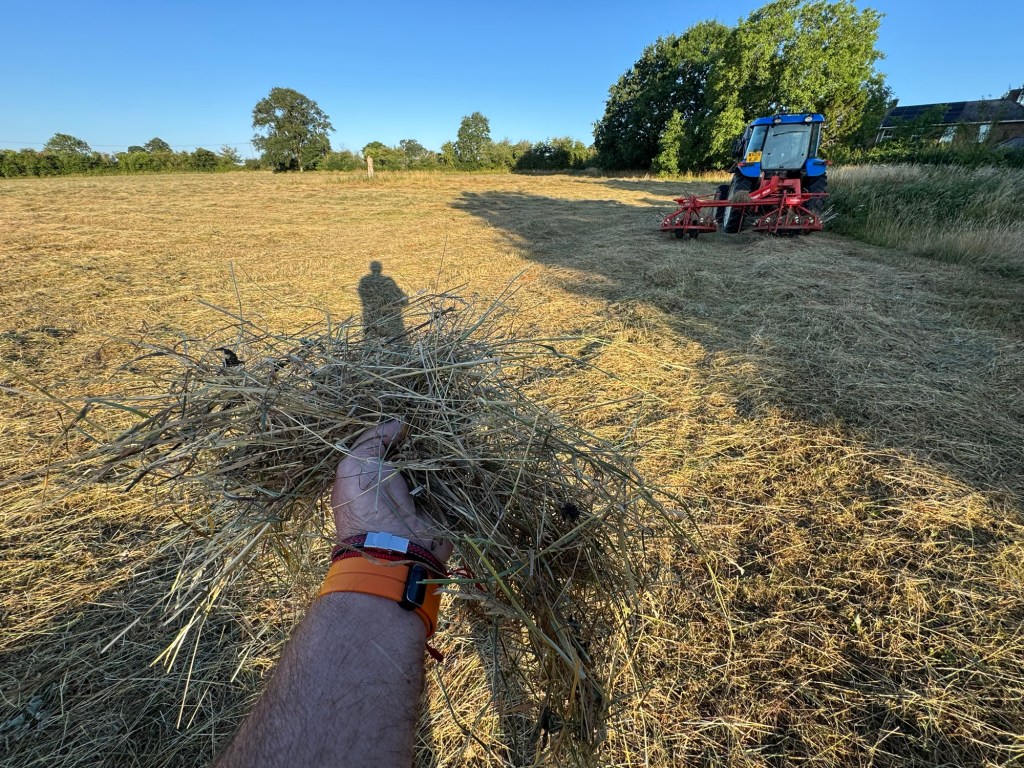
The rake sits idle at the edge of the field, the tractor cool and waiting. But the work will begin soon. By mid-morning, the drone of diesel and the dusty churn of wheels will rise into the valley air. For now, the field is suspended: warm, silent, full of promise.
A red kite glides overhead. Wings outstretched, motionless but for a twitch of the tips. It catches the thermals rising off the field: circles, watches, waits. Somewhere in the grass below, a vole or mouse is living its last carefree moment.
And just like that, I am back in the village. The footpath ends abruptly at the back of a gravel driveway. I pass out between wheelie bins and garden gnomes and step into the street.
At this hour, the Parish Church of Lydiard Millicent, All Saints, is still shuttered and padlocked. But I step through the lynch gate beneath the great old yew anyway. I can never resist a parish church.
The building rises before me: solid and beautiful in its weathered stone, every block and buttress bathed in golden light. Its windows catch the morning sun like black mirrors. The tower — medieval, square, unmistakably English — stands watch over the slumbering village. I imagine the generations who’ve passed beneath this same yew, said the same prayers, attended weddings (as I once did in this same church), buried their dead beneath the turf I now walk across.
The graveyard is quiet. Ivy climbs the leaning stones. Lichen blooms in dusty greys and ochres across the limestone. Names half-remembered, dates worn smooth, stories long folded into the silence.

I circle once, slowly, then make my way back to the street. The village is beginning to stir. The traffic is building: commuters on their way to work in the offices of Swindon, tradies in their vans.
I walk the last few hundred yards to my cousin’s house, my shoes damp with dew, hay dust on my hands, and my mind still half in the fields. Inside, the smell of coffee is already drifting down the hall.
Another day in Wiltshire begins.


 TravelWriterLife