Deep in the Herefordshire countryside, the River Wye steps down over a shoal of boulders and curls into a deep pool overhung by a pair of alders. The dark water spirals and roils as the invisible profile of the riverbed pushes against it. Viridian tendrils of weed wave gently in the current.
Chub and barbel inhabit this stretch of the river. They loiter patiently in the depth of the Whirly, lethargic in summer-warm water. I wade into the shallows, the stones slick beneath my feet, the water cool and clear, curling gently around my calves.

Rob, my ghillie for the day, is already poised, a pellet held between his fingers, deftly looped into place on the hook with a tiny rubber band.
“We’ll fish just off the edge of the weed,” he says, nodding at a pocket of darker water. “Barbel love it there. They cruise through, just waiting for a tasty morsel to fall into the water.”
I cast. The float lands softly, its orange tip drifting downstream as if pulled on an invisible string. There’s a pause. Then, a twitch. A dart. A sudden dip.
Strike.
The rod bends. The line sings.
And just like that, I am no longer merely a person standing in a Herefordshire river, but something primal, focused, entirely present. The fight is solid. The fish runs hard, testing both my strength and patience. Ten minutes of give and take. Then I draw it in. A five-pound barbel, bronze-backed, thick with muscle, and utterly beautiful.
I grin like a schoolboy.
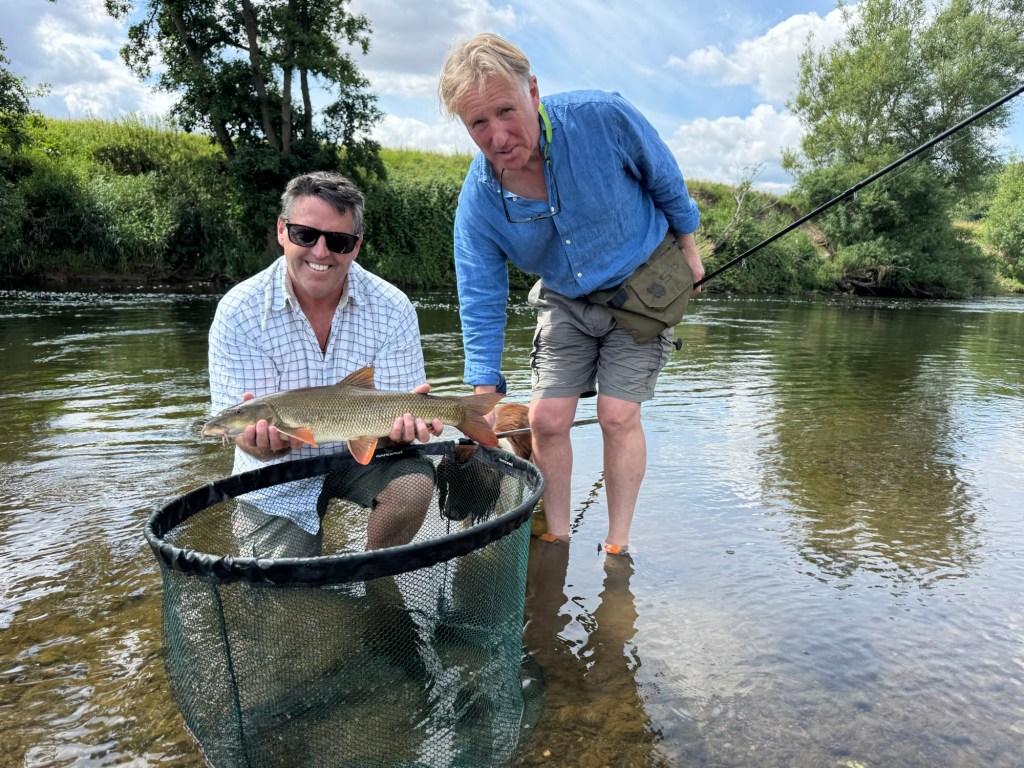
There is a quiet philosophy to fishing. A deliberate slowing down. In the gentle eddies and murmurs of the river, I feel the sediment of modern life begin to settle. Time folds differently on water. Out here, it isn’t measured in deadlines or digital alerts, but in casts, currents, and the quiet patience of the waiting.
Isaac Walton understood this. The Compleat Angler is not just a book about bait and tackle. It’s a meditation on life, on nature, on the quiet satisfaction of being in the world without needing to dominate it.
“God never did make a more calm, quiet, innocent recreation than angling,” he wrote, and today, knee-deep in the Whirly, with dragonflies skimming the surface and the sky wide overhead, I find myself quietly nodding in agreement.
Walton’s rivers — the Lea, the Dove — flow through his prose like sacred channels. But the Wye, today, flows through me. Beneath its shimmering surface, the chub and trout and barbel patrol their liquid realm, indifferent to our presence. My world narrows to the rhythmic motion of the cast, the steady drift of the float, the tightening of line when something bites.

Rob and I fish through the morning, swapping stories and tactics. We release every catch, watching them flick their tails and vanish into the depths like old secrets. Around us, the Herefordshire countryside hums with the soft sounds of high summer. Bees drift lazily from bloom to bloom. A red kite circles high above the tree line. The air smells of damp grass and sun-warmed earth.
We wade out of the water as the sun reaches its zenith, casting golden ripples across the pool. My arms ache a little. My face is flushed. I am both tired and wholly content.
Fishing the Whirly isn’t about conquest or tally. It’s about immersion. Connection. A fleeting harmony with the water and the life it holds. The river asks only that you slow down and listen.
And sometimes, if you’re lucky, it answers back with a bite.


 TravelWriterLife