I step through the tall doors and into cool air. Outside, the heat has begun to press down on Seville like a hand. Inside, there’s marble, shade, and silence. I’m in the Museo de Bellas Artes, and I plan to wander, slowly, deliberately, through whatever the day has to offer.
The first painting that stops me cold is El Juicio Final by Maarten de Vos: a towering Last Judgment, packed with angels and chaos, the blessed rising, the damned tumbling. It’s Catholic theatre in oil and smoke. I stare at it for a long time. Everyone here is either ascending or falling. No one is just standing still. It’s a tough religion, Catholicism. Follow the rules and you’ll be rewarded with paradise; break them and you’ll be getting spikes up your crevice for eternity.
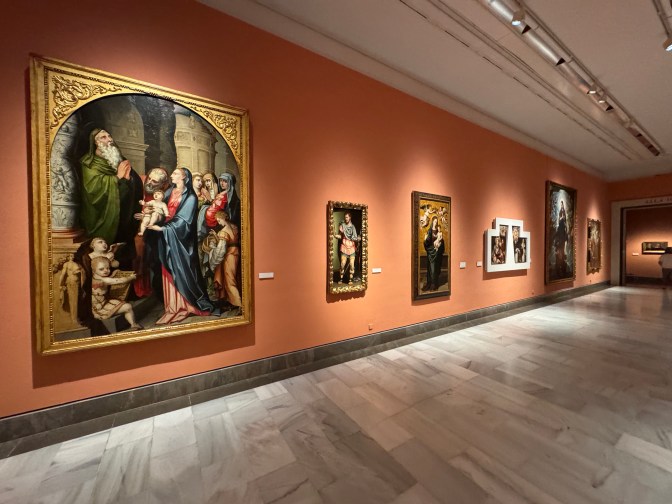
Around the corner, I meet Pedro de Campaña and his San Jerónimo Penitente. The saint is half-naked in the wilderness, beating his chest with a rock. His body is taught, contorted: not spiritual ecstasy but something rawer. I used to work in the hills myself, years ago, in New Zealand, a shepherd under big skies. There’s something familiar in Jerome’s grit. I know what it is to be alone with your thoughts and your body and the weight of silence.
Then comes El Greco, painting his son, Jorge Manuel. It’s quiet. The boy stands in black, looking not quite at me, not quite away. The background is dusk. It feels like a private moment, somehow let loose into the world.

And then Velázquez. I’ve always loved him. Cabeza de Apóstol: just the head of an apostle, painted around 1620. It’s unfinished, maybe. Or maybe it’s exactly enough. He looks inward, this apostle. Not to heaven. Not to me. Just… inward. Velázquez was young when he painted this, and he was already seeing people as they really were.
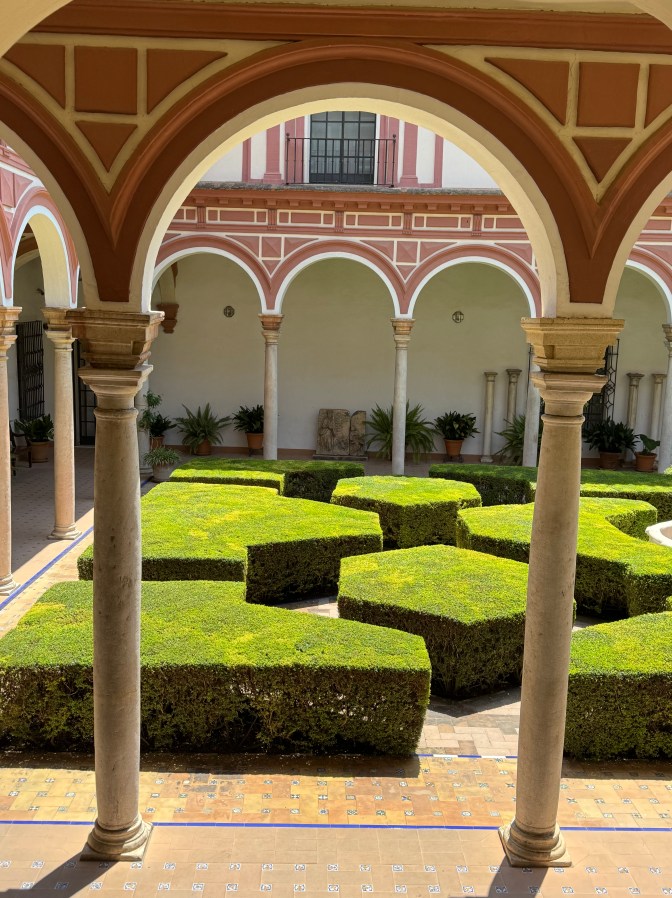
I take a break in the courtyard. Trees trimmed into formal shapes, a fountain in the centre, sunlight bouncing off the tiled walls. The courtyard is the breath between thoughts. Birds flit. A student sketches. I sit on a bench and don’t think of anything for a while.
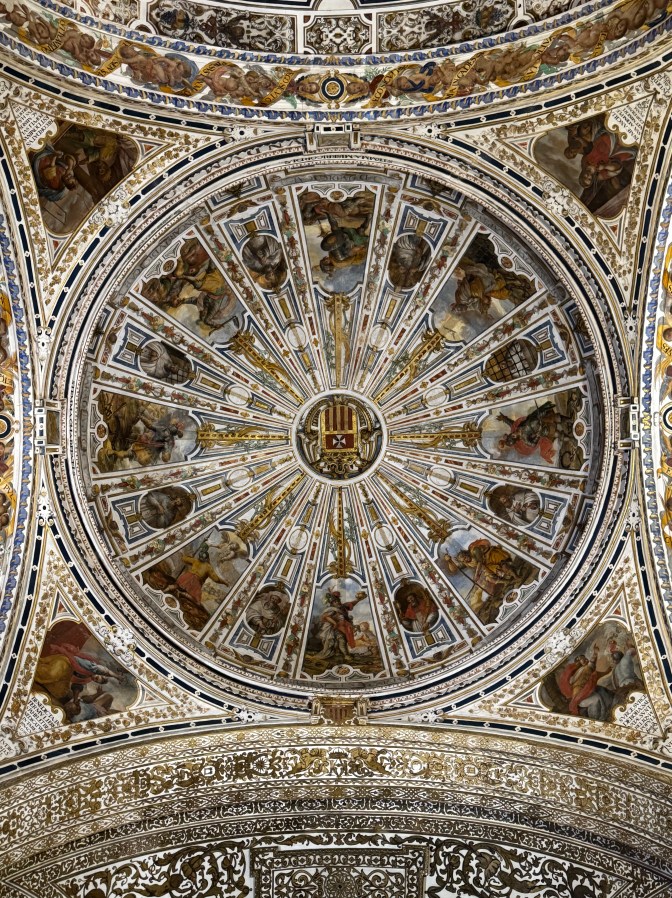
Back inside, a domed ceiling explodes above me in colour and gold, every inch covered in painted angels, saints, and flourishes. I lie down on a wooden bench and stare upward, arms behind my head. The coat of arms in the centre. The radial frescoes around it. I feel tiny, and oddly grateful.
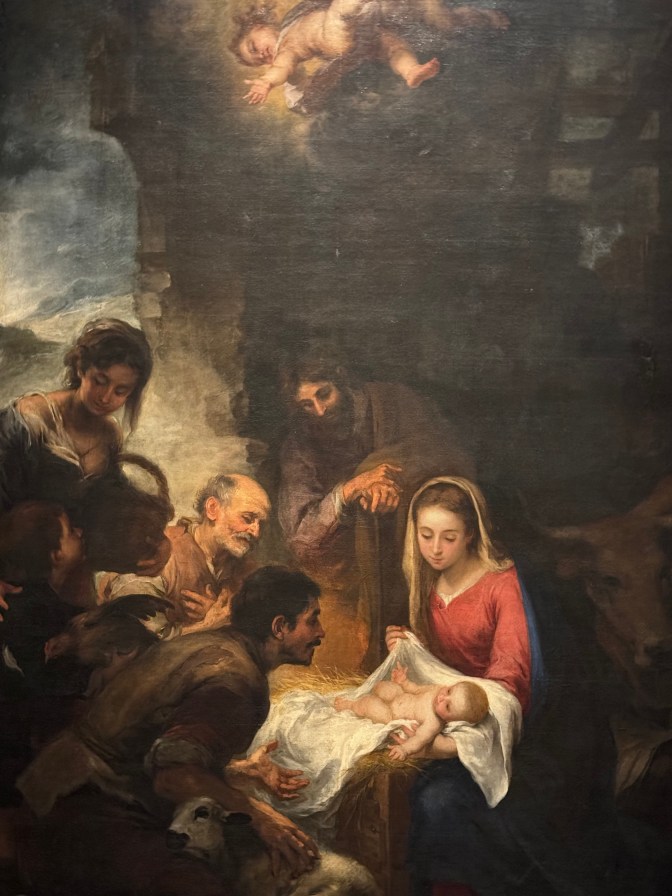
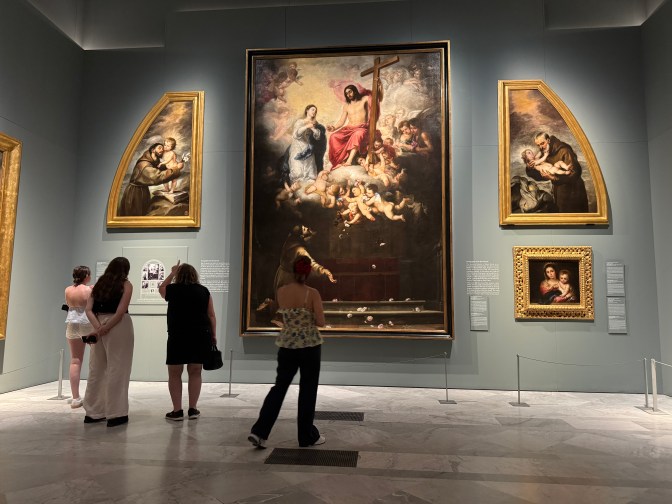
Then come the Murillos. His St. Anthony of Padua with the Christ Child is curved to fit a chapel arch. The saint is physically leaning into the space, bending toward the child. In another room, I find The Adoration of the Shepherds. It’s different. More personal. The brushstrokes are slower, more honest. Murillo is no longer copying prints. He is creating. As a former shepherd myself, I recognise the men he paints: weary, awed, practical, resourceful. They are kneeling not just because the child is divine, but because they’ve seen new life before. And every time, it still feels like a miracle.
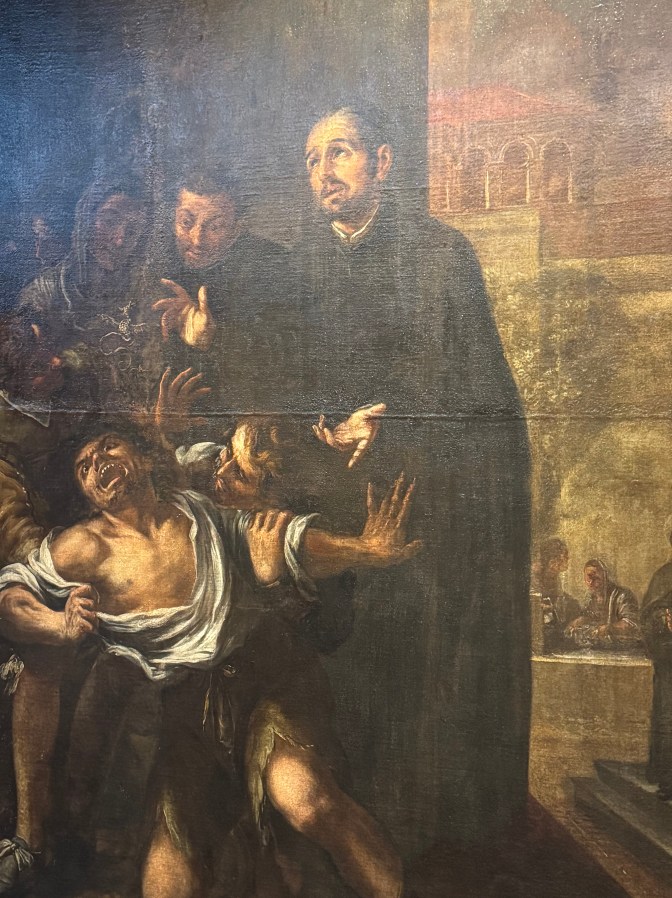
Then the mood goes dark. Juan de Valdés Leal. San Ignacio exorcising a demon. All wild eyes and writhing limbs. The saint is calm; the demon howls. It is belief as battle. Not peaceful, not pretty. But real. And terrifying.
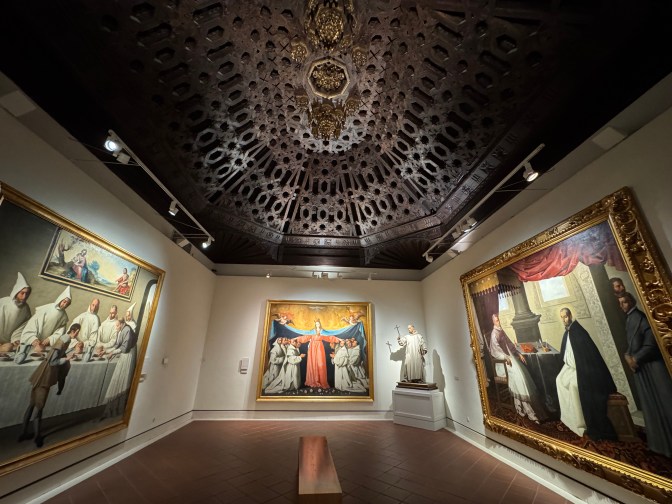
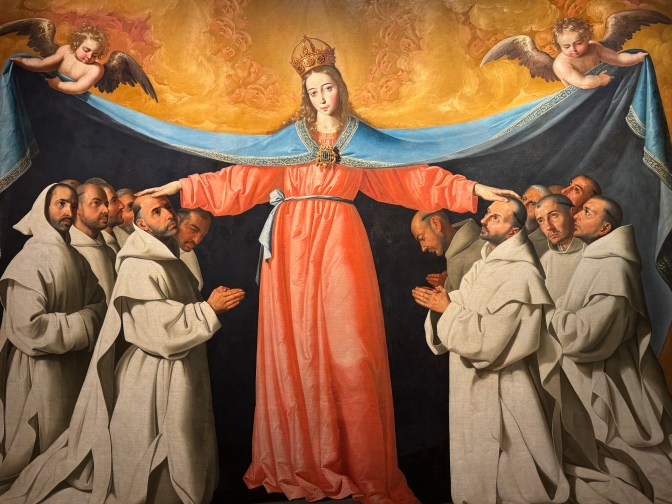
From there, I slip into stillness again: Zurbarán’s Virgen de las Cuevas. She stands tall, serene, her cloak held aloft by angels, surrounded by white-robed monks. Her hands rest gently on their bowed heads. Nothing moves. The hush in the room is so deep it feels painted too.
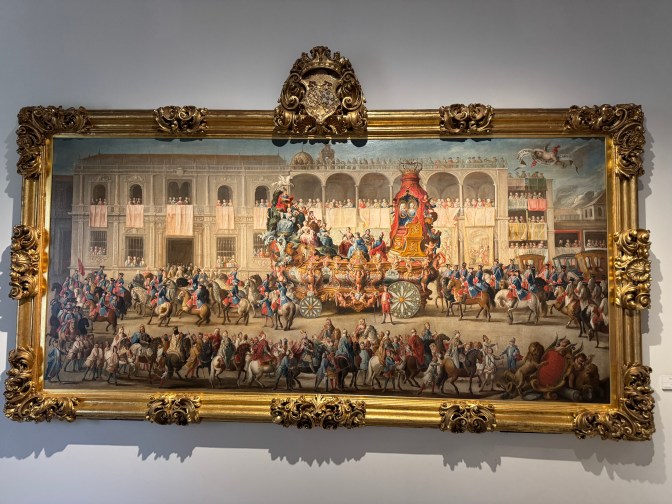
I think I’m done. All these religious motifs, demons, and gruff gazes are overwhelming. But then I turn a corner and walk straight into a full-blown Sevillian spectacle. Domingo Martínez has filled the canvas with a civic-religious procession: gilded floats, red-uniformed guards, women in balconies, the Virgin paraded through town like a holy celebrity. It’s the Church as pageantry. Loud, exuberant, choreographed. But oddly touching. Faith with trumpets.
And finally, Goya’s Portrait of Canon José Duaso. A man sits in black, alone. No grandeur. No angels. Just a face, a chair, a stillness. He looks at me calmly, curiously. Goya has stripped everything down to thought. It’s the most human thing I’ve seen all day.
I leave quietly. Back through the courtyard, into the sun. I carry with me a jumble of brushstrokes: judgment, penitence, tenderness, fury, silence, theatre, stillness. A whole theology of paint. Seville always knows how to surprise.

 TravelWriterLife