There are some films you never grow out of. For me, one of them is Notting Hill. It’s not just the romance, or the gentle comedy, or even Hugh Grant’s affable awkwardness. It’s the world the film creates: a quiet corner of West London where bookshops double as sanctuaries, gardens lie hidden behind tall brick walls, and chance encounters can still change a life. I’ve always loved that world. And today, I’ve come in search of it.
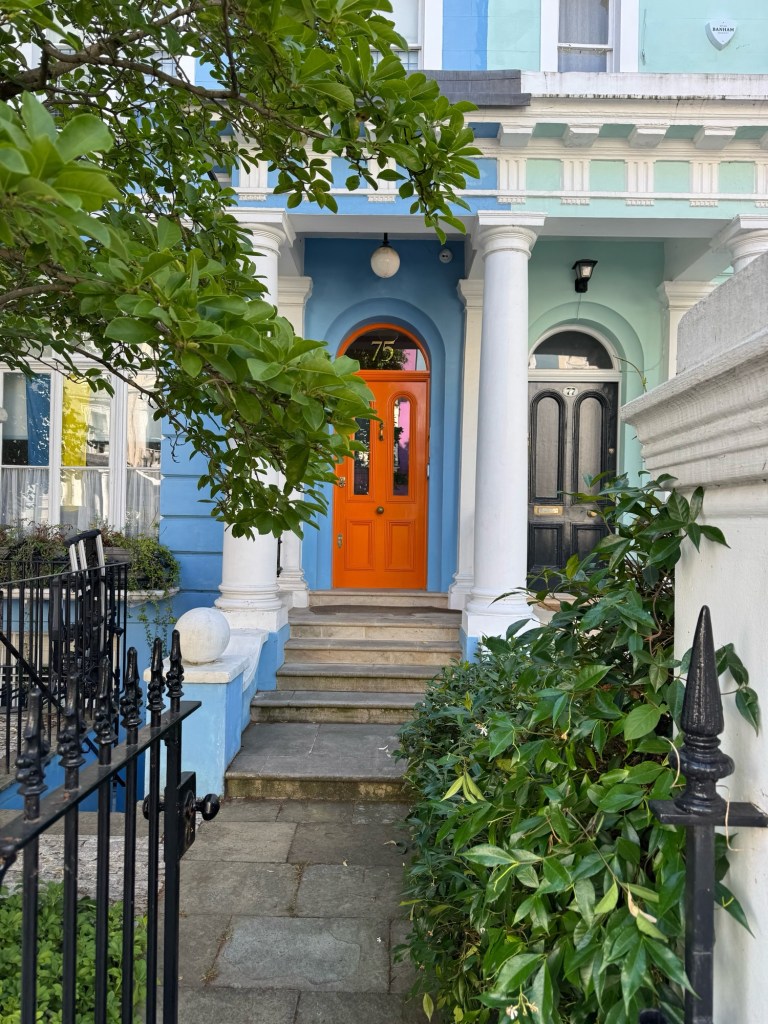
Notting Hill is a film I return to like an old friend. And like the film’s famous blue door, it’s easy to forget how close it is: just around a corner, just past the noise of life, just out of view. So here I am, in London, chasing ghosts. Or maybe memories.
The sun is already warm when I step onto Portobello Road. The market is only just waking up: canvas awnings being hauled into place, fresh bread laid out beside old books and faded jackets. There’s an old man selling doorknobs and a young couple arguing gently over a vintage lamp. London life spins on, full of its usual contradictions; frantic but timeless, messy but utterly captivating.
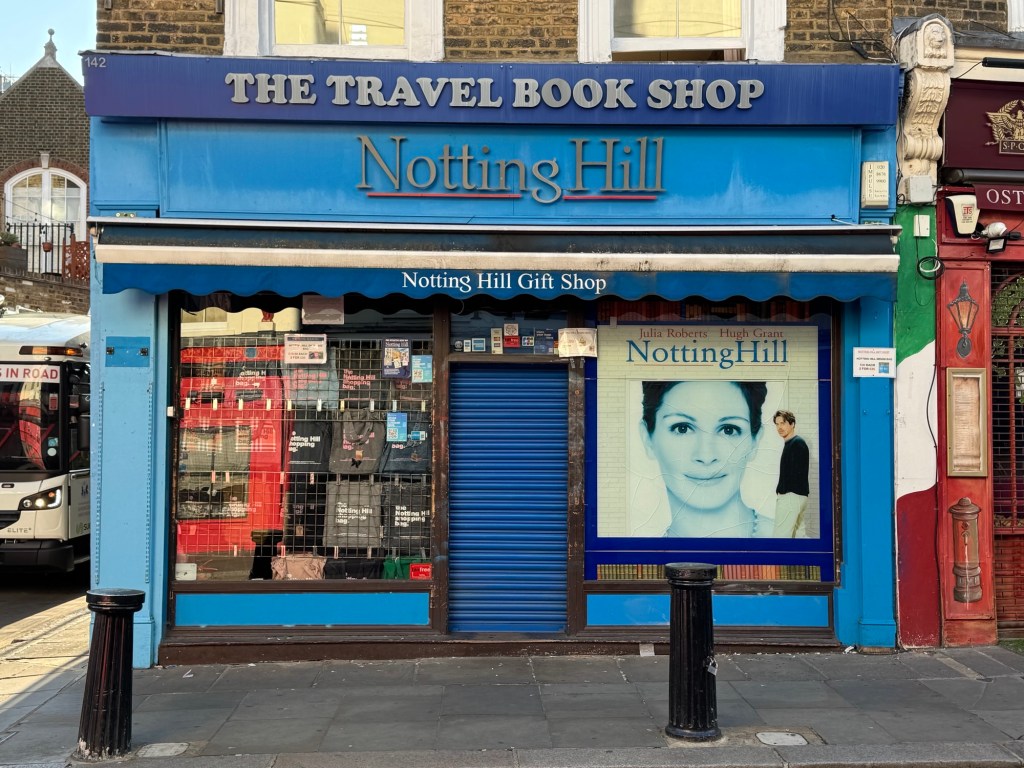
At 142 Portobello Road, the shutters of The Travel Bookshop are still down. Julia Roberts’ face stares out from behind the glass, Hugh Grant leaning against the wall looking out at me. It’s a gift shop now, of course. You can buy mugs and magnets and T-shirts that say “I’m just a girl…” But if you look past the kitsch, you can still feel the heartbeat of the original idea. The notion that a bookshop could be a portal, not just to other places, but to unexpected people.
I linger a while, watching a waste lorry squeeze past down the tight lane beside the shop. A pigeon flaps down to investigate a chip packet. The spell wavers a little. But that’s the charm of this kind of pilgrimage… or any London pilgrimage. It never unfolds the way it does in the movies. The city is ever-present, ubiquitous, chaotic, filthy, loud.
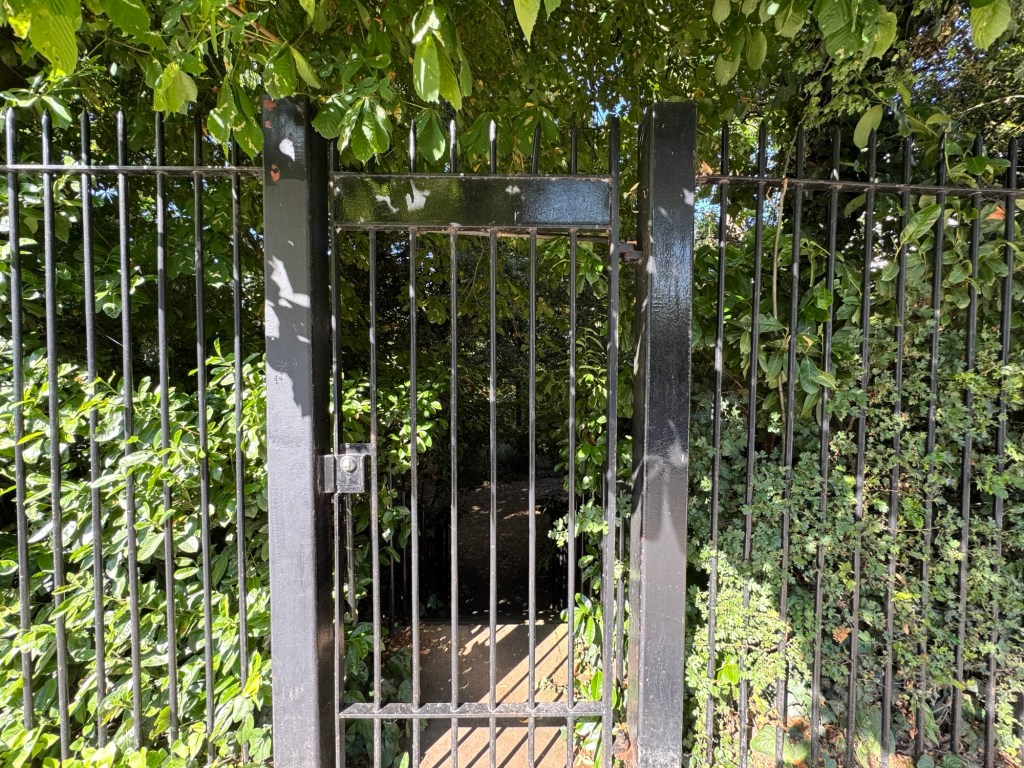
From there I wander down to Rosmead Gardens. The gate is locked, as it always was, unless you’re Anna Scott or someone who can say “whoop-see-daisies” without feeling silly. But just standing by the railings, I can imagine it: the garden parties, the moonlit conversations, the line about loving one another, exactly, precisely, as they are. The houses around the square gleam in the morning light, their chimneys lined like soldiers, their windows shut against the city’s churn.
I walk. Notting Hill is still beautiful, still oddly serene in places, despite the world roaring by on Ladbroke Grove and the clang of another delivery van reversing. The layers of the city are always in motion. New restaurants, old shops, forgotten corners, sudden silence. London never waits. It keeps turning.
I realise I’ve passed the same post box three times. Somehow, in all my looking, I’ve missed the one thing I set out to find. And then, quite suddenly, it’s there. The blue door. Deep and solid, framed by quiet classical columns, standing proud behind a locked bike and a few brave weeds.
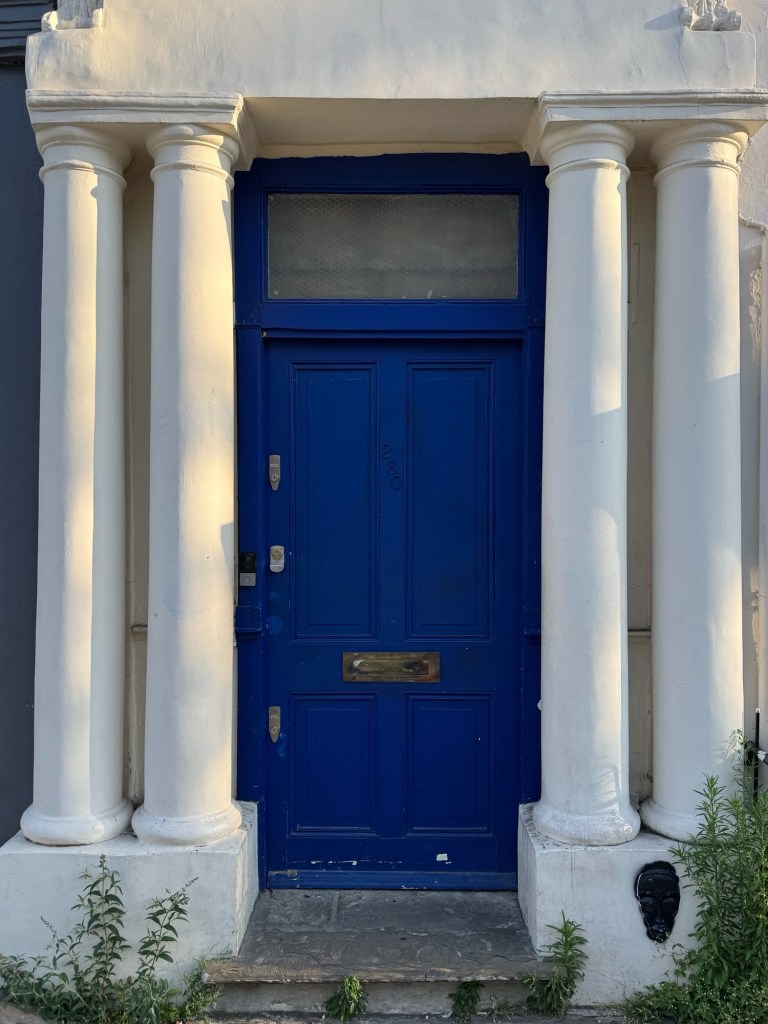
I’ve walked past it at least a dozen times without noticing. And that feels right, somehow. Because the film never shouted. It whispered. It was always about the unnoticed things: the tiny decisions, the sideways glances, the unexpected moments that only later become profound.
I don’t knock. This isn’t the movie. William Thacker isn’t waiting inside, orange juice on his shirt and that wistful look in his eyes.
I just stand there, grinning like a fool. Because I found it. Not just the door, but the feeling. That quiet, hopeful sense that the world is still full of gentle surprises, even when you think you’ve seen it all. That along every ordinary street, there might be something extraordinary. You just have to be looking.


 TravelWriterLife