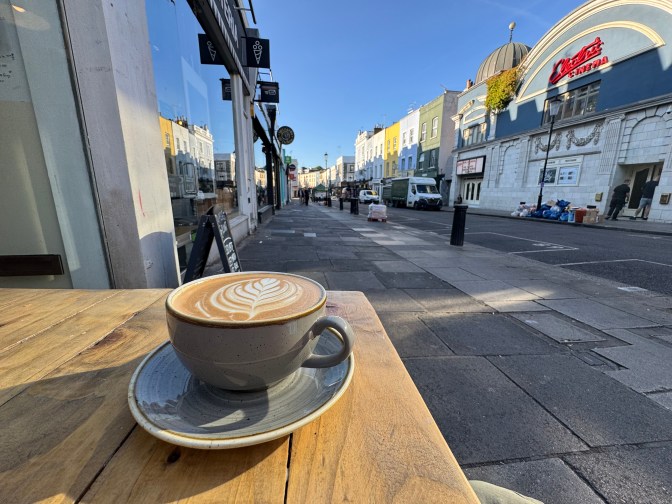
Morning in Notting Hill. I walk up Portobello Road with the sky a flawless blue overhead. The flowers outside The Duke of Lonsdale pub blaze with colour. The baskets are a jumble of geraniums, begonias, and fuchsias: cheerful, bright, and absurdly optimistic. One of the bushes below them is completely dead, crisp and crackling brown. It’s a kind of botanical metaphor for the city itself. London in microcosm: glorious and faded, flourishing and failing, all at once.
The fruit vendors are calling their prices. A man in a Panama hat rides past on a bicycle with a small dog in the front basket. Somewhere, out of sight but not out of earshot, someone is busking with a guitar and a voice like sandpaper. There are Union Jacks and second-hand books and antique cameras on trestle tables. And everywhere, there’s the sense that this is its own place: not just a neighbourhood of London, but a village that happens to have been swallowed up by the city. Notting Hill doesn’t feel like part of the capital. It feels like a walled garden. A stage set. A place apart.
I step through the great wooden doors of St Mary of the Angels. The church is quiet, cool, and unexpectedly majestic: a 19th-century Catholic sanctuary hidden in a quiet side street near the bustle of Westbourne Grove. Sunlight pours through the rose windows and the stained-glass above the altar, painting fractured rainbows on the pillars and pews.
A woman sits alone halfway down the nave, head bowed in silent prayer. The carved crucifix floats overhead in the chancel arch, suspended like a question. I take a seat on one of the benches and feel the hush descend. It’s not silence exactly, but a kind of deep stillness. The kind only old buildings know how to keep. This, too, is the village. The hidden heart of it.
Years ago, we lived down in Lambeth. Back when Lower Marsh Road was still feral, fierce, and faintly criminal. We lived above The Red Lion pub, lulled to sleep by the rumble of trains into Waterloo and the howls of drunks from The Cut.
Lambeth had its own cast of characters, its own feuds and rhythms. It was shabby and chaotic, but it was ours. We knew the butchers, the buskers, the guy with the bolt cutters who nicked bikes. We lived in the village of Lambeth, and it had nothing to do with Mayfair, or Kensington, or even Southwark, just down the river.
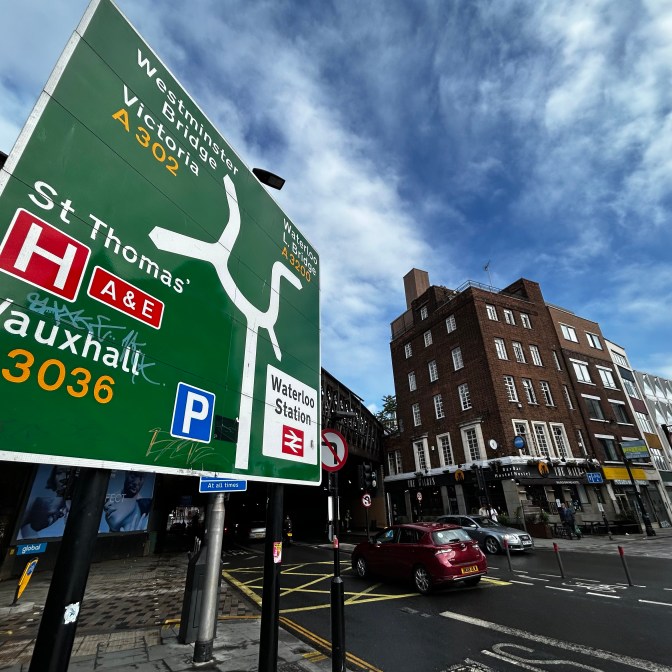
Now, I walk these streets with different eyes. The market stalls have changed. The scaffolding is newer. But the bones of the village remain. The pub is now called The Walrus. The dossers have vanished, replaced by yoga mums and coffee culture. But I still know that street. It still knows me. Lambeth never really leaves you.
Even Westminster, grand, imperious, and ceremonial, is just another village when you strip away the monuments. There are local benches where the civil servants eat their sandwiches. A favourite kiosk for coffee, a shortcut through to Black Rod’s Garden.
I’ve crossed Westminster Bridge a thousand times, and each time I feel the past crowding in. Wordsworth’s “beauty of the morning” still glinting off the river; the ghost of a student nurse swaying drunkenly into a cab; the flash of blue lights from the Poll Tax riot. Westminster might wear the robes of the nation, but beneath it all, it’s just another part of the patchwork.

Everywhere I go in London, I find myself stepping from one village to the next. Soho with its grit and flash. Bloomsbury with its leafy hush. Ladbroke Grove, where Jack-in-the-Green dances through railway cuttings and foxes dart through dawn shadows. These are not just districts. They are lives. They’re layered memories. And once you know that, once you know how to see the village beneath the skyline, you can never look at London the same way again.
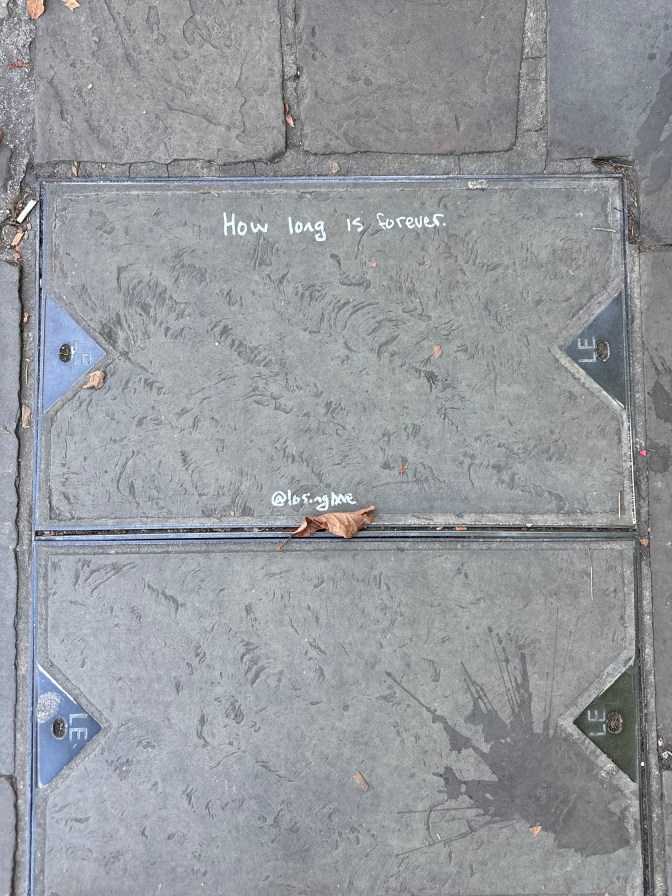
A question painted on a Westbourne Grove pavement keeps returning to me: How long is forever? The answer, maybe, is: forever is as long as it takes for a place to remember you. And in these villages of London, I am remembered. I have left footsteps here. Beer rings on the bars. Laughter in the stairwells. Love, maybe, in the bones of the buildings.
The sun is high now. I pass the florist setting up a stall in the market, the air thick with the scent of crushed stems and warm bread. A young couple walks past hand in hand, talking about films. Someone is sketching on a graffiti-scarred bench. A pigeon flaps up from the gutter. And I realise, once again, that I’m at home here.
Not in a city.
But in a village called London.


 TravelWriterLife