Taking shelter by the standing stones
Miles from all that moves…
…feeling spirits never far removed”
– Ultravox, Man of Two Worlds
The stones rise from the grass like forgotten giants. Silent, weathered, immense. I walk among them, not reverently exactly, but cautiously, as though entering someone else’s house uninvited. The sun is high and warm, shadows crisp beneath each monolith. There’s a light breeze, and the only sound is birdsong and the low murmur of distant voices from the village pub.
This is Avebury. Larger and older than Stonehenge, more open, more expansive. Less well-known. Less a monument and more a world: a vast Neolithic circle stitched into the living fabric of an English village. Thatched cottages sit calmly among the stones. A church stands where once, perhaps, rites were held beneath the stars. Children play near the western arc of the henge. Life goes on, wrapped around, inside, and between the bones of something far older than belief.
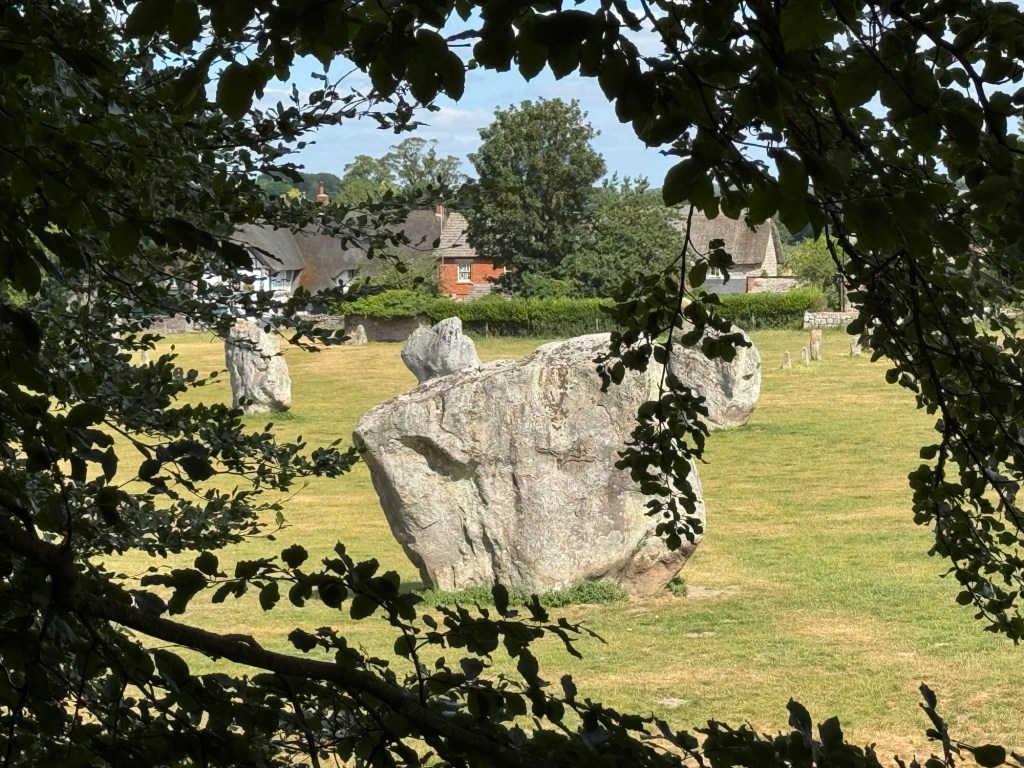
I rest beneath a hawthorn tree and look out across the field. The stones seem scattered at first, but the longer I sit, the more the pattern emerges. Nothing here is random. Everything was placed with intention. Placed by hands long vanished, driven by rituals and meanings now entirely lost to us. A circle within a circle. A gateway. A calendar. A map of the cosmos. Theories abound, but none explain away the feeling of the place.
And there is a feeling. Not eerie. Not supernatural. But something unmistakable. Like a low note held just beneath hearing. A kind of presence. I feel it as I pass between the tallest stones. It’s not fear. It’s not even awe, but a hush. A slowing of time. The sense that whatever these stones were meant to mark or summon or connect to… it hasn’t entirely gone. Ultravox had it right. Feeling spirits never far removed.
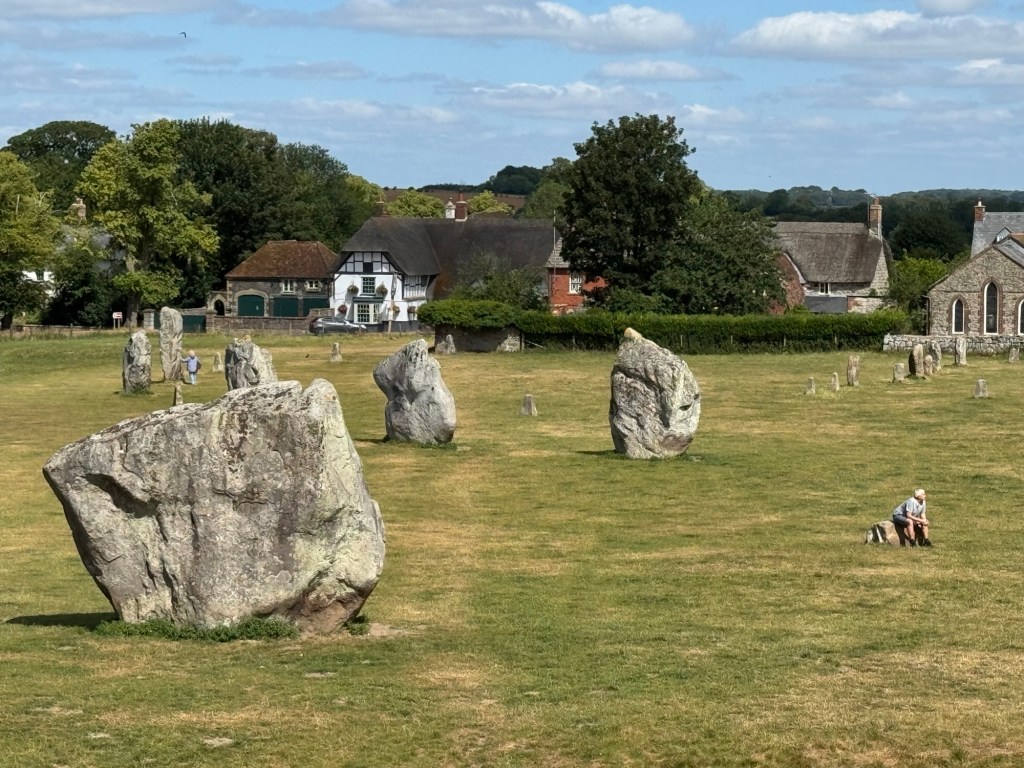
The village is part of the circle. That’s what makes Avebury so strange, so compelling. A woman walks her Labrador between the southern stones, nods hello, and moves on. A man unloads groceries from his car in front of a 17th-century cottage that backs onto what was once the inner sanctum. The sacred and the ordinary co-exist here, as they always have. The circle holds.
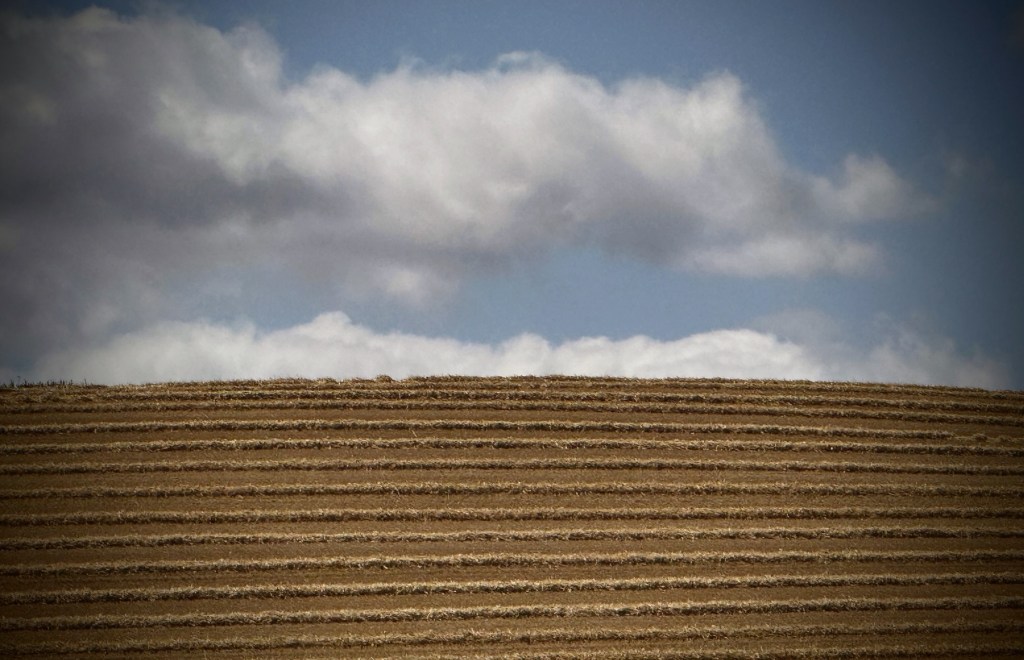
Later, I follow the edge of the great ditch— the henge itself— and climb to higher ground. From here, the pattern is clearer. I can trace the long avenues stretching toward the horizon, feel how the land undulates and guides the flow of ancient feet. The straw from a newl-harvested field of wheat or barley mirrors the lines of stones: a modern-day henge, temporary, transient, soon to be swept away by a baler and replaced with the furrow-lines of the plough: rituals just the same.
I try to imagine what it was like five thousand years ago: drums, fire, procession, rituals. Or maybe just quiet and wonder, the same as now.
Taking shelter by the standing stones. Miles from all that moves. Avebury isn’t a destination. It’s an encounter. With time. With landscape. With something unspoken. I wander the last arc of stones before returning to the lane. The shadows are longer now. A rook cries from the trees. The air feels thick with stories no one can tell.
I walk back through the circle. I don’t try to understand it. It is here. Like the cosmos that may (or may not) have inspired it. It is just here. That’s all that matters. I just let it be.

 TravelWriterLife