“And this also,” said Marlow suddenly,
“has been one of the dark places of the earth.”
- Joseph Conrad, Heart of Darkness
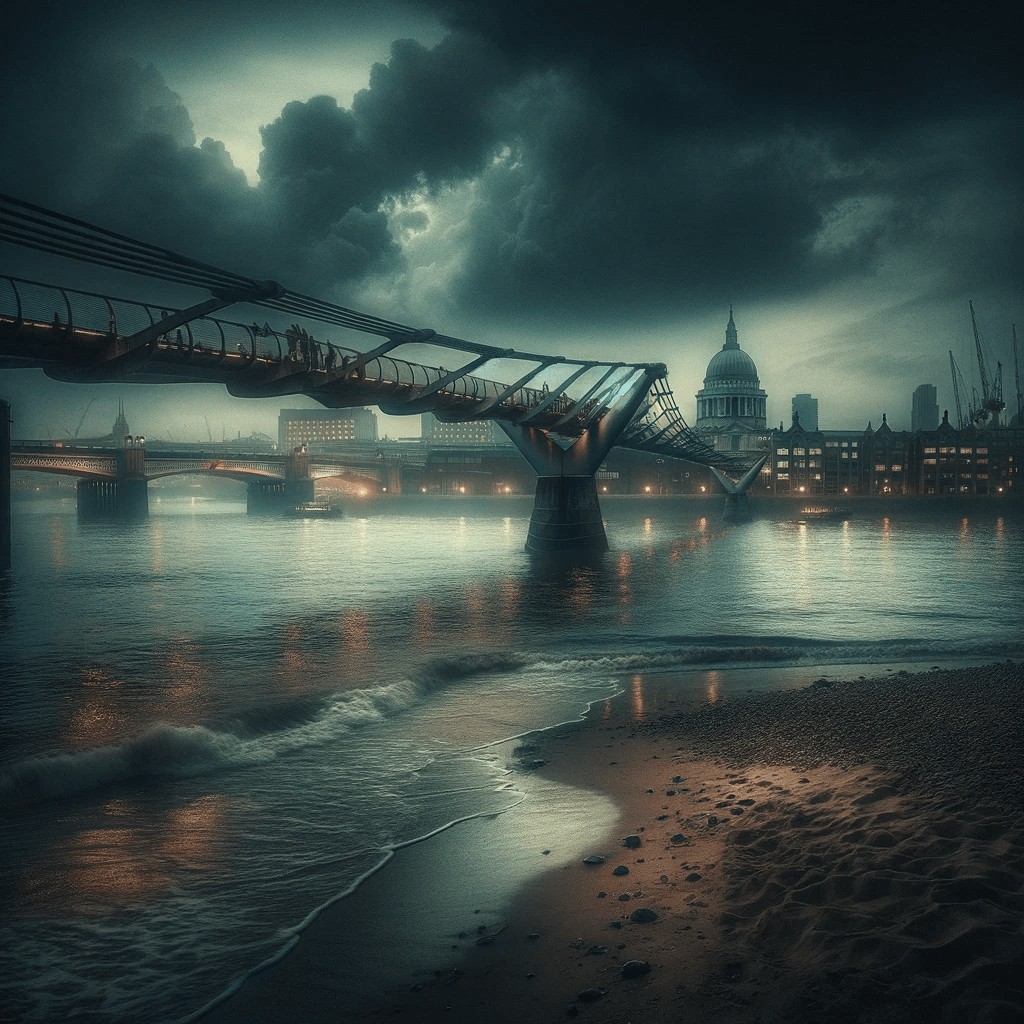
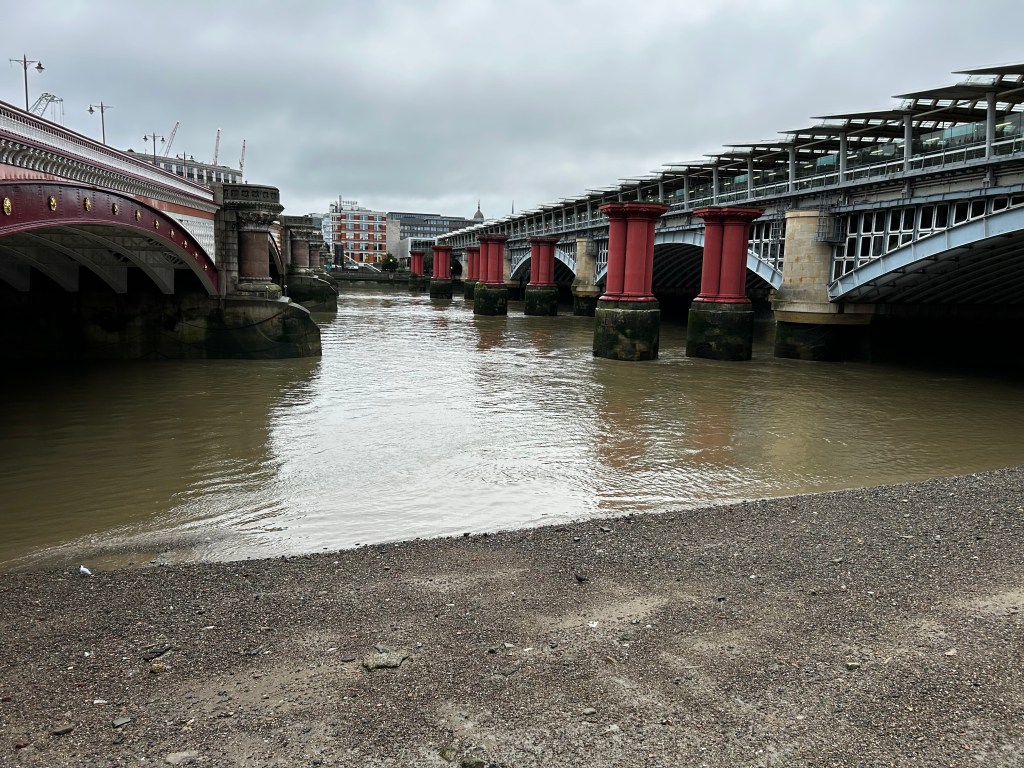
Low tide on Bankside Beach. A thin drizzle falls from a leaden sky above London. It is summer warm despite the weather. Chips of blue sky punctuate the clouds, promising a fine day to come. The opaque, watery disc of the sun shimmers above St. Paul’s Cathedral.
The Thames lies before me like an immense snake uncurled, with its tail in the English Channel and its head lost in the vales beyond the depths of the city. This is the river of Joseph Conrad. It is the river of Charles Dickens, William Morris and John Keats. Writing in Our Mutual Friend, Dickens described the river as “a bewildering maze of tide-races and eddies, of undertows and currents, intricate to an extraordinary degree.”
In days gone down, this river carried with it the germ of empires, the seeds of countries, the dreams of uncountable millions. Some of these seeds took root in colonies at the uttermost ends of the Earth. My great grandfather, Charles Robert Blakiston, sailed down this very river in 1864, bound for the goldfields of Victoria and then, to the fledgling settlement of Canterbury.

A plastic fisherman’s lug lies upturned on the sand at the water’s edge: a new arrival on the falling tide. It is stencilled with the words “Property of Baronetcy Fishing Ltd” and has a wide crack in its base. I imagine it falling overboard on some distant bank far out in The Channel. Who knows what currents and tides races brought it to this shiny hem of sand?
I sit on the bin and gaze across the river at the shimmering city. This stretch of the Thames was once the Empire’s heart. It was a time when the world’s commodities flowed through the docks and reaches of the river. The trade routes of the colonial world started and ended here, in the Pool of London.
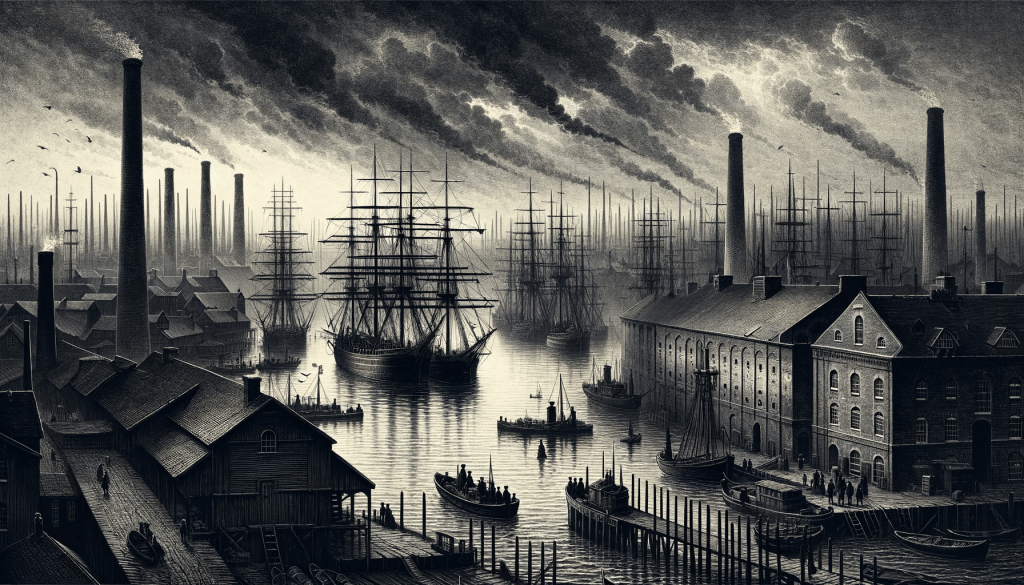
In the 1880s, the Pool of London stood as a testament to the might and reach of the British Empire. The air was saturated with the heavy scents of far-flung lands: the bittersweet tang of spices from the Orient, the rich, earthy aroma of tobacco from the Congo, shining bales of calico and barrels of indigo from India. The warehouses of Limehouse Reach, Canary Wharf and Shadwell Basin bulged with coffee from Malaya, fish from the Outer Banks of Newfoundland and South Georgia, whale oil from the South Pacific, and golden merino fleece from the stations of the Australian Outback and the High Country of New Zealand’s South Island.
The Thames itself flowed around and through the docks, murky and inscrutable, silently carrying with it tales from every corner of the globe. Its waters spoke of the vast, uncharted waters that the ships, now rocking at their moorings, had traversed, bringing back with them the goods of empire. The docks were a forest of towering masts, furled sails and spiderweb traceries of rigging. Galley chimneys belched black smoke into the London sky. Inside the cavernous warehouses that brooded over the river, a ceaseless ballet of commerce and trade unfolded. The timbers of the warehouses echoed with the resonance of a world that was at once in motion, yet strangely devoid of life.
The streets around these warehouses thrummed with a different kind of energy. Pubs and inns, their walls steeped in the sweat and stories of countless sailors, offered a raucous respite from the grim reality outside. Here, amid the smoky interiors, tales of distant lands were told. Each story was a fleeting escape from the harsh truths of their teller’s existence; every yarn grew in grandeur and suspense with each repetition.
The humanity that thronged the Pool of London was a melange of the empire. There were Jack Tars from every corner of the earth, drabble-tailed prostitutes draped in garish finery, and merchants with eyes gleaming with avarice. The air was filled with a babel of languages, the cacophony of a world shrunk into the confines of these docks. Dark Croatians sang songs in sad minor keys. Sailors chanted shanties as they sipped their daily doubles. The ghosts of old Cape Horn were recalled to life in ballads: tales of mystery, imagination and horror from Davy Jones’ Locker. The food, too, reflected this diversity, from the simple fare of pies and eels to the exotic flavours of curries and spices, each a fleeting reminder of distant homelands.
Yet beneath this veneer of vibrancy and life, there lay a palpable sense of despair. The stench of the river, a noxious blend of industrial effluent and urban waste, served as a constant reminder of the price of progress. Resurrection men dragged the river for corpses that could be sold to medical men for dissection. Murder and mayhem stalked the alleyways and stairs. In counting houses behind death-rattle doors, blear-eyed accountants totted up the tallies of profit and loss, charting the success of distant transactions in columns of ink-smudges figures cascading down the pages of thick ledgers.
In this microcosm of the empire, where wealth and squalor existed side by side, the human spirit both soared and withered. It was a place of paradoxes, where the glories of the empire were starkly juxtaposed against the desolation and degradation of its underbelly. The Pool of London was a grim and grimy mirror reflecting the dual nature of man: his unquenchable thirst for discovery and dominion, and his inexorable descent into the depths of greed and inhumanity.
The River Thames, meandering through the heart of London, was more than just a conduit of commerce and industry. It was — and still is — an artery connecting the metropolis to the vast, uncharted expanse of the world. In its silent, murky depths lay both the beginning and end of a path that stretched from the familiar confines of this ancient city to the uttermost ends of the earth.
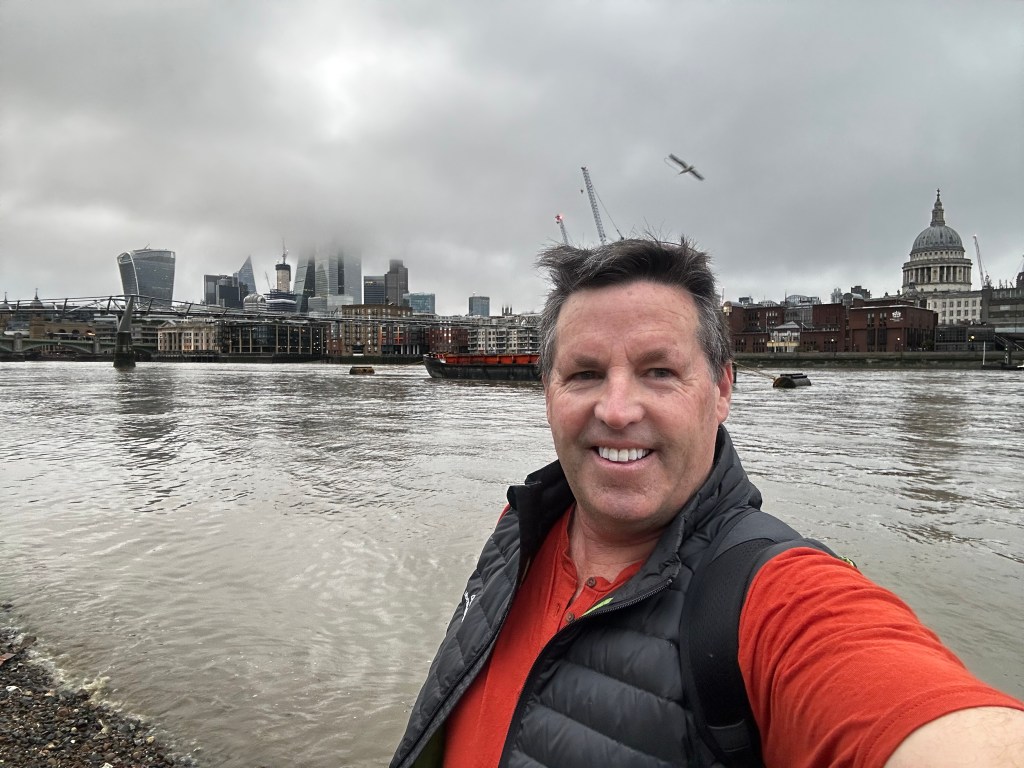
From my vantage point on the beach, I watch the city and the river slowly come to life. It is my first morning in London for 13 years and yet, I feel completely at home here. This city seems to be part of my DNA; racial memories etched into my bones and flowing in my blood.
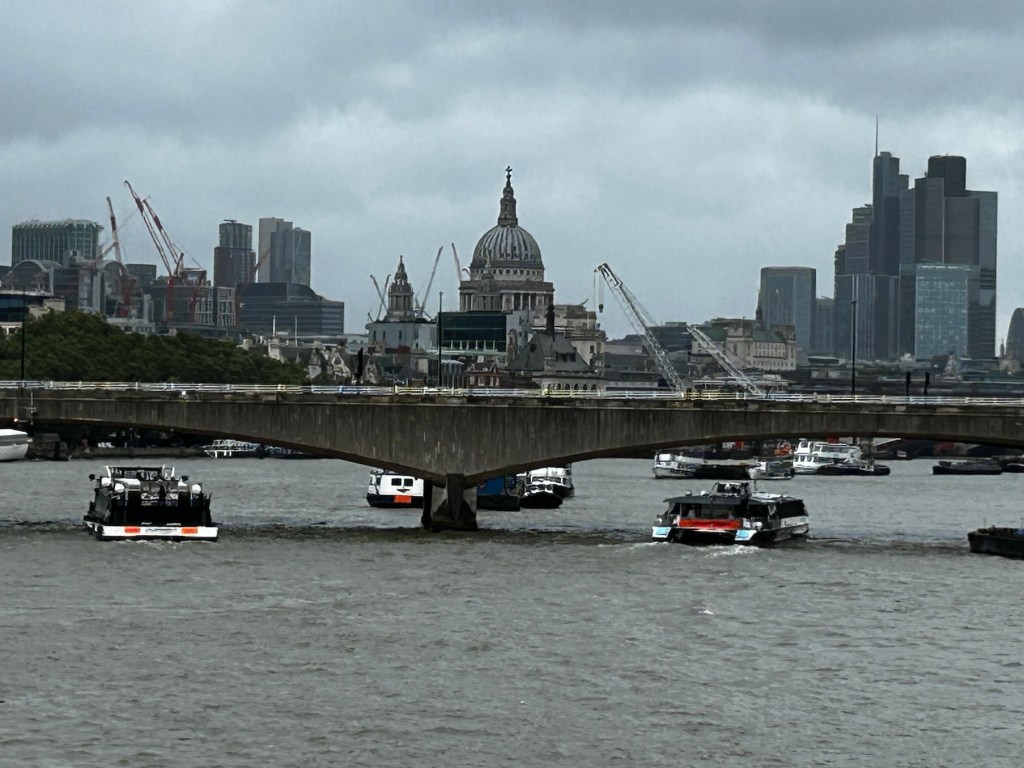
A tender tows a barge upstream, its cargo hidden beneath blue and green tarps. The dome of St.Paul’s hangs in the sky beyond the stone facades along the opposite bank. Further downstream, the gleaming towers of The City buttress the clouds. The river laps at the shingle along the edge of the beach: timeless, opaque, and brim full of history.
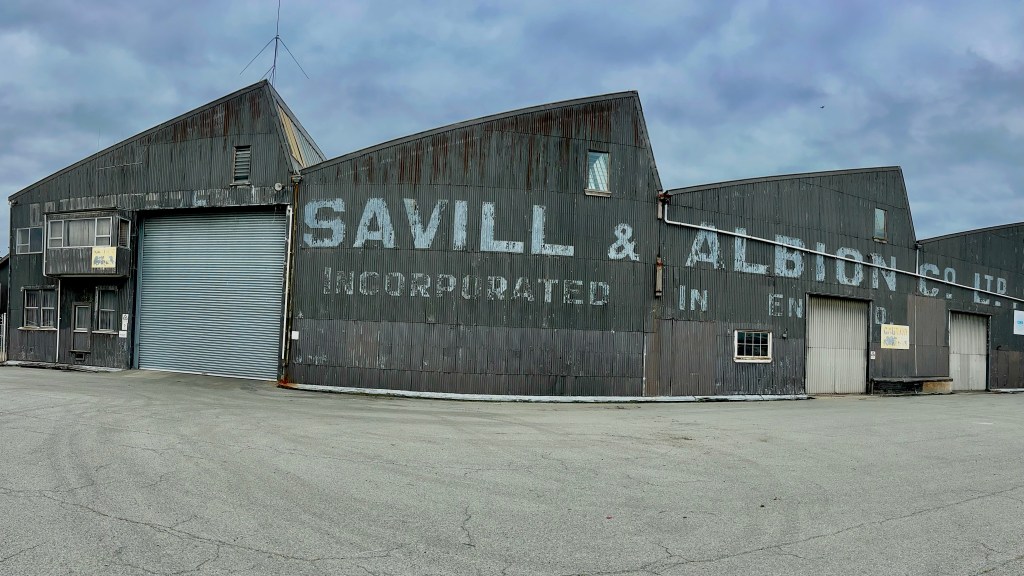
At the Port of Timaru on the South Island of New Zealand, there is an old warehouse that once formed part of the nautical lattice that ended here in the Pool of London. The Shaw, Savill & Albion Line was established in 1882 to provide a regular cargo service between New Zealand and England. It pioneered the transport of chilled and frozen produce — notably mutton and beef — from Australasia. By 1900, this trade in frozen meat was contributing huge amounts of food to the British economy. In that year, 95,000 metric tonnes of frozen mutton were conveyed to Britain from New Zealand alone.
The ships of the Shaw, Savill and Albion Line (later shortened to simply Savill & Albion) loaded frozen meat and other cargo at Timaru from their dedicated meat loading facility on the Number 1 Wharf and from their warehouse on Hayes Street. The warehouse is still there. Its serrated roofline forms a backdrop to my day-to-day work at the port. Occasionally, I have to enter the building via a locked side door behind a rusted gate secured by a chain and padlock. The interior of the warehouse, with its heavy timber support columns soaring up to a cathedral-like roof of trusses and lintels, is redolent of wool, oil, grain and jute.
It is easy to imagine the activity and heat that once filled this giant space. And as I sit beside the Pool of London, it is easy to imagine the ships unmooring at Timaru to begin their long journey to here.
As the 20th century dawned, the Pool of London was bustling with the trade enabled by new technologies. Steamships had largely replaced the graceful clippers and brigs of the age of sail. Wind power had given way to steam turbines, turning screws and the diabolic energy of burning coal and heavy fuel oil. This transition from sail to steam marked a pivotal chapter in maritime history, profoundly affecting how the Pool of London operated and influencing the broader dynamics of global trade and travel.
During the age of sail, the Pool of London had been a labyrinth of masts and rigging. Sailing ships, dependent on the whims of the wind, required skilful navigation through the Thames. The rhythm of life in the docks was governed by the natural elements, with ships sometimes waiting for days for favourable winds before they could enter the Thames tideway to begin their passage upriver. The docks were designed to accommodate the smaller burthen of sailing vessels, with warehouses and quays built accordingly. Trade was steady but limited by the capacity and speed of these ships.
The advent of steam power in the mid-19th century revolutionised maritime travel and trade. Steamships, no longer at the mercy of wind patterns, brought predictability and efficiency. The introduction of coal — and later heavy oil — as sources of fuel, allowed for longer voyages and larger cargo capacity. Steamships could make regular and faster trips, significantly increasing the volume of goods that could be moved.
The Pool of London underwent significant changes to accommodate these technological advancements. Larger and deeper docks were constructed to accommodate the bigger steamships. Warehouses and storage facilities were expanded to handle the increase in goods. Where gangs of labourers once carried loads on and off the gangways of sailing ships, cranes now lifted them directly from ship’s holds into the warehouses.
The workforce also had to adapt to the new technology. Skills that had been essential in the age of sail — ropemaking, carpentry, sailmaking — became less relevant. New skills related to steamship operation and maintenance gained importance. This shift brought defining social changes to the communities around the docks. Traditional jobs disappeared and new opportunities arose for those willing to embrace the new technologies.
The shift to steam power also had a profound impact on global trade. Goods could be transported faster and more reliably, making international trade more efficient and increasing the interconnectivity of world economies. Exotic goods from distant lands became more accessible, changing consumption patterns and fiscal relationships between nations.
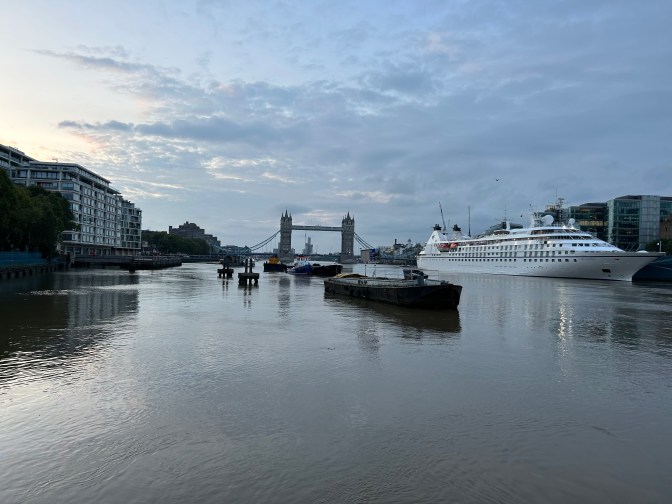
With the outbreak of the First World War in 1914, The Pool of London became a strategic centre for military logistics. The focus shifted from commercial trade to wartime needs. The docks saw the arrival and departure of troops and military supplies. The war’s end in 1918 brought a brief period of hope, but the area was left grappling with the war’s economic and social impacts as unemployment grew and labour movements fought for workers’ voices.
During the 1930s, the Pool of London, like much of the world, was affected by the Great Depression. Economic hardship led to a decline in trade, impacting the docks and the lives of those who worked there. The once-thriving area faced reduced activity, and the vibrancy of the previous decades dimmed under the shadow of economic challenges.
With the Second World War, the Pool of London again found itself at the centre of conflict. The docks became prime targets for German air raids during the Blitz. Significant damage was inflicted, disrupting operations and impacting the surrounding areas. Post-war, the Pool faced a monumental task of reconstruction and recovery.
In the post-war period, changes in shipping technology and the increase in containerisation led to a shift in focus to larger, more modern ports. Tilbury Docks, further down the Thames, became more prominent. These docks could better accommodate the larger cargo ships that were now the norm. This shift marked a decline in the traditional role of the Pool of London. The once-busy wharves and warehouses gradually fell into disuse, signalling the end of an era.
By the 1970s, the Pool of London was a wasteland. What was once the heart of London’s maritime commerce lay derelict. The warehouses stared sightlessly out over the river. The water lay black and filthy in the docks. Weeds and trees grew from the cracks in the concrete pavements: Jack-in-the-Green reasserting the natural world into the man-made.
One by one, the warehouses were pulled down or refashioned into housing complexes. The docks were filled in and the brickwork water blasted to remove the patina of centuries. The bordellos and bars were replaced by bedrooms and bistros.
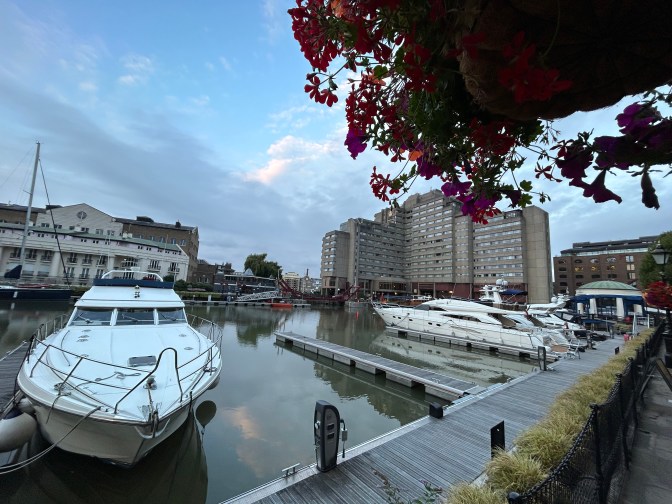
Sitting on the beach beside the river, I try to imagine what Joseph Conrad, whose stories explored the human psyche against backgrounds of complex social settings, would think of these modern Docklands. He might be fascinated by the transformation, seeing it as a reflection of the inexorable tide of change that affects cities and civilizations. Conrad could potentially see this evolution as symbolic of humanity’s constant struggle and adaptation in the face of industrial and technological advancement. However, he might also mourn the loss of the gritty reality of maritime life that he knew: a world that was raw and unfiltered, now sanitised and repackaged for a new age.
Charles Dickens, too, with his keen eye for social commentary and a deep empathy for the plights of the underprivileged, might have a mixed reaction to the gentrified Docklands. On one hand, he could appreciate the revival of an area that, in his time, was often characterized by poverty and squalor. The new, clean, and prosperous Docklands could be seen as a triumph over the destitution and hardship that he depicted in his works.
On the other hand, he might lament the loss of the area’s historical character and the stories embedded in its old alleyways and buildings, now reimagined in modern developments and gentrified streets
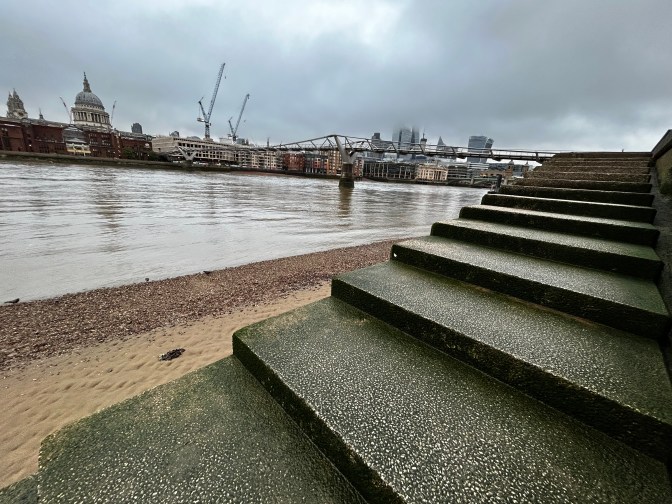
For me, The Pool of London represents both the beginning and the end of a journey. I have a month of adventures in England ahead of me. And just as this river took my ancestors downstream and out into the world, it now draws me back into a new age and new stories. The Thames laps at the edge of the beach beside me. It slips beneath the Millennium Bridge, turns downstream past the Isle of Dogs, Gravesend, Canvey Island and the Erith Sands, and begins its journey to the uttermost ends of the Earth.