For more than a thousand years, the city of Quanzhou as been at one end of the world’s longest supply chain.
A good traveller has no fixed plans and is not intent on arriving.
– Laozi
On Tumen Street, I am walking in the footsteps of Marco Polo. Enveloped by this city, steeped as it is in the cultural strands of Chinese Confucianism, Taoism, Chan Buddhism, and Islam, I feel as though I am part of a frenetic global village: both of its time and of mine. While the Quanzhou of today is a thoroughly modern city, its streets are still redolent of the people from myriad ethnic and social backgrounds that once gathered here as equals to trade and share ideas.
For Quanzhou was once the Eastern terminus of the world’s greatest trading route: the Maritime Silk Route. Merchants, businessmen, seafarers, traders, pirates, poets, painters, mendicants, scholars, mystics and adventurers came from across the known world to Quanzhou to do business, forge alliances, exchange knowledge, and leave their mark on the city. Quanzhou wasn’t just an entrepôt, a world market on the edge of a global village. It was a crossroad of civilisations where goods, philosophies, religions and cultures converged.
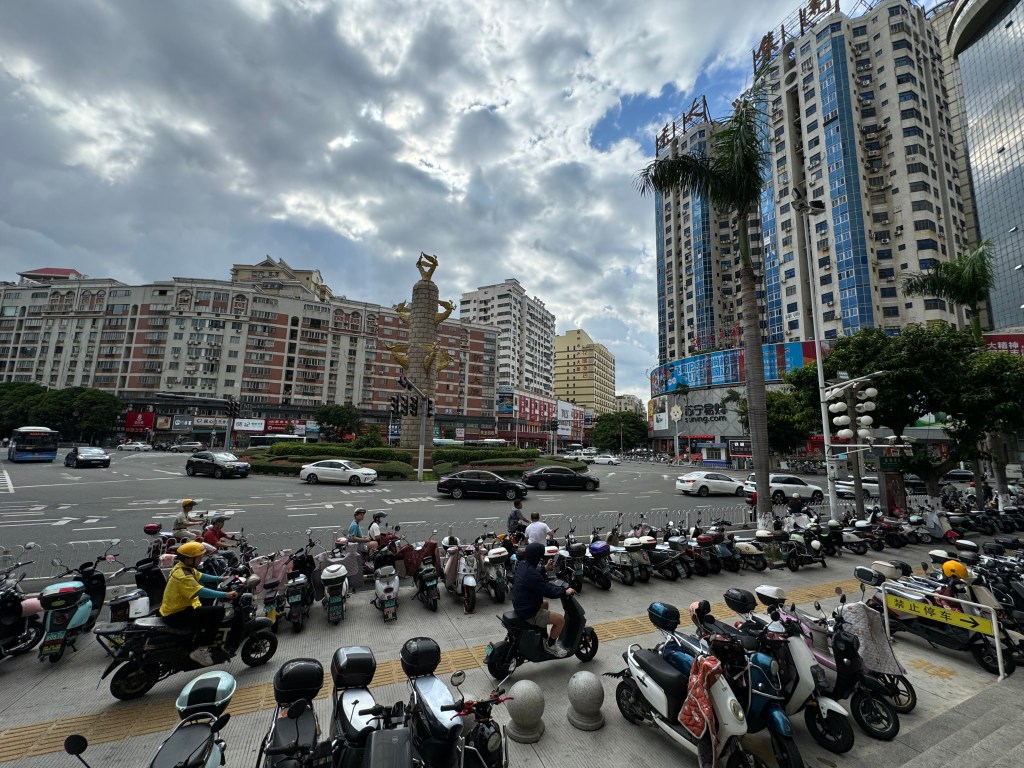
Visiting in 1292, the Venetian adventurer, explorer and trader Marco Polo described Quanzhou as “the Alexandria of the East.” At the time, the Egyptian city of Alexandria, where the Nile met the Mediterranean, was considered the greatest trading port in the world. But the city that Polo visited, perched on the edge of the South China Sea and linked to the vast hinterlands of Fujian by canals and roadways, rivalled Alexandria in scale, ambition, and cosmopolitan energy. And as I ease myself into the hectic rhythms of Quanzhou, I too, feel as though I am stepping onto a crossroad of history, where the whispers and reverberations of the old trade routes and the cross-pollination of ideas are still pulsing just below the surface.
A Crossroad of the World
Quanzhou rose to prominence during the Northern Song Dynasty (960–1127) as a pivotal hub of maritime trade. Its strategic location and connection to inland Fujian made it an ideal location for shipping the goods and produce that came down from the Chinese interior in an endless stream. Likewise, its large and safe harbour was perfect for receiving the exotic goods of the empires along the shores of the Indian Ocean and the Arabian Sea.

A global logistics hub
In today’s world, logistics hubs are powered by cutting-edge technology: automated warehouses, AI-driven supply chains, and global tracking systems ensure that goods are moved with precision and speed. Yet, the logistics hub of Quanzhou in its heyday during the Song and Yuan dynasties was no less remarkable for its time.
Though lacking the machinery of modern logistics systems, the city operated as the command nexus of the Maritime Silk Road, relying on an intricate network of merchants, navigators, and administrators to manage the flow of spices, ceramics, silk, porcelain, metals, tea, and precious stones. Its Maritime Trade Bureau, established in 1079, oversaw fleets of ships and vast warehouses, while its bustling port linked China to destinations as far as Arabia and East Africa.
And just as today’s hubs integrate diverse technologies, Quanzhou integrated diverse cultures and goods, serving as the linchpin of a global trade network that was as innovative and transformative in its era as the smart ports of today.
The greatest terminus in the world
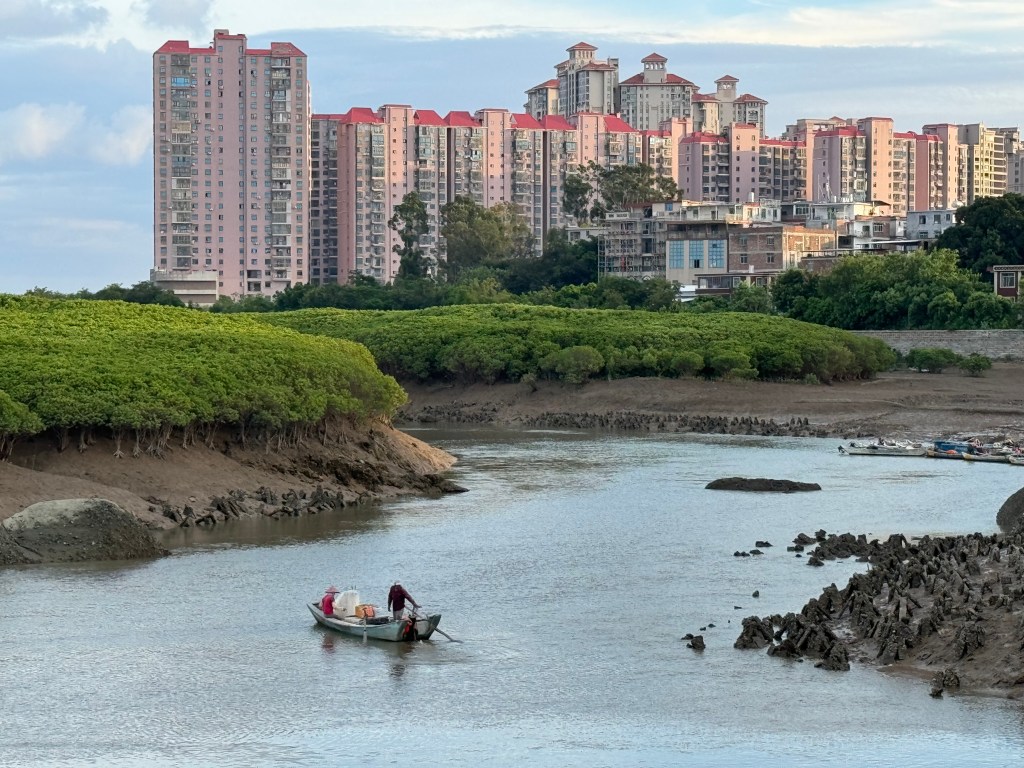
By the 12th century, Quanzhou had eclipsed Guangzhou (called Canton by later Europeans) as China’s premier port, serving as a key terminus of the Maritime Silk Road. At its height, the city hosted traders from across the globe — Arabia, India, Southeast Asia, and beyond — transforming it into a cosmopolitan epicentre where commerce, cultures and religions mingled. Tamil merchants constructed Hindu temples, Muslims built China’s first mosque, and the city became an intricate melange of goods, ideas, and beliefs.
Under the Yuan Dynasty (1271–1368), Quanzhou’s prosperity grew further, bolstered by Muslim trade superintendents like Pu Shougeng, who leveraged his extensive connections in the Middle East to restore the city’s international significance. When Marco Polo visited Quanzhou during this period, he praised it as “one of the two greatest havens in the world for commerce”: the other being Alexandria. Polo noted the city’s bustling trade in spices, gemstones, pearls, and porcelain. His return expedition to Persia (to deliver the Mongolian princess Kököchin for her wedding to a prince of the Persian Ilkhanate) began at Quanzhou’s port, underscoring its role as the gateway to China for the arrival and departure of vessels plying the global maritime routes.

Rise and fall
Of course, nothing lasts forever and Quanzhou’s fortunes waned in subsequent centuries. The Ispah Rebellion in the late Yuan period brought turmoil, culminating in anti-foreign massacres that diminished Quanzhou’s cosmopolitan character. The rebellion was led by a Persian garrison (known as the Ispah, from the Persian word Spāh meaning “army” or “troops”) who were locked in a power struggle with the authorities of the Yuan. It rapidly descended into widespread chaos as the Persian troops, who had originally been brought to Quanzhou to maintain order, turned on the Yuan rulers. The brutal conflict engulfed the city, shattering its multicultural fabric and disrupting its trade networks
The restrictive trade policies of the Ming Dynasty (1368-1644) further stifled Quanzhou’s maritime activities. By the time of the Qing Dynasty (1644-1912), sea bans and internal strife had rendered the port nearly obsolete. Without regular maintenance, the harbour had silted up, exacerbated by the natural sedimentation of the Jinjiang River.
These days, Quanzhou’s three ports — Shihu, Xiaocuo and Weitou — are located far from the city on the shore of Quanzhou Bay. But still, Quanzhou retains its historical charm and cultural richness, characterised by its many temples, ancient stone bridges, and the oldest mosque in China.

In the Name of Allah
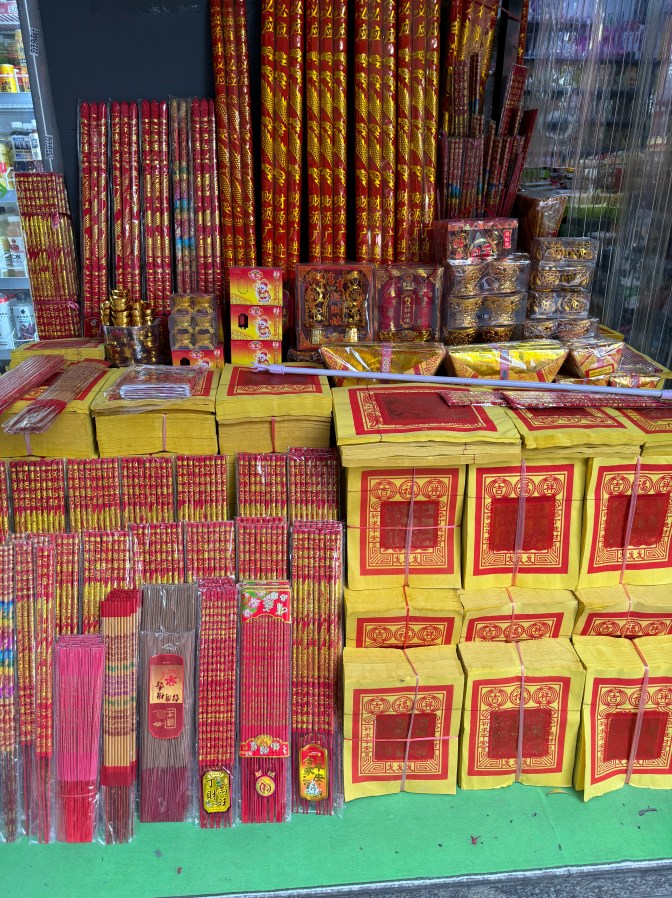
I pause at a corner shop to buy an apple. The piles of fruit arranged along the open front of the shop — oranges, pears, guavas, mangosteens, lychees, bananas, longans, pineapples — cascade back into the interior in multi-coloured tiers. Piles of imitation paper currency, joss sticks, paper effigies and other trappings of worship teeter on the pavement. The scent of burning incense and juniper drift across from the Guandi Temple opposite the store. Munching my apple, I cross the street and enter a sudden world of colour, clamour and devotion.
Smoke and shadows
One of the delights of exploring a new city in an (almost) alien country is the sudden, serendipitous discovery of extraordinary places en route to some other destination. Passing through the courtyard of the Guandi Temple is like stepping into the canvas of a vivid painting brought to life. Worshippers bustle between incense burners. Monks chant melodiously, unseen within the shadowy interior. Kaleidoscope offerings of fruit and paper money are piled high on tables in front of the temple. The air is thick with the mingling scents of incense, juniper, and burning joss paper. And over it all rings a discordant symphony of clanging bells, incantations, lustrations and chatter.

It is an unexpected and overwhelming spectacle: a glimpse of devotion and tradition that feels at once deeply personal and universally human. With the mosque still ahead, I linger for a moment, captivated by this spontaneous encounter with the sacred. I have the sudden impression of being a time traveller, momentarily flashing into existence in a centuries-old world before the paradoxes of quantum physics take me on to my temporal destination. With this queer thought, I pass through the smoky precinct of the temple, its colours and cacophony swirling behind me, and follow the shaded street toward the quiet grace of the Qingjing Mosque.
The pillars of Islam
Islam arrived in China in the 7th century with the Arab traders and missionaries who traveled along the Silk Road. These early Muslim communities settled primarily in cities along the trade routes, becoming an integral part of the local economies and cultures. By the time of the Song Dynasty, these communities had established mosques and were actively contributing to the cultural and social fabric of Chinese society. The Song Dynasty, known for its economic prosperity and advances in technology, was particularly receptive to new ideas, making it a fertile period for the integration of Islamic knowledge into Chinese life.
The influence of Islam is notably evident in various aspects of Chinese civilization during this era. The Chinese were introduced to such technological achievements as advanced irrigation techniques which enabled arid areas of the empire to be brought into production. Scholars brought astronomical instruments from the Muslim world, which enhanced the Chinese understanding of engineering and the cosmos.

Philosophical and scientific texts from the Islamic world, translated into Chinese, introduced new concepts in mathematics, medicine, and philosophy. The scholars of the Song Dynasty, who had been traditionally inward-looking, began to appreciate and assimilate these innovations, recognising the value in the intellectual traditions of what they had once considered barbarian cultures.
The period also saw a synthesis of Islamic art with Chinese traditions, exemplified in the architecture of mosques built in the Chinese style. The introduction of Arabic calligraphy into Chinese art created a blend that enriched both traditions. Nor was this cultural intermingling just confined to the cosmopolitan centres alone. It spread across the regions connected by the Silk Road, facilitating a broader cultural dialogue between China and the lands to the west. Islam (and other influences) arriving along the Silk Road challenged and expanded the Chinese worldview, creating a dynamic interchange that helped to shape the course of Chinese history in subsequent centuries.

Fellow travellers
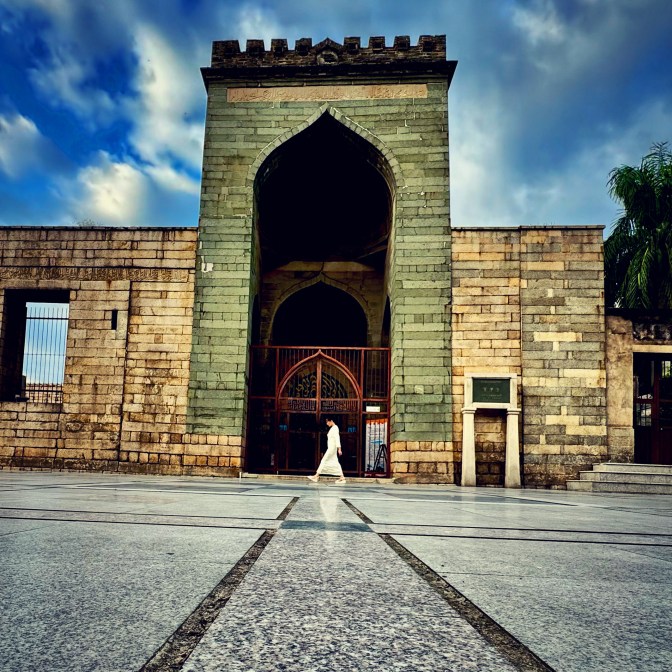
I step into the Qingjing Mosque via a narrow portico through the outer wall. One moment I am in modern, tech-savvy China; the next, I am swept back through centuries to a quiet world of prayers and contemplation. The walls of the mosque seem as strong as when they were built almost a thousand years ago.
Completed in 1009, the mosque was a central place of worship for the Arab traders and Muslim businessmen who flocked to Quanzhou during the Song and Yuan dynasties. For the Muslim traveller and writer Ibn Battuta, who came to Quanzhou in 1345, the Qingping Mosque would have seemed a welcome haven of solace and familiarity amid the chaotic world of Buddhist and Taoist China.
And for me, a little worn out by the constant struggle to make myself understood (and to understand), the mosque is a place where I, too, can relax. Here inside the thick, sound-deadening walls of this ancient sanctuary, I find a shared stillness that bridges the 679-year gap between Ibn Battuta’s visit and mine. And although my visit is guided by curiosity rather than faith, I can feel time folding in on itself, connecting us both to this place and uniting us as fellow travellers.

Sitting at a stone table in a quiet corner of the mosque, I wonder what Marco Polo and Ibn Battuta would make of modern Quanzhou. Would they be amazed by the bustle and technology? Or would they simply take it all in as yet another exotic set of experiences on their travels? Just like me, and the Chinese philosopher and poet Laozi, centuries before, they were travellers just passing through, not sure of their destinations and unbound by a final destination.
Straight lines and upward curves
The design of the mosque combines traditional Chinese and Islamic styles. Domed archways inscribed with the names of Allah are supported on ziggurat patterns of brickwork. The walls rear upwards from the courtyards in imposing verticality, their corners still razor-sharp and perfectly perpendicular despite centuries of weathering and destructive political upheavals.
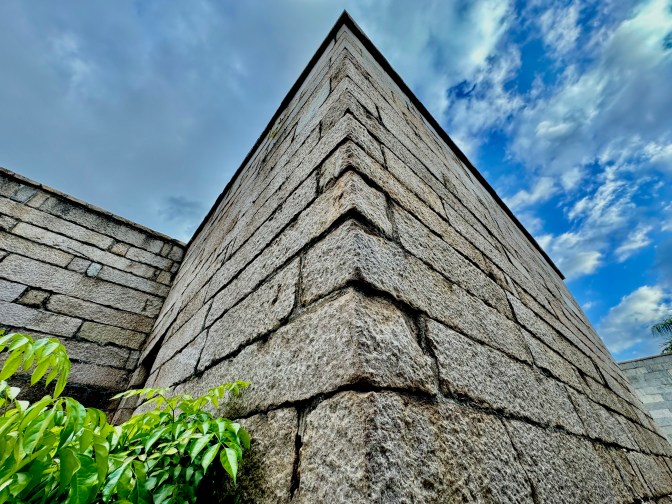
But the curved, upward-curving tiled roofs are distinctly Chinese. The ceilings within the prayer rooms and arcades are also of painted bamboo, with swirls and twirls that imitate the images of dragons, proscribed as profane under Islamic law. However this syncretic blend of decorative styles seems to fit together perfectly, seamlessly melding the worlds of China and Arabia: art and architecture becoming shared languages that transcend borders.
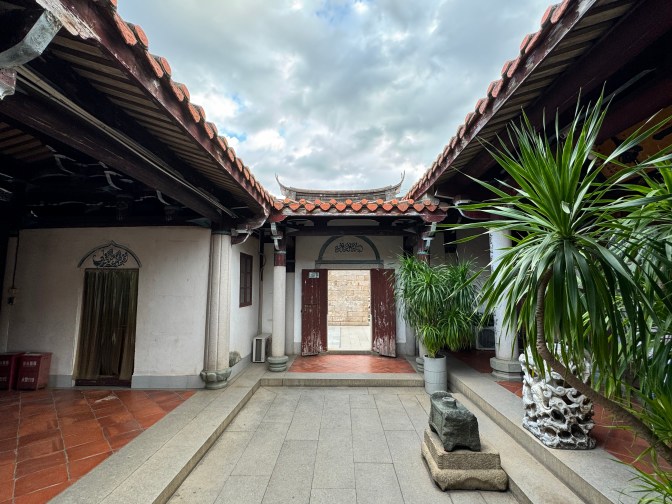
As I wander the rooms and courtyards of the mosque, I feel as though I am straddling two worlds: one deeply rooted in the past and the other, just outside, racing towards an exciting and uncertain future, where technology reshapes traditions but struggles to replicate the soul of places like this. The quiet resilience of the mosque stands as a reminder that while progress is inevitable, the stories etched into its walls — of faith, fusion, and survival — are timeless, offering a grounding counterpoint to the relentless pace of change taking place beyond its walls.
The mosque closes for prayers at 4:30 p.m. I am the last visitor to leave. Indeed, if a security guard hadn’t noticed me, I might have been locked in. He asks me in Arabic if I am a Muslim and if I will be attending salah: prayers. I say “Lā, shukran, Salaam Aleikum” (“No thank you, peace be upon you”) and step through the gate back out into Taoist and Buddhist China.


 TravelWriterLife
Great article but Qingjing Mosque is not the oldest in China, as you stated twice. The oldest is Huaisheng Mosque in Guangzhou dates to 627, nearly 400 years earlier.
LikeLike
Hi Jeffery. Thanks for your comment. I will update the text as follows: “Qingjing Mosque is sometimes mistakenly described as China’s oldest mosque. In fact, it is the oldest surviving stone-built mosque structure in the country, dating from the early 11th century. The earliest Islamic mosque site in China is generally recognised as Huaisheng Mosque in Guangzhou, founded in the mid-7th century, shortly after Islam first reached China via maritime trade.”
LikeLike