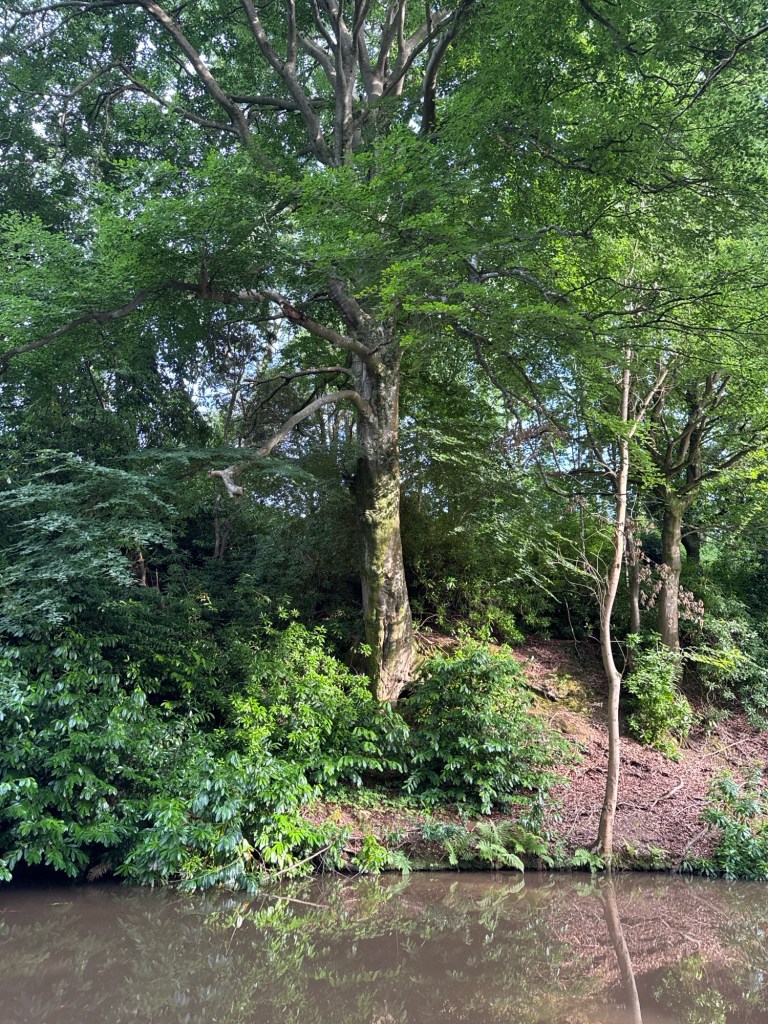
The sycamore stands like a sentinel. Its great limbs stretch outward, heavy with leaves, each one etched with veins like a map of forgotten paths. I walk along the towpath of the Monmouthshire and Brecon Canal above Llangattock, and stop opposite this vast tree. It leans slightly toward the water, reflected in the opaque surface as though peering into its own memories.
There’s a stillness here. Not silence—the birds chirrup, a family of ducks splash, and a fly buzzes past my ear—but a calmness that feels older than the stone bridge downstream. And older than me, certainly. This sycamore must have been growing when the canal was first cut into this valley in the late 18th century. It would have been a sapling when gangs of navvies came through here with spades, picks and powder, digging a line from Brecon to Newport.
I sit for a moment on a patch of sun-warmed grass and look up into the branches. The sycamore has witnessed it all. Imagine: the clang of iron tools, the shouts of men, the blast of black powder echoing off the valley walls. Whole hills reshaped, streams redirected, oak forests felled for locks and gates. A green and quiet place made into an artery for burnt limestone, coal and iron.
By the early 1800s, this tree would have heard the creak of harness leather and the plod of hooves as horses pulled laden barges down the canal. It would have watched as men in soot-blackened coats tended the locks and loaded iron pigs and sacks of coal from the pithead at Pwll Du. Brecon iron to Bristol ships. Blaenavon coal to London fires. Wealth flowing past these roots.
But the tree wouldn’t have cared about the ironmasters’ profits or the Parliament men toasting empire. It would have felt the vibration of the barges and inhaled the smoke from the men’s pipes, perhaps. It would have shed its leaves in autumn and drawn sap again in spring, indifferent to human ambition.
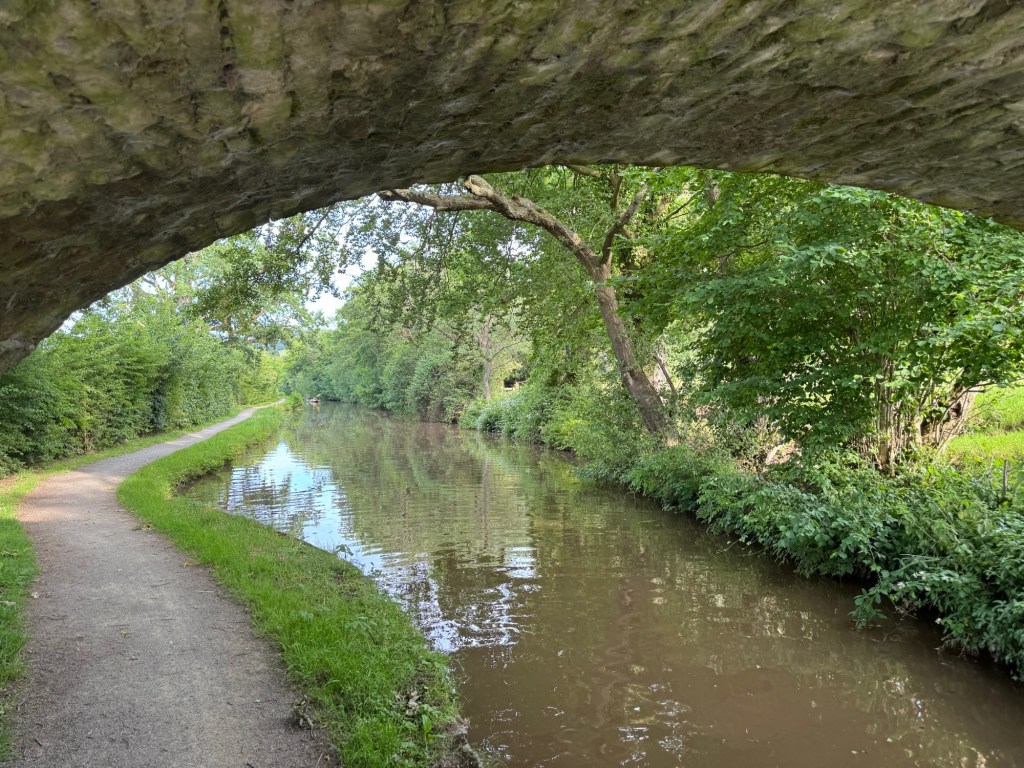
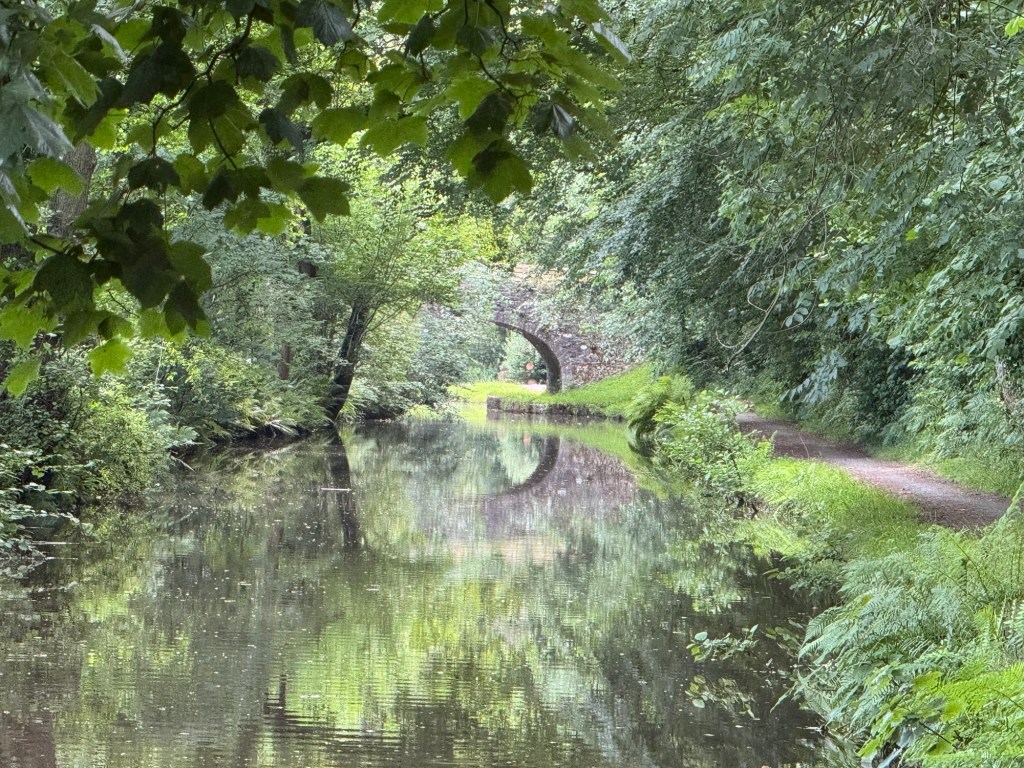
And then, with the coming of the railways, the canal fell silent. I can almost see the last narrowboat easing under the arch of that stone bridge (Number 13) its reflection a perfect oval in the brown mirror of the water. The horse hooves are silent now. The towpath overgrown. The sycamore watches it all: the great boom, the slow decline, the modern rediscovery.
I get up and walk on, following the canal’s gentle curve. The sycamore disappears behind me, absorbed again into the green mass of the valley. But it stays with me, that tree. It reminds me that change is never the end of the story, it’s only the next chapter. Empires rise, revolutions come, and still the trees grow.
This place was once a corridor of industry. Now it’s a place of reflection. And that feels right. The past whispers here, not in words, but in the shape of the land, in the arch of a bridge, and in the steadfast watch of an old tree.

 TravelWriterLife