A bell tolls. Its sound rolls across the village: slow, deliberate, resonant, as though each stroke is being rung not just for the hour, but for something older and deeper. I stand beneath the great yew at the lychgate of St. Mary’s in Dymock, its dark, feathery branches framing the russet tower like a living portico. It is a warm July morning. High summer in Gloucestershire. The air is soft with summer dew. The scent of damp grass mingles with the musky tang of yew needles and lichen-covered stone.
The path ahead is crooked and uneven: a scatter of ancient flagstones worn by generations of footsteps. Tombs and headstones tilt at odd angles, slumping into the earth as if resting after centuries of duty. The bells toll again, the sound reverberating from the tower and echoing into the churchyard beyond. It is a sound not unlike memory: low, persistent, unhurried.

It has been two years since the last time I stood here. It seems at once longer than that, and as if hardly any time has passed at all. Time has no real meaning in churchyards. The hours become days, the months become years, the decades become centuries, passing with uninterrupted regularity into the continuum of the past.
I pass beneath the yew and step into the south porch. The latch still has that familiar old-world stubbornness. The heavy timber door swings silently on its wrought-iron hinges. The nave of St. Mary’s is cool and quiet. Presumably, the campanologists are somewhere in the tower, waiting to ring the next peal. But even so, I feel as though I have this acoustically alive place all to myself.
I find a pew halfway along and sit down. The hush inside is profound: the kind of stillness that makes me aware of my breathing, my heartbeat, the sibilant creak of the timber pew beneath me.

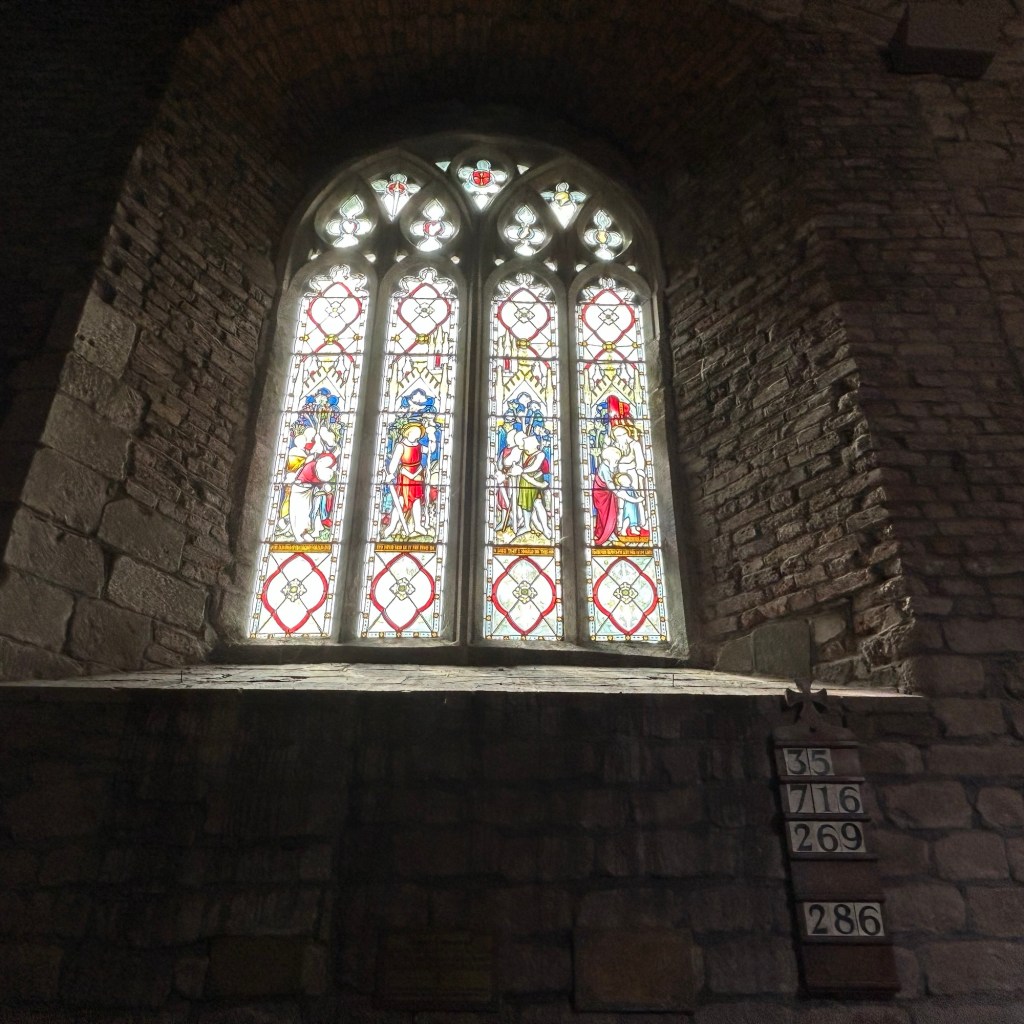
I stare at the high wooden beams and the stained-glass window glowing faintly above the altar. This place has seen it all: weddings, christenings, funerals, harvest festivals, Christmas carols. The ordinary and extraordinary cycle of rural English life.
And somehow, it feels personal. Because it was from parishes just like this that my ancestors and relatives came—explorers and farmers, shepherds and soldiers—who left these quiet English churchyards for the raw uncertainty of the South Pacific, Africa, China. They walked through churchyards just like this one, heard bells like this, looked out over fields like those outside the window, before boarding ships bound for the colonies of the Empire.
And now, generations later, I find myself back. Not in search of graves—I know I won’t find their names here—but for a sense of connection, a kind of historical gravity. It’s not about sentiment. It’s something deeper: a resonance. The sounds of those bells feel less like a call to service and more like a call across time.
There is a shrine for the Dymock Poets at the back of the nave: verses pinned to corkboards and spare pencil sketches of their thoughtful, remote faces, already fading into memory. Rupert Brooke. Edward Thomas. Robert Frost. They too were stirred by the landscape around here: the way the mist clings to the fields, the cadence of birdcalls in the hedgerows, the weight of history in the earth itself. Their poems blend with the stone, the trees, the silence. I read a few lines, then step back into the open air.

Half a world away from here, another St Mary’s stands; the church where my mother worshipped, where I was christened, where I served as an altar boy every fifth Saturday through my teenage years. Where both of our children were welcomed into the world of ritual and community.
Standing beside St. Mary’s Dymock, I feel the thread between these two places tighten, not in distance, but in spirit. Here, in this quiet English church with its ancient wood and silent echoes, I find something of home. Not the kind with walls and a roof, but the kind made of memory, family, and history.
The day is brightening, warming. A tractor hums somewhere over the rise, working the land as it has always been worked. Birds call from the hedgerows. The vicar arrives to prepare for the Sunday Communion. I wish her a good morning and walk out into the landscape. Behind me, the bells of St. Mary’s begins tolling again. It feels like a benediction.


 TravelWriterLife