It is raining in Reefton. The air smells exactly as I imagine it has for generations: rain, coal smoke and wet rainforest. The big trees brood on the hills surrounding the town. The Inangahua River carries the mountains grain by grain towards the Tasman Sea. The facades of the timber and tin buildings, painted in deep greens and reds, look as though they have wandered out of another century. It would not have surprised me in the slightest if a horse and dray clatter past the window.
Yet my own horse is quietly recharging down on The Strand. While my electric vehicle replenishishes its battery, I sit at a table in the Broadway Tearooms with a beautifully made oat milk latte. Within moments I am scrolling through news from around the world on a device connected to every place in the world.
Yet just across the street, the weatherboard front of Wilson’s Hotel seems perfectly at home in another age. The glass between us reflects neither the past nor the present. It simply puts them together. My latte is as contemporary as one I would find in London, Shanghai or Auckland, but beyond the window the street seems to be moving at a pace that belongs to another age.
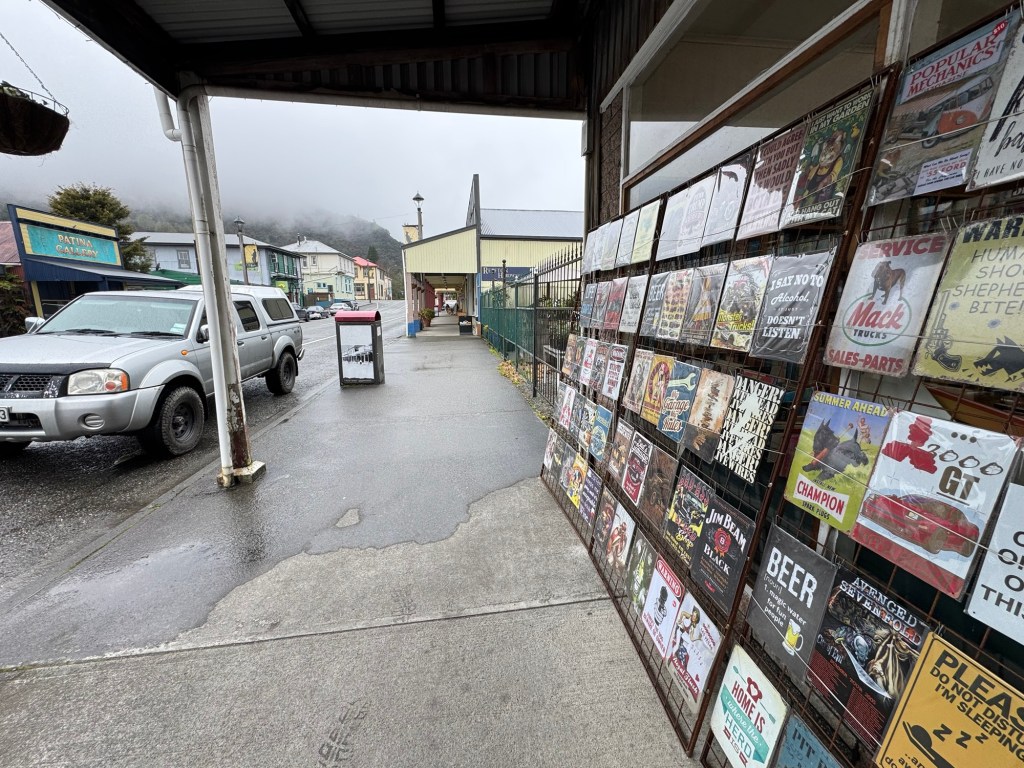
Reefton is a place that seems suspended between centuries. Yet it has no need to choose between yesterday and tomorrow. It simply allows them to share the same street. And I find these juxtapositions endlessly fascinating.
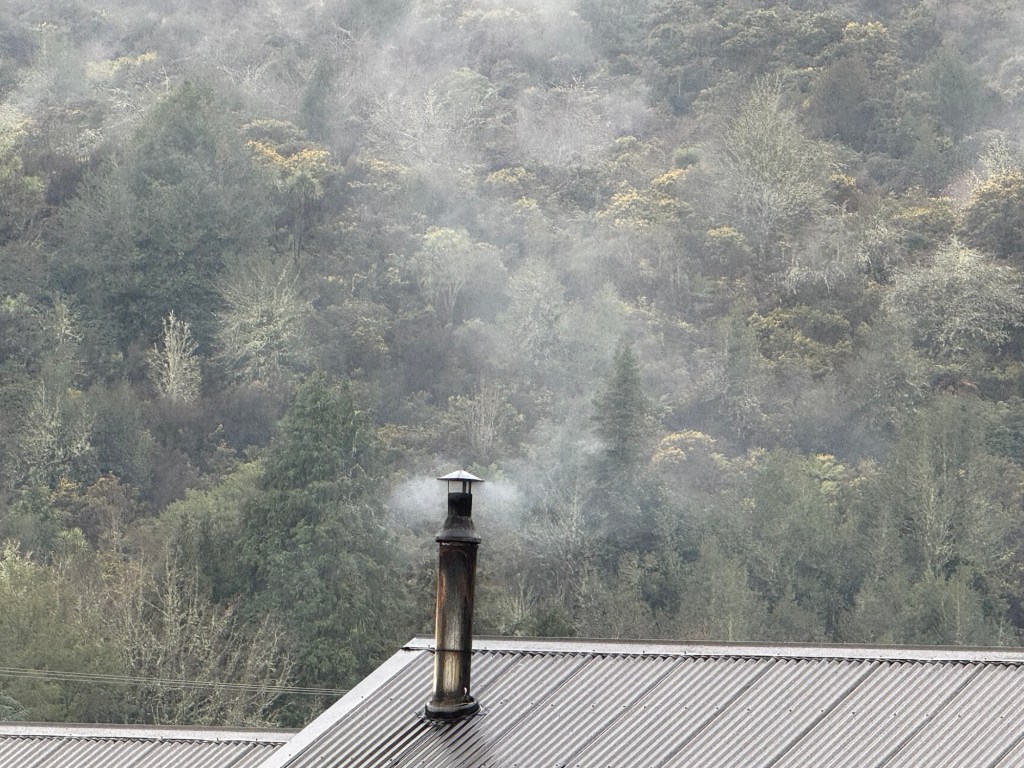
I am sitting in a building that once housed a Victorian-era mining engineer’s offices while I scroll a digital news feed beamed in from a satellite orbiting out in space. As coal smoke swirls from the chimney of the hotel opposite, electricity from the national grid is moving lithium ions in a complex ballet inside the battery of my car. The old and the new are not opposites, they are simply different chapters being read at the same time.
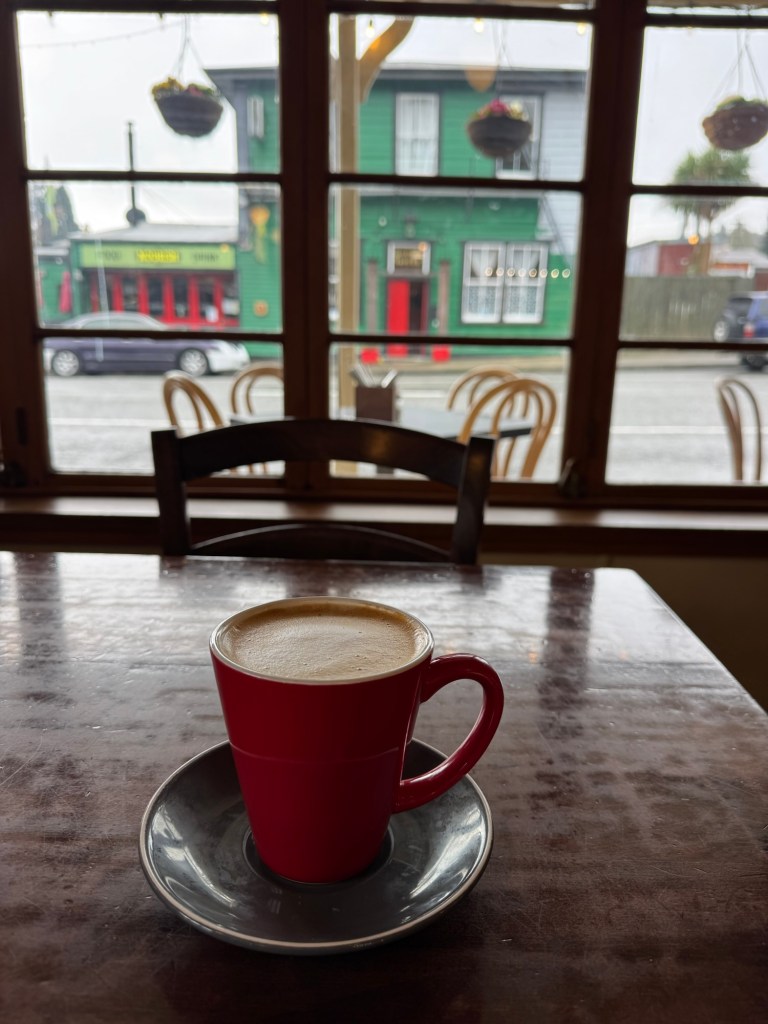
One of the things I love most about travelling is not discovering places that are different from home, but discovering places where different times somehow exist together. Reefton is one of those places. So often we speak as though history is a series of chapters that close behind us. We imagine that one era replaces another. The horse gives way to the motor car; coal yields to electricity; newspapers surrender to digital media.
But in Reefton, I can see that this isn’t how the world really works. The old never entirely disappears. It simply learns to coexist with the new. The smell of coal smoke still hangs in the morning air, even as silent electric cars glide through the streets. Victorian shopfronts now house cafés serving expertly-crafted coffee to travellers carrying smartphones. The rainforest surrounding the town is older than humanity itself, while the technology in my pocket is younger than some of my own memories. None of these things diminishes the others. Together they create a place richer than any single period in history could ever have been.
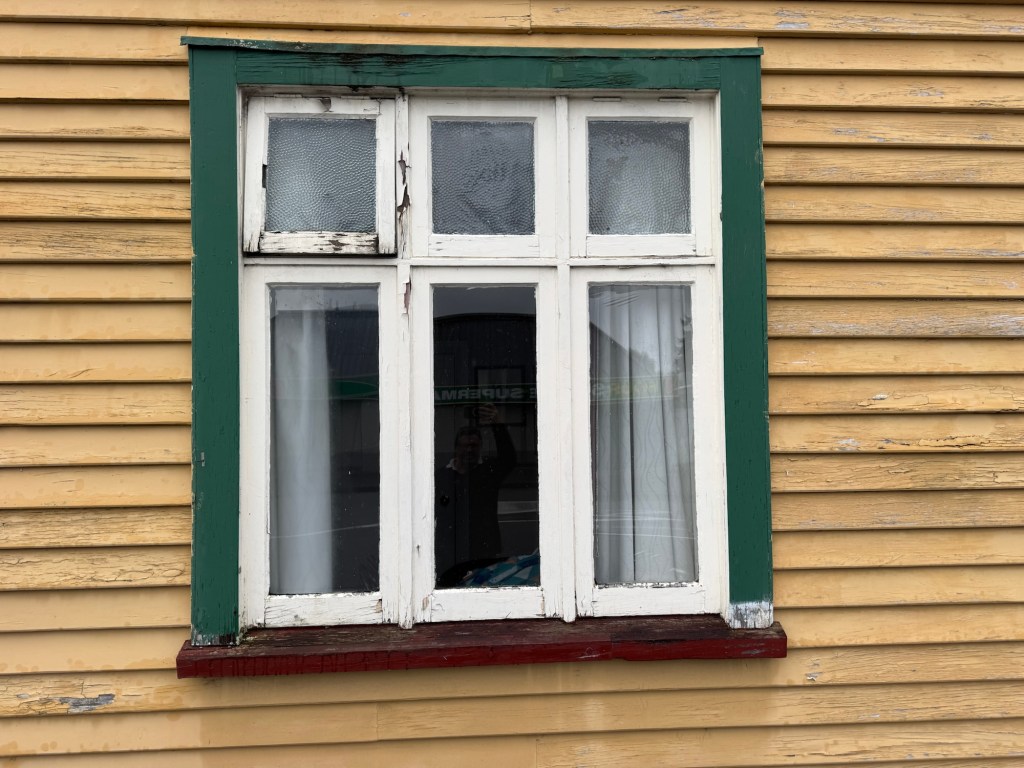
Perhaps that is why Reefton feels so authentic. It isn’t trying to become a museum, preserving a carefully selected version of the past. Nor is it trying to erase its history in pursuit of the future. Instead, it allows every generation to leave its mark. Gold miners, coal miners, railway workers, café owners, tourists, conservationists, and EV drivers all become part of the same continuing story.
As I finish my coffee, my car’s app informs me it is ready to continue the journey. Outside, the rain has begun again. The hills disappear into mist, the rainforest watches impassively from above, the coal smoke drifts in the air, and the river continues its ancient work of carrying the mountains to the sea.
Reefton remains exactly the same as it was when I arrived: a town existing in several centuries at once. And I think that’s why I like it so much. It reminds me that the past isn’t somewhere we leave behind. It travels with us, existing just beneath the present, like stratigraphy in the rock record, giving it depth, meaning, and perspective.

 TravelWriterLife