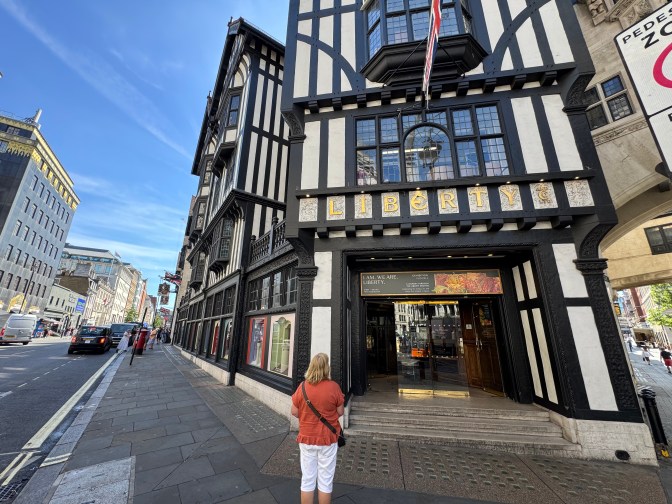
I stand outside Liberty on Great Marlborough Street and look up. The black-and-white timbers of the Tudor revival façade rise like the prow of some grand, static galleon, moored improbably, in the middle of the West End. Above me, the Union Jack unfurls and snaps in the breeze, as if reminding the fashionable foot traffic that this building was once made to move. And in a way, it did. This is a shop made from ships.
We cross the brow beneath the golden “LIBERTY” sign and enter a cathedral of wood. Warm, heavy, creaking underfoot. The polished floors give back the sound of footsteps with the same timbre as a deck once did to a midshipman’s shoes. The scent hits me straight away. But it’s not one that a Jack Tar would recognise. Instead of oakham, gunpowder smoke, tobacco and rum, I can smell oak polish, high-end perfume, old wood, and new money. It’s a curious blend, like Chanel No.5 dabbed behind the ears of Admiral Nelson.
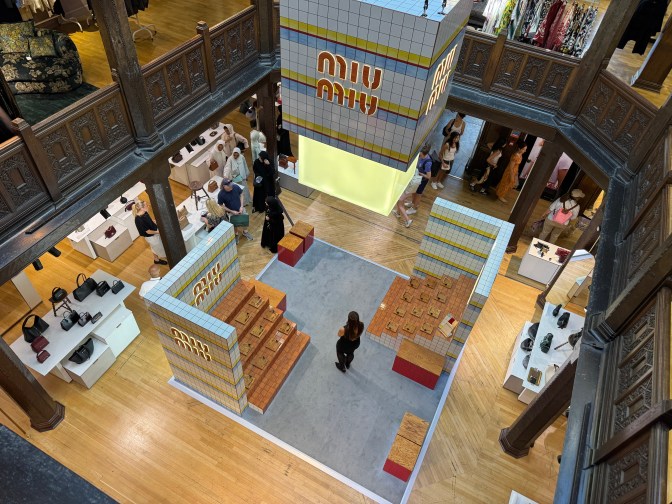
This building—with its gables and galleries, its creaking floorboards and carved balconies—was constructed in the 1920s from the bones of two Royal Navy ships: HMS Impregnable and HMS Hindustan. They were grand old wooden warships of the Victorian navy, built of oak and teak. When their time at sea ended, their timbers found new purpose here, as pillars, beams, banisters, and balustrades. The wooden walls of the old empire became a department store made for the new empire; the empire of commerce, fashion, and disposable income.

In the centre of the store, sunlight filters through a glass atrium high above. Three galleried levels rise around me, each one like the interior of a country house or a great cabin. I lean over a carved railing and look down into the hold. Racks of finely tailored coats and silk blouses toe the line in neat formation across the floorboards. Mannequins stand rigid in designer outfits, rowed up like sailors at Divisions, awaiting the inspection of a well-heeled Admiral with a Balenciaga shopping bag and a Platinum Amex.
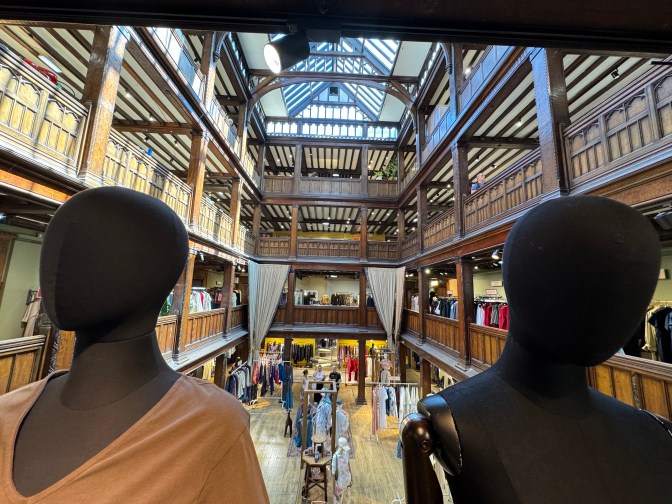
There’s something wonderfully absurd about it all. The teakwood that once braced against typhoon-driven swells now holds up a £900 pashmina scarf. A beam that withstood the recoil of cannons now supports a chandelier above the perfume counter. Rows of scent bottles glint like signal flags—Dior, Creed, Byredo, Maison Francis Kurkdjian— potent little vials of bottled identity. I breathe deep and catch notes of bergamot and leather. Or is it bergamot and cash? It certainly isn’t gunpowder and slush.
I wander deeper. Everything here is curated to suggest luxury: not just the stuff of it, but the air around it. Liberty is a palace of things, a museum where everything is for sale and nothing stays the same except the building itself. That’s what has brought me here. Not the scarves or the scents or the fashion on parade. But the structure. The ship.

I press my palm against one of the great wooden pillars. The grain runs long and true, dense with the weight of age and salt and purpose. This wood has moved through the world. It has felt equatorial heat and Arctic cold. It has rolled and pitched across oceans. It has heard the rattle of the boatswain’s whistle and the snap of sailcloth in a trade wind. Now it holds a cashmere cardigan and a security camera.
We retire to the galley. This one isn’t below decks. It is Seventy-five Restaurant at Liberty on the second floor. It doesn’t have a cast-iron stove or a one-armed cook ladling out salt horse. The ship’s biscuits—the “old Weevil’s wedding cake” of old—are macaroons so delicately pastel they seem painted rather than baked. We drink tea from genteel cups resting on saucers as delicate as a butterfly’s wing. There are white linen tablecloths and little silver spoons. I wonder what the Jack Tars of HMS Hindustan would make of it all. Hard tack and rum it is not. I imagine one of them squinting at the menu and muttering, “What the fuck is crème brûlée?”

Liberty stands still now, but its stories are never motionless. They echo faintly in the footsteps on the stairs, the creak of a floorboard, the salt-grained hush beneath the perfume and pop music. London has a knack for this: layering the centuries like coats of varnish.
We step ashore, as it were, back out into the sunlight. The façade looks almost theatrical in the brightness of the day: a Tudor mask over a modern city. The flag stirs again. Behind me, the ship-shop hangs at its moorings, carrying on as it always has, afloat in the tides of fashion, history, and the eternal West End afternoon.


 TravelWriterLife