A story of hills, tea, and the distance between here and home.
I am in my friend Lydia’s village. Sānyàng. 三样. It means “three kinds”, or “three appearances.” It is the place where she was born, grew up. Left. For leaving is a part of Chinese culture. It always has been. Leaving for trade. Leaving for education. Leaving for a better life.
I cannot believe that I am here. This is where Lydia learned to walk, to speak, to dream of somewhere else. And she found her way—from this isolated place, these narrow lanes, these grey-tiled roofs, these hills that close in like a fist—to become my neighbour in Geraldine, New Zealand. Another village. A main street. Fields of sheep beyond the houses. The Southern Alps on the horizon. The distance between here and there is almost inconceivable.
The road to Sānyàng climbs. It winds up from the valley floor through a landscape of terraced tea hills. I have dreamed of this place, these hills. And now I am here.
The road switchbacks up the mountainsides, each one rising fang-like overhead: sharp ridges cutting into the grey sky, their slopes dense with forest, their peaks lost in mist. The soil is rich and red; the red of old iron, of dried blood, of brick dust. And the forests—verdant, fecund—are almost aggressive in their greenness.
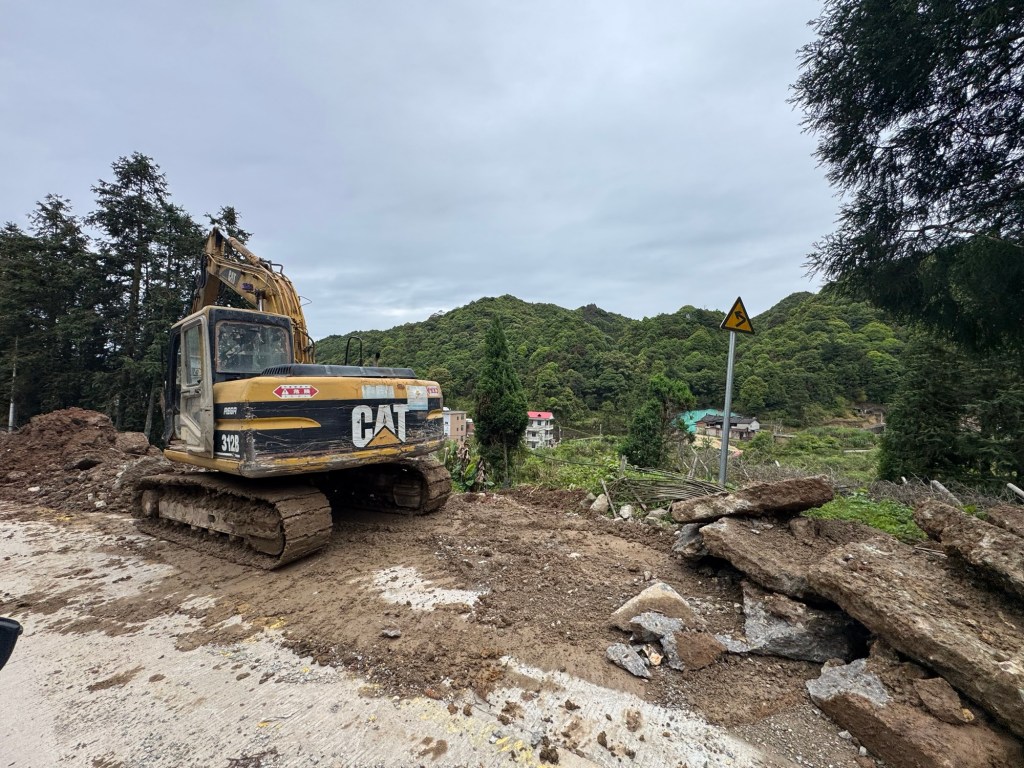
We climb so high that my ears pop. Great bluffs of weathered granite tower overhead. The air is cooler and drier than the city. Tiny runnels of water drop from the hillsides onto the road. In places, washouts have taken the road away, but it is being patiently repaired.
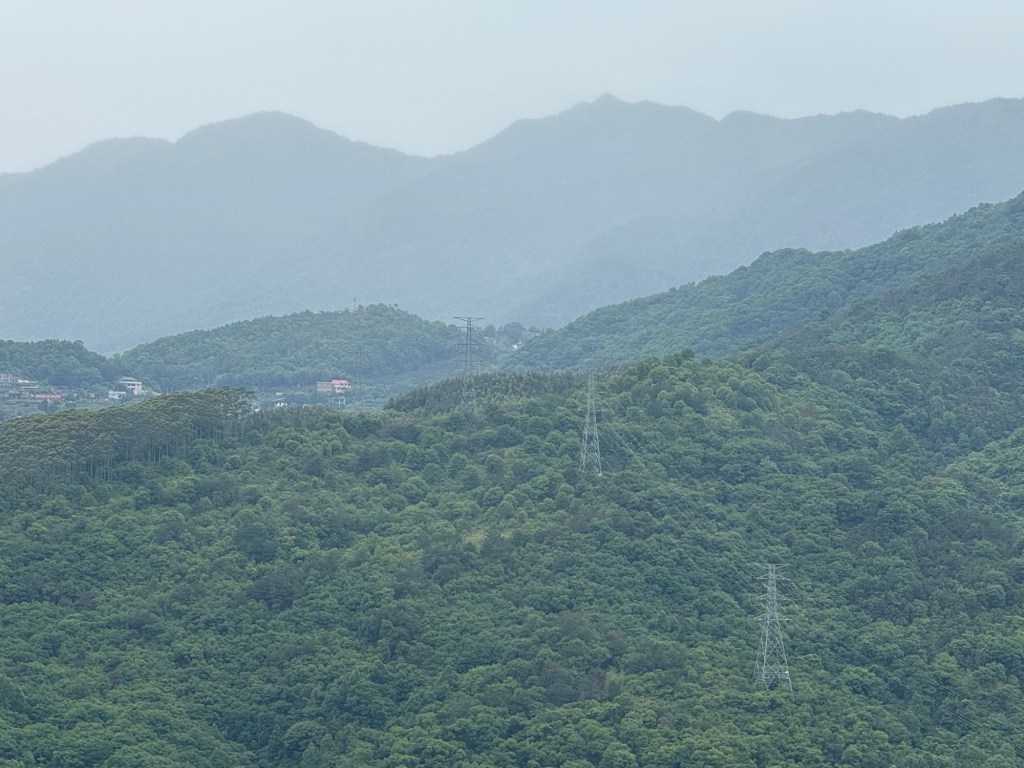
The hills fall away in rows; ridge after ridge, terrace after terrace, unfolding like a fan. Linear perspective does its quiet work: each mountain is a different shade of blue-grey, the nearest dark and detailed, the next softer, the next a mere suggestion, the last lost entirely in mist.
High above the valley, on the mist-shrouded hilltops, wind turbines move ponderously: slow, deliberate, like giants turning in their sleep.
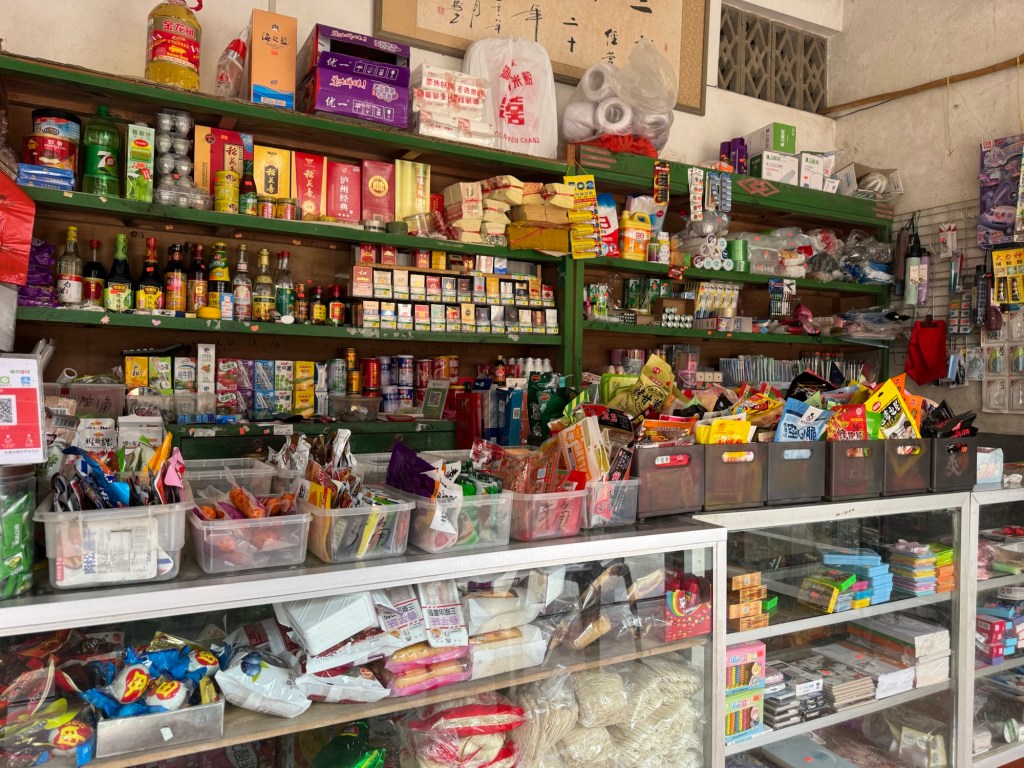
In the village, I find the shop. It is owned by Lydia’s parents. It sells a happy miscellany of goods. Cold drinks in a cooler: Coca-Cola, iced tea, bottles of water beaded with condensation. Instant noodles stacked in colourful towers. Sweets in glass jars. Cigarettes behind the counter. Sauces: soy, oyster, chili. Toys. Stationery. Umbrellas, three of them, stacked in a corner, identical and blue.
Everything clustered and cluttered together. Piles on the shelves. More piles on the floor. Showcases bulge with lighters and batteries and sewing kits and things I cannot identify
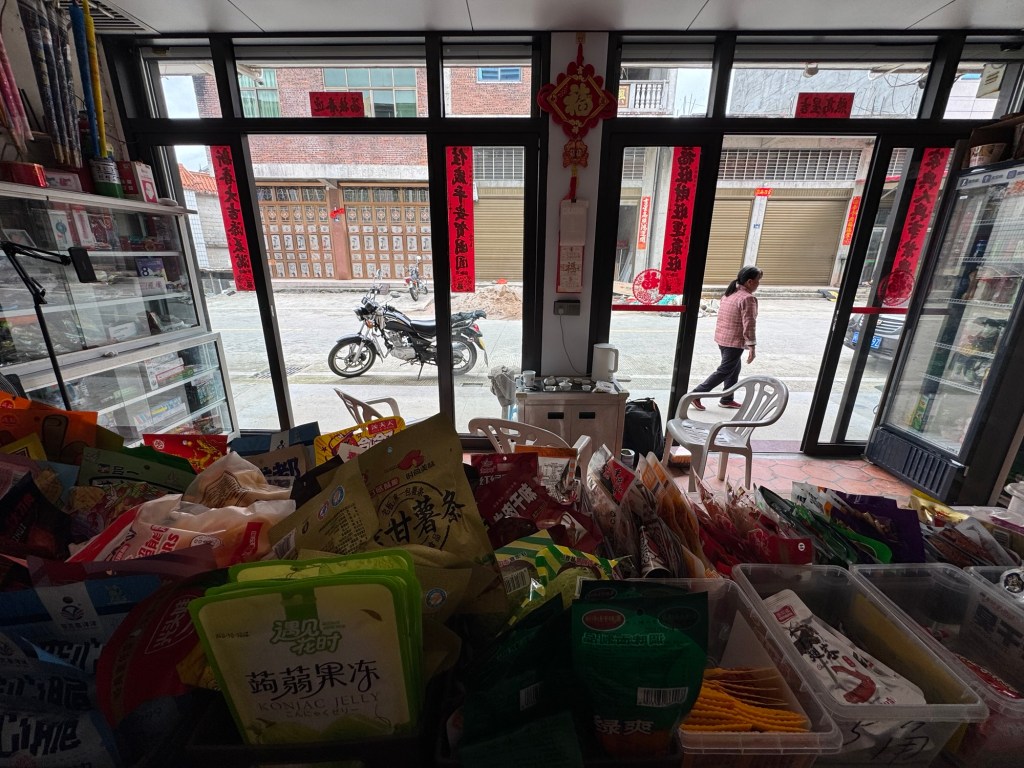
It should be chaotic. It should be overwhelming. But it is not. Because this shop contains just about everything you would need for a happy life here in Sānyàng. Noodles for hunger. Sweets for joy. Cigarettes for patience. An umbrella for the rain, which comes often. Stationery for a child who must do homework. Toys for the same child, after the homework is done.
Sauces to make the simple food taste better. Cold drinks for a visitor, offered freely, because that is what you do when someone walks through your door.
I stand in the middle of it all, turning slowly, trying to take it in. This is where Lydia grew up. Behind this counter. Stacking these shelves. Sweeping this floor. Learning that a happy life does not require much: just enough food, a dry place to sleep, and a shop full of things that make the days a little easier.
Lydia’s father takes me to a tea shop. It is a small, modern place, one bright room with a high ceiling and a polished table. The woman who manages the shop has steady hands. She has poured tea ten thousand times.
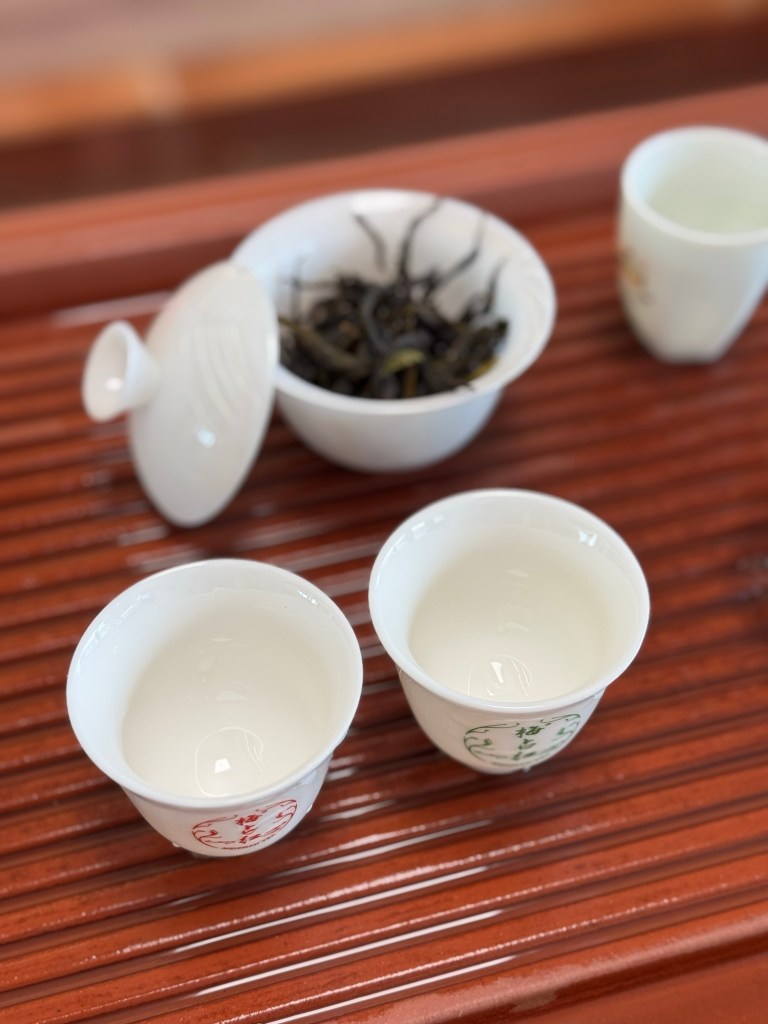
I point to a name on the menu: 古树滇红. Ancient Tree Dianhong. Black tea, from trees that have stood for centuries. She pours hot water into a gaiwan, swirls it, pours it out, pours again. She lifts the lid and gestures for me to lean closer.
I bend over the gaiwan. The steam rises. And I breathe in. Hay. The smell of hay. Warm, dry, sweet, the smell of summer afternoons in New Zealand, of barns and paddocks and the slow turning of the seasons. The smell of my childhood. The smell of home.
The smell brings tears to my eyes. It is so familiar. Not the tea itself. I have never tasted this tea before. But the smell—the hay—is as old as my oldest memories. Half a world away, rising from a gaiwan in a tea shop in a village I could not have found without help.
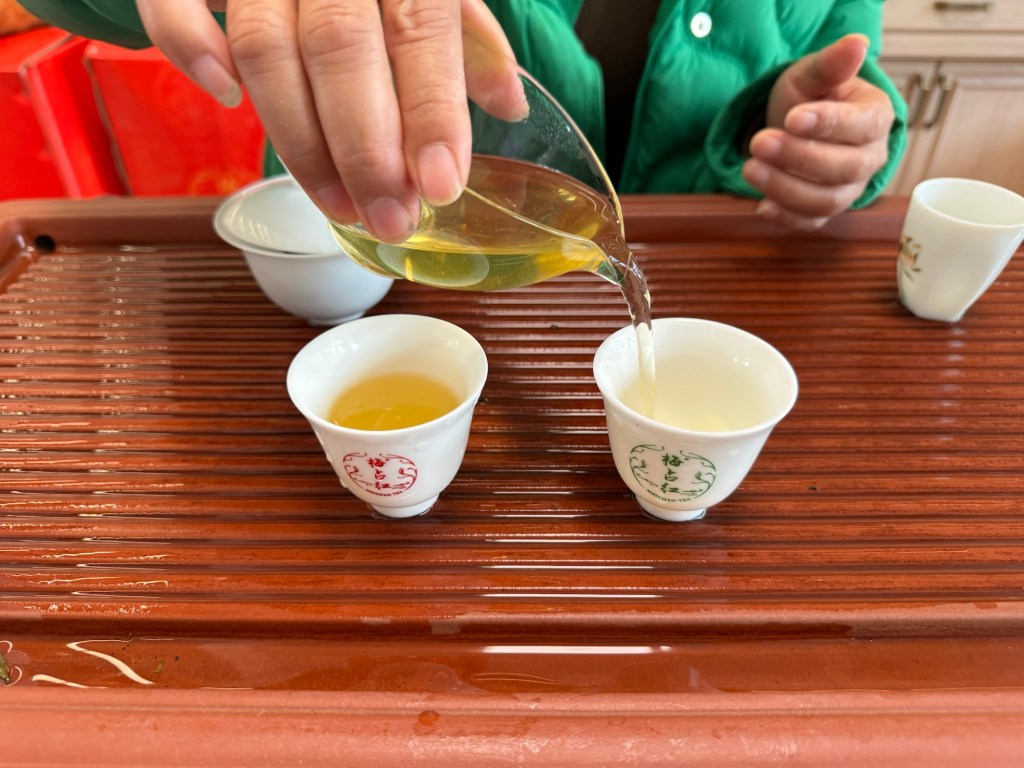
The woman watches me. She does not ask why my eyes are wet. Perhaps she has seen this before: travelers, far from home, suddenly struck by something they cannot name. Or perhaps she simply understands that tea can do this. That smell can unlock what the mind has locked away.
I wipe my eyes. She pours the tea into a small cup. I drink. The taste is not hay. It is deeper, earthier, with a sweetness that lingers on the tongue. It is the taste of this place: these hills, this red soil, these ancient trees.
But the smell. The smell is mine. The smell is New Zealand. The smell is home.
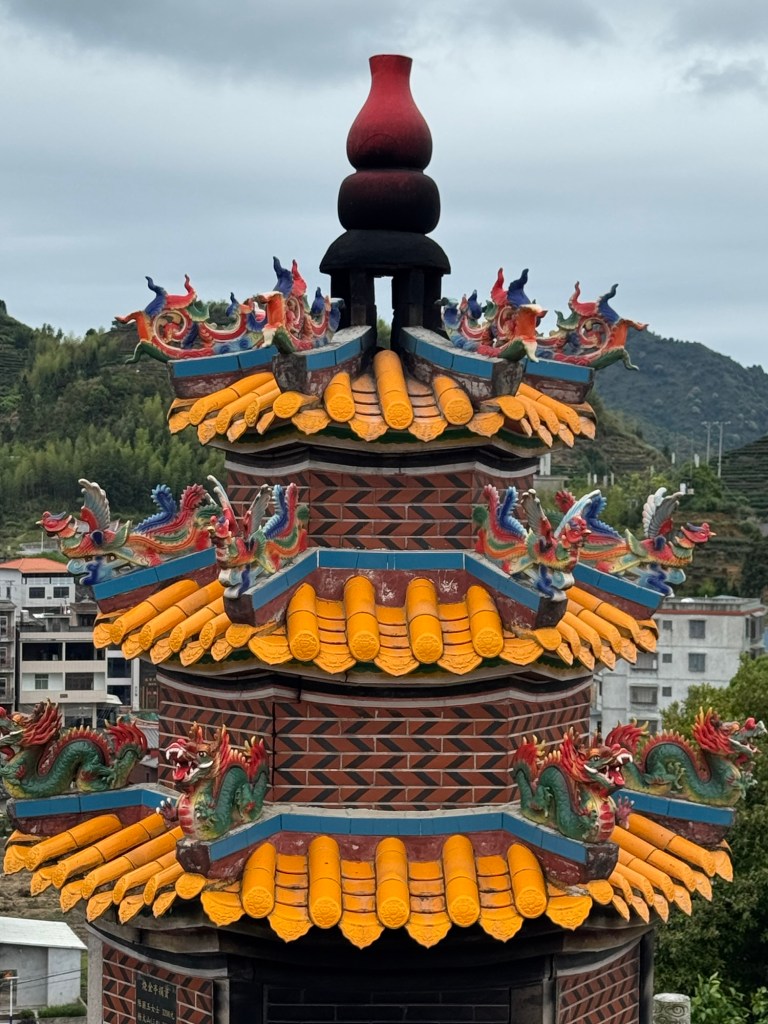
We walk through the village. The curved rooflines of temples rise against the grey sky, each one a gesture, a calligraphy stroke made of tile and time. The steam-escaping hiss of cicadas fills the air; not a song, not a buzz, but the sound of heat itself, escaping from the earth through a million small throats.
In courtyards, tea leaves are spread out on tarpaulins to dry. Dogs sleep on the piles, their bodies rising and falling softly, the tea breathing beneath them, the day holding its breath.
Old women under conical hats turn the leaves with wooden rakes. They do not look up. The dogs do not wake. The red bedspreads dry on lines, a slash of bright colour against the grey sky and the green hills.
I just had an odd thought.
When we see tourists in New Zealand—in Geraldine, in Timaru—we don’t understand them. Why are they taking photographs of rubbish bins? Street signs? Things we consider just ordinary, mundane, clutter that detracts from the scenery.
That’s not worth a photo, we think. That’s just… everywhere.
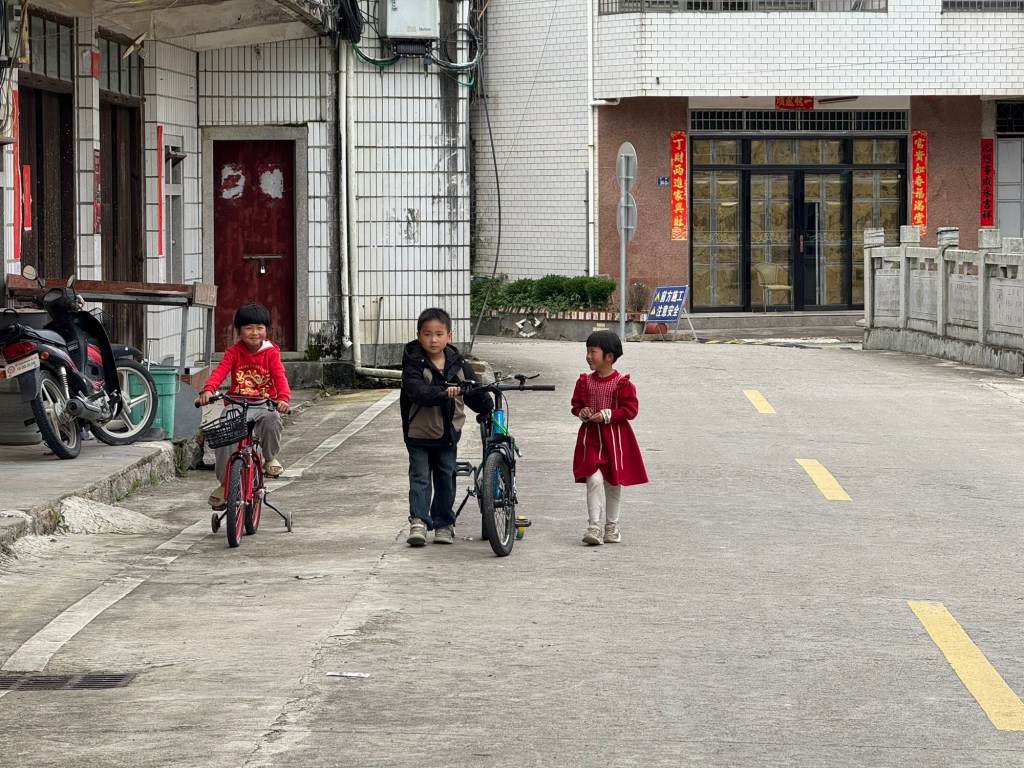
And yet. Here I am in Sānyàng, taking photographs of doorways. Of chickens scratching in the dirt. Of an old woman with a conical hat, turning tea on a blue tarpaulin. Of a red bedspread drying on a line.
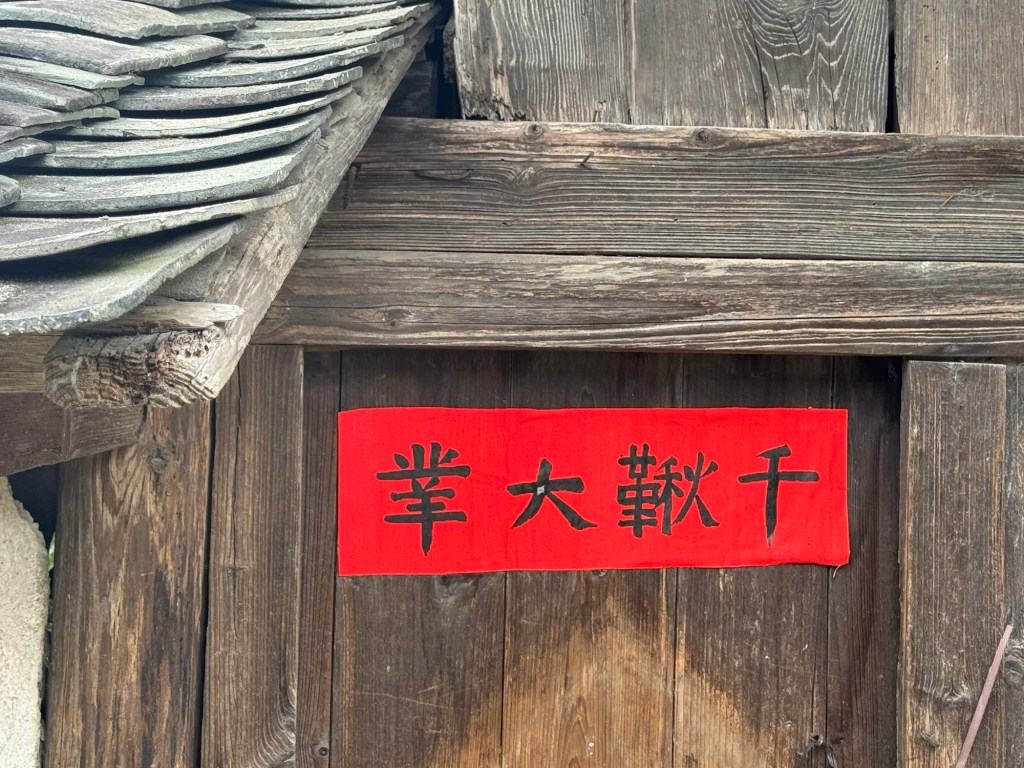
The people here must look at me and think: Why is he taking photos of that stuff? That’s just… everywhere.
The thought is odd because it reverses everything. In New Zealand, I am the local. I do not photograph the ordinary because it is not special. But here, everything is special because nothing is mine. The doorway is not just a doorway: it is a Chinese doorway. The chicken is not just a chicken: it is a village chicken. The field of vegetables is not just a field: it is the field where Lydia’s former neighbours grow the food they will eat tonight.
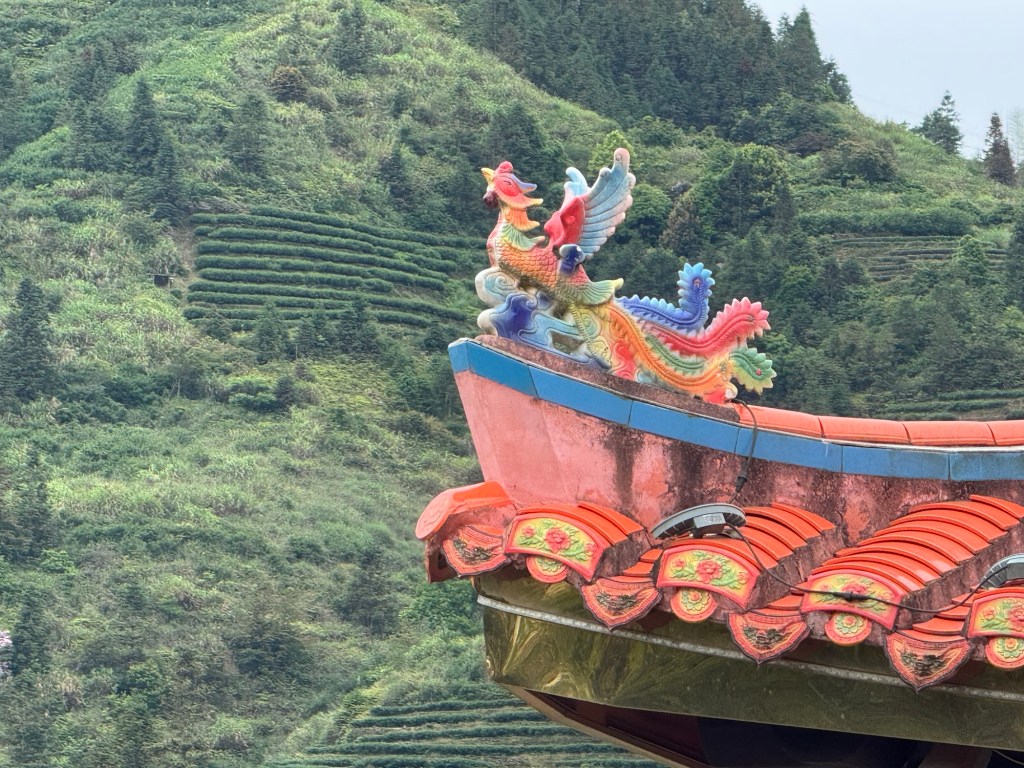
Of course I photograph it. Because that is what tourists do. That is what we all do, when the ordinary becomes extraordinary simply by being elsewhere.
I will not stop taking photographs. But I will do it with a little more humility, a little more awareness of how strange I must look. Because that is the bargain of travel: you get to see the world, but the world also gets to see you. And you are always, always, the odd one.
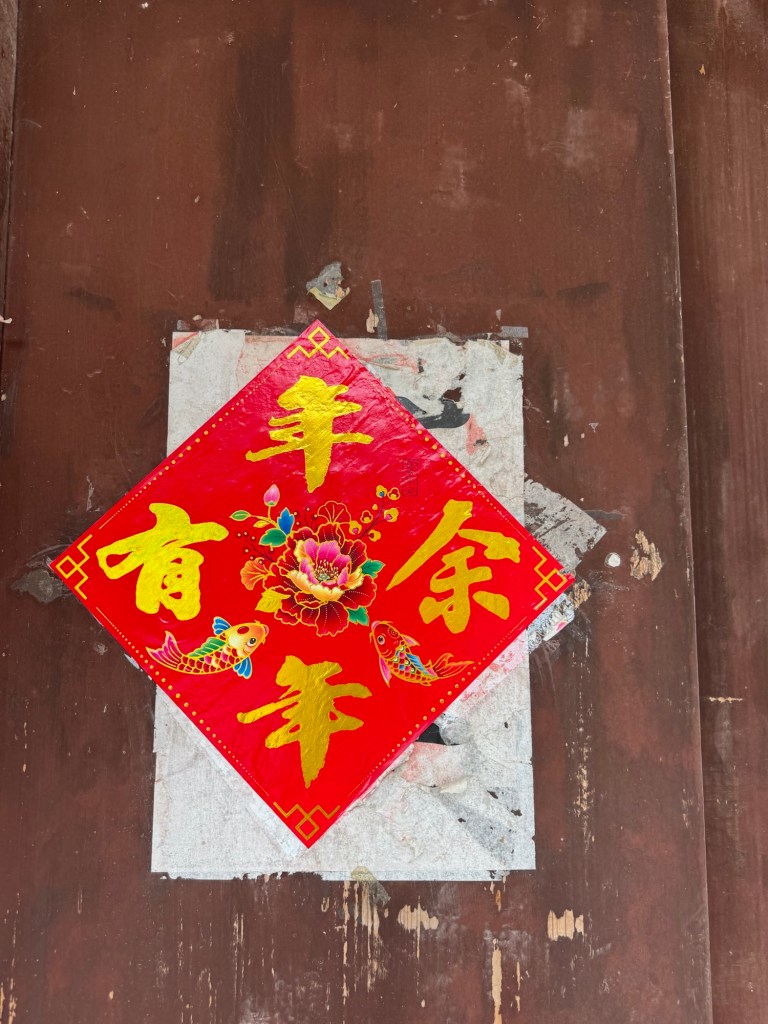
Later, I drink another cup of tea in the shop owned by Lydia’s parents. The parents are kind. They do not speak English, and I do not speak enough Chinese, but we smile and nod and pour more tea. They show me photos of Lydia as a child: small, serious, wearing a red coat, standing in front of these same hills.
I think of her in Timaru. In her car, driving to work. In the supermarket, buying milk. In her home, marking papers, cooking dinner, living a life that began in this small shop, in this little town, in the middle of the hills of Fujian.
The distance is inconceivable. And yet, here I am. Drinking tea. Sitting where she sat. Seeing what she saw.
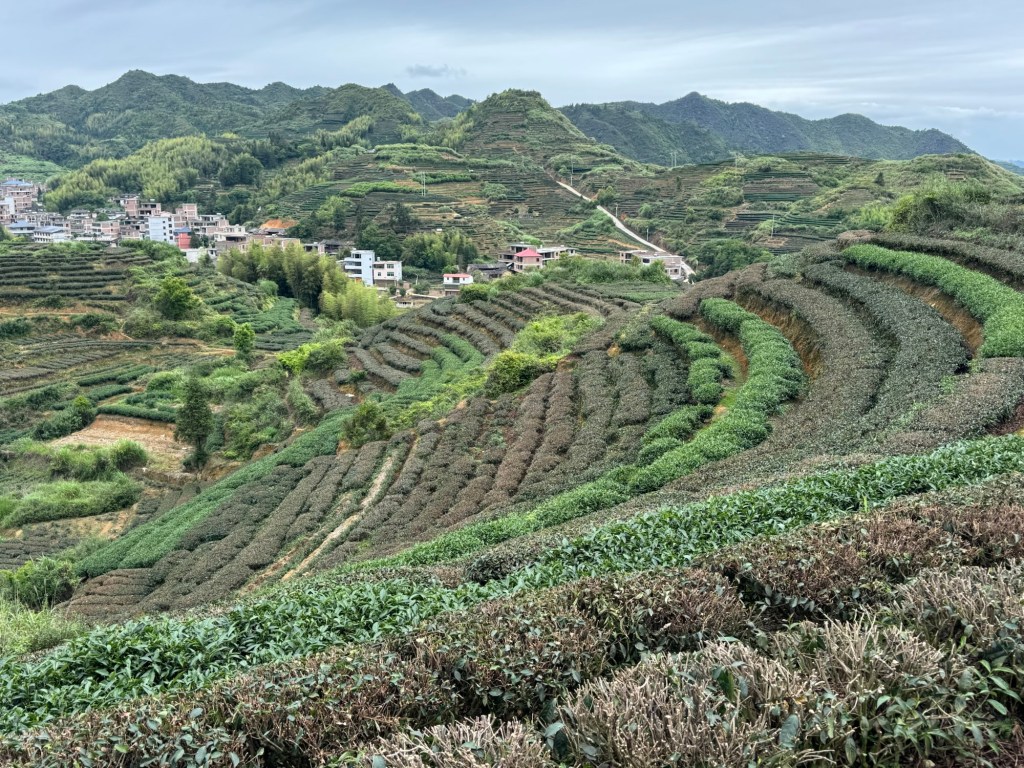
Perhaps that is the real journey: not to go somewhere new, but to go somewhere that made someone you know. To stand in the footprints of their beginning and feel the weight of how far they have come.
I finish the tea. I thank the parents. I step back out into the narrow lane. The hills are still there. The mist is still drifting. The shop will still be here tomorrow, and the next day, and for as long as Lydia’s parents tend its shelves.
But I am different now. I have seen the beginning. And I understand, a little better, what it means to leave a place and build a life somewhere else.
I came to China to see temples and tea hills and ancient bridges. But the most important thing I have seen is a small shop in a small village, where my friend began her journey to become my neighbour.
That is not a travel story. That is a miracle. And I was lucky enough to sit in it, drink tea, and believe.