The tide is coming in. It does not rush. It never rushes. But it is relentless; a slow, patient rising that has been happening twice a day for millennia, long before the Song Dynasty engineers laid the first stone of this bridge. The water fingers its way into the channels of the mangroves, slipping between twisted roots, filling the hollows where crabs scuttle and mudskippers wait. Each small creek becomes a river again. Each basin remembers its shape and accepts the returning weight.
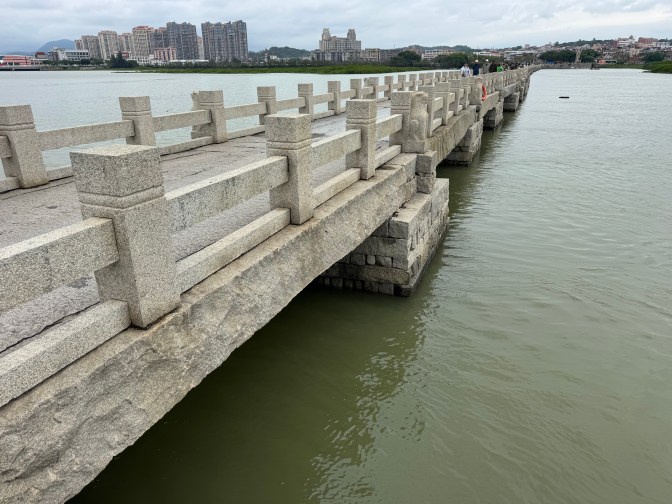
Below me, the abutments—those massive stone piers that have held the bridge for nearly a thousand years—begin to disappear. First the barnacled bases, then the grey shoulders, then the curved cutwaters that divide the current like the prow of a ship. The river licks at them gently, almost tenderly, erasing the line between stone and water.
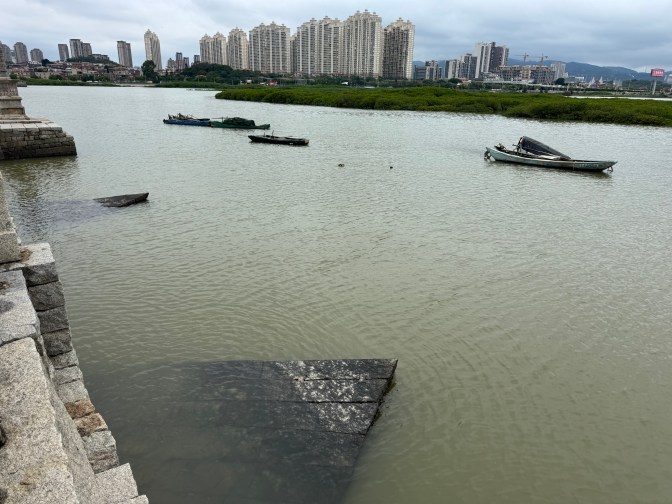
The fishing boats have been resting on the mud since dawn, their hulls tilted, their ropes slack. But now, as the tide rises, they stir. A gentle lift. A soft creak. The ropes tighten. The boats begin to float again, turning slowly on their moorings, ready for the evening’s work. Their diurnal waters have returned: the same water that rose yesterday, and the day before, and the day before that, back through the centuries.
Near the bridge approach, the oyster ladies are eating. They have finished their low-tide gathering in the hours when the mudflats were exposed, and they could walk out with their baskets and knives, prying oysters from the rocks and the old bridge pilings. Their waterproof boots are still wet. Their hands are lined with salt and small cuts. But now they sit on low stools, in a circle, each holding a stainless steel bowl or a plastic container.
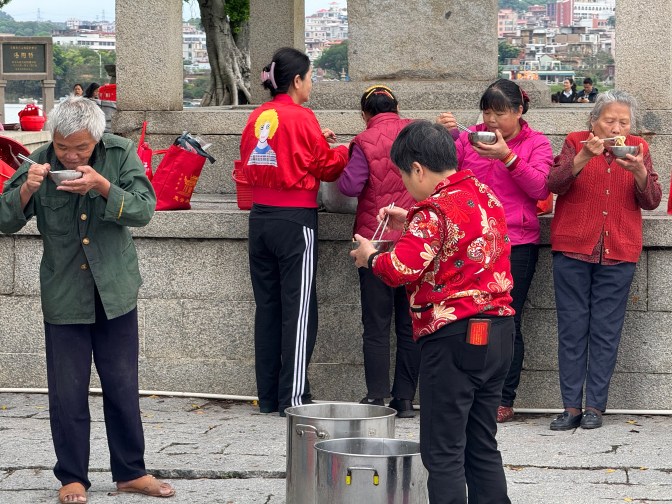
Rice. Vegetables. A bit of fish. Chopsticks moving steadily. The oysters they gathered this morning are already open: small mounds of glistening meat resting on beds of crushed ice, displayed on tables by the roadside. A handwritten sign gives the price per catty. A few early customers pick through the piles, selecting the fattest ones.
The women do not look up. They have earned this meal. The tide gave them their work, and now the tide is taking the mudflats back, inch by inch, covering the stones where the oysters cling. The women eat in the rhythm of the day: gather, open, sell, eat. Tomorrow the tide will fall again. And they will be here again.
I pass them quietly. They do not notice me. That feels right.
I stop in the middle of the bridge. Below me, the river is no longer low and exposed. It is full, grey-green, alive. The mangroves stand half-submerged, their branches rising from the water like the hands of patient swimmers. A heron lifts from a channel, its wings slow and deliberate, and flies beneath the bridge, passing so close I could almost touch it.
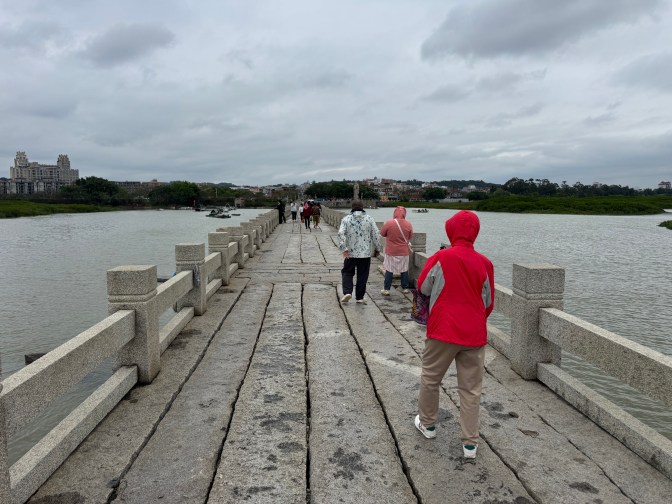
Last time I was here, it was low tide on a hot September evening. The mudflats steamed. The boats sat crooked. The bridge seemed taller then, farther from the water. That was a different crossing; a crossing of heat and dust and the end of summer.
But today the water rises. The tide claims what belongs to it. And the bridge, that ancient oyster-shell marvel, does what it has always done: it waits. It lets the water come. It lets the water go. It holds.
On the far side of the bridge, I find the shop. It is small: a counter, a cooler, a few plastic stools. The same little shop where I stopped a year and a half ago, thirsty after the walk, and bought a bottle of fruit tea. I remember the cold glass against my palm. I remember the way the woman behind the counter smiled as she handed it to me.
I remember writing in my diary—the same diary I carry with me now— the words “she is beautiful.” I did not expect her to remember me. Why would she? I am just a foreigner with a notebook, one of hundreds who pass through Quanzhou, cross the bridge, buy a drink, and disappear.
But when I walk in today, she looks up. Her eyes widen. Then she smiles.
“Ni hui lai le,” she says. You came back.
She remembers. I order fruit tea again. The same brand. She pulls it from the cooler, wipes the condensation from the bottle, hands it to me. Our fingers do not touch. They do not need to.
I sit on the same plastic stool. She stands behind the same counter. People pass by. The bridge waits, patient as ever. I do not tell her what I wrote in my diary. I do not tell her that I kept that page, that I remembered her smile across the seasons, that I walked across the Luoyang Bridge today partly to see if she would still be here.
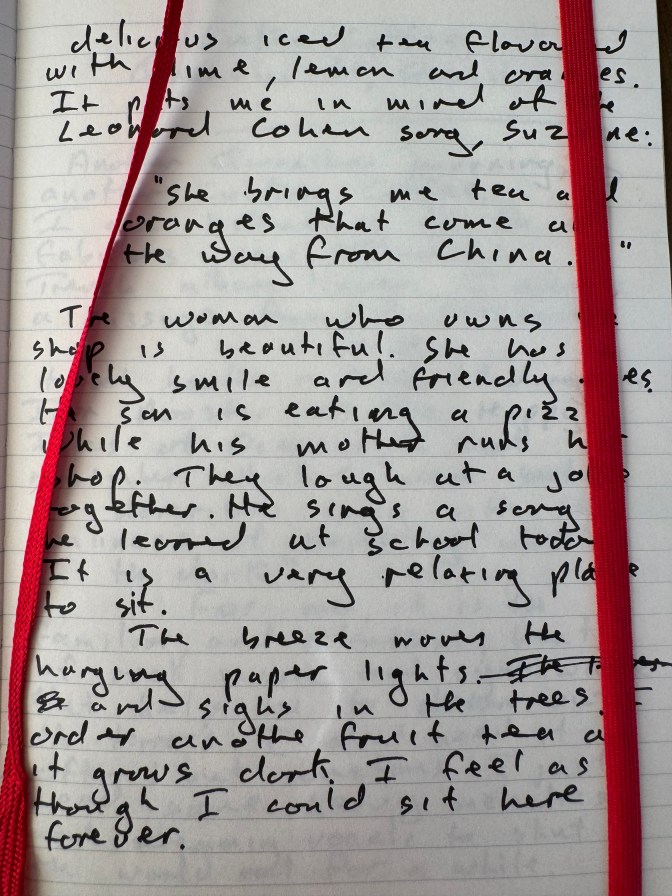
I just drink my fruit tea. And she is beautiful. Still. Exactly as beautiful.
Some stories do not need endings. They just need witnessing. A bridge. A tide. Oyster ladies eating their meal. A shop. A woman who remembers a stranger. A diary that holds a secret. The tide rises. The rain falls. The oysters sell. And somewhere, in a small shop near an ancient bridge, a woman smiles at a traveller who came back.