The aircraft groans, a deep hydraulic sigh, as the pushback tractor nudges us away from the gate. We have been here for half an hour—boarding, belting, waiting—and now, at last, we are moving. Not forward. Backward. The terminal slides past the window: empty gates, sleeping shops, a final glimpse of landside before the night swallows everything.
Outside, the air is thick. I can almost see it through the glass: heavy, tropical, dense with the heat that has followed me all day. Even at midnight, Guangzhou does not cool down. The city holds its warmth like a memory.
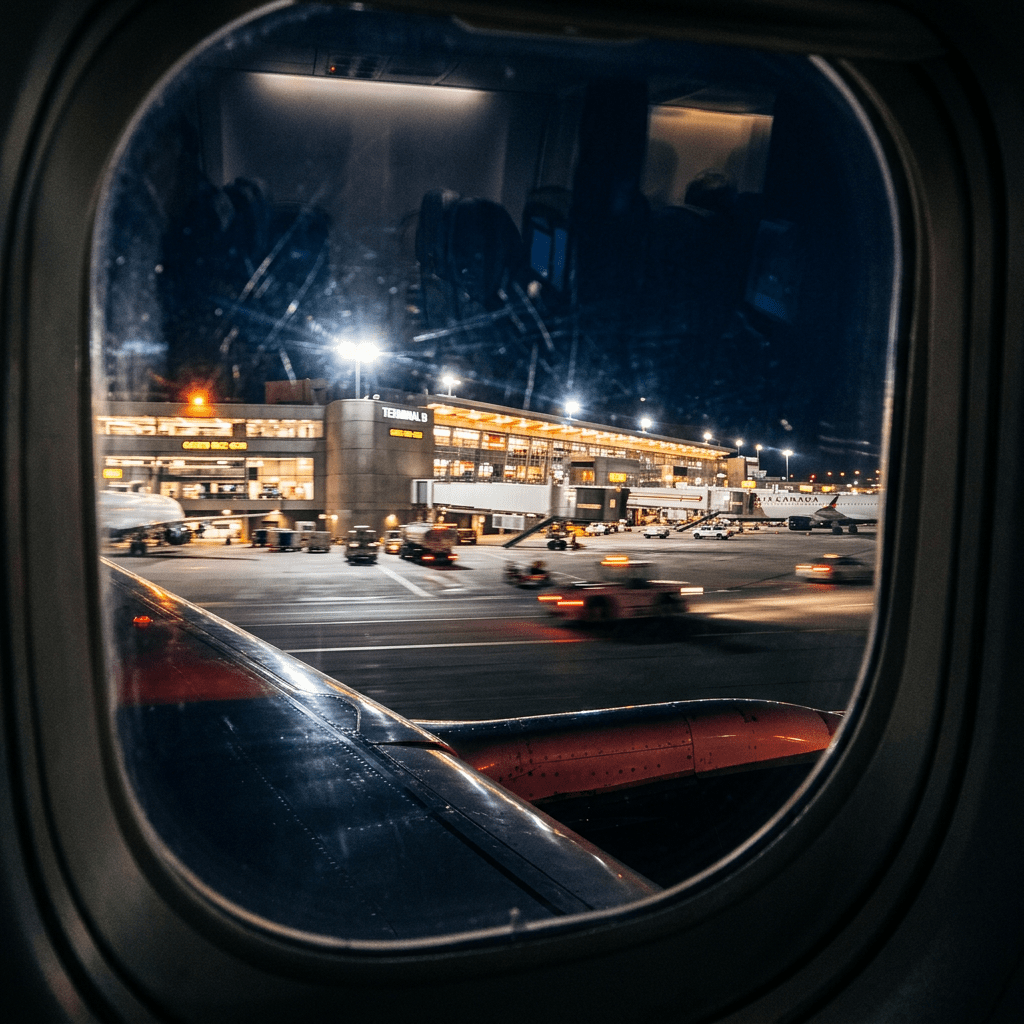
We crawl toward the runway. The cabin lights are dimmed. The safety video plays silently on screens no one watches. A child sleeps across two seats. A businessman types furiously on his phone, his thumbs a blur. The woman beside me has her eyes closed, her hands folded in her lap.
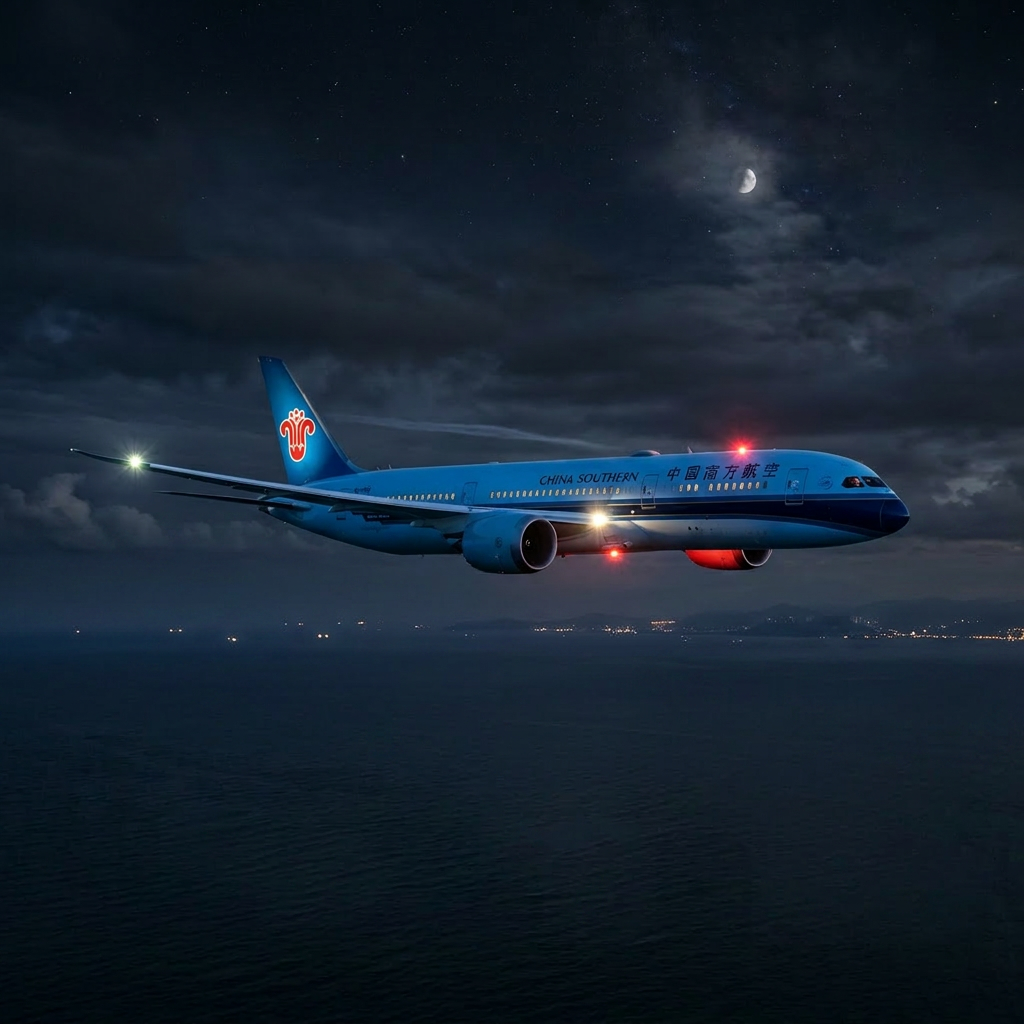
Through the window, the airport sprawls: a constellation of blue taxi lights, red warning beacons, the distant glow of terminals we have never entered. Another plane passes, slow and patient, a whale in a midnight ocean.
The engines spool up. A whine, then a roar, then silence again. We stop. We wait. The captain’s voice crackles: “Cabin crew, prepare for takeoff.” The engines wind to a high, sustained scream. The plane trembles; not with fear, with anticipation. The brakes hold us back, a giant hand on our shoulder, and then… Release.
We hurtle down the runway. The lights blur. The blue taxiway markers become streaks of neon. The woman beside me opens her eyes. The child stirs. The businessman pauses his thumbs.
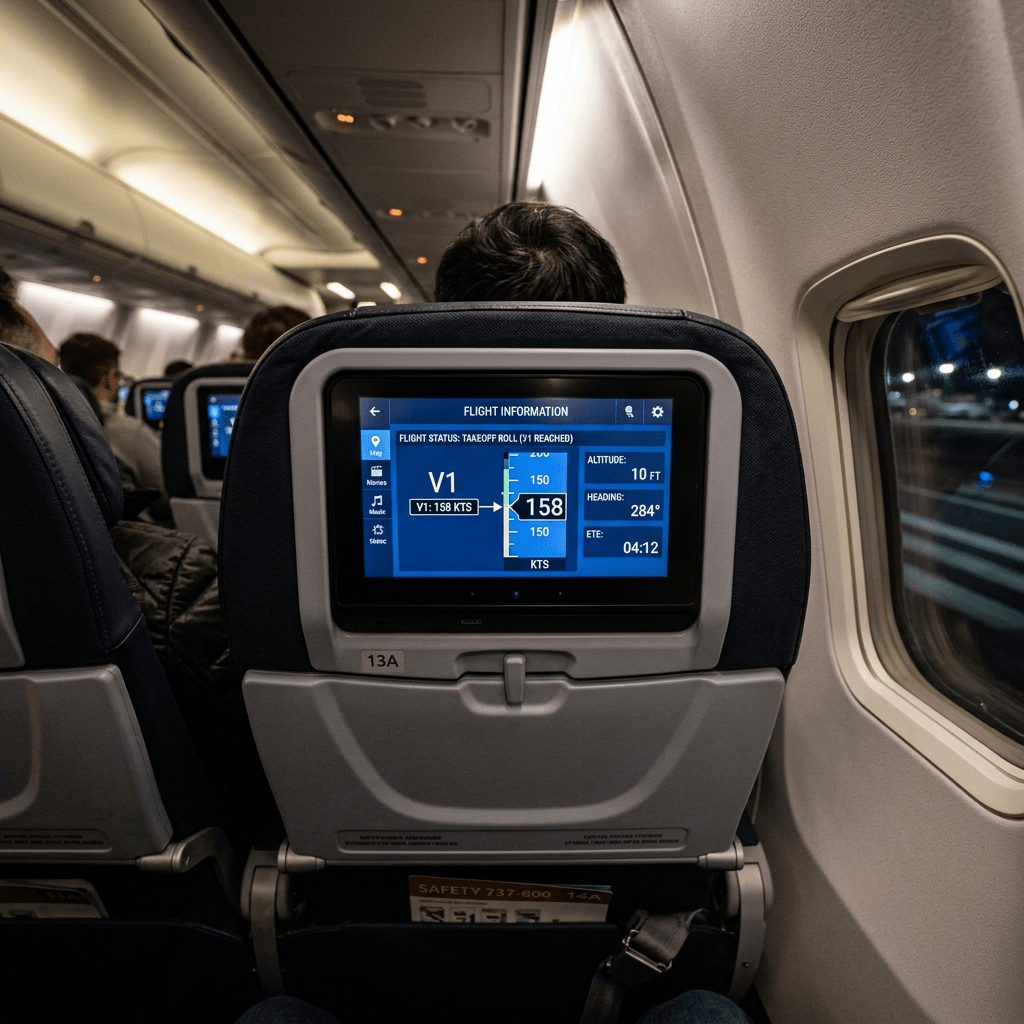
I have the flight monitoring information playing on the screen mounted in the seat in front of me. The airspeed climbs: 80 knots, 100, 120. The aircraft reaches V1: the point of no return. We are committed now. Whatever happens, we leave the ground.
V2. The nose lifts. The world tilts. The artificial horizon shows a safe climb rate of ten degrees. The runway falls away, the lights shrinking, the terminal becoming a toy, the city a circuit board spread beneath us.
Guangzhou at night: a million LEDs, a billion microchips, streets running in parallel lines, rivers traced in neon, the vast urban mathematics laid out for no one but the departing. Now they are pixels. Now they are memory.
The plane banks. The city rotates beneath us, a slow, silent spin. We punch through the low clouds. The city disappears. For a moment, there is nothing but grey: soft, damp, the same grey that followed me from Quanzhou to Xiamen, to this last, leavetaking night.
Then we are above them. The clouds spread below us like a woolen blanket, and the stars emerge: hard, bright, indifferent. The seatbelt sign chimes off. The cabin crew rises. The businessman resumes his typing. The child sleeps on.
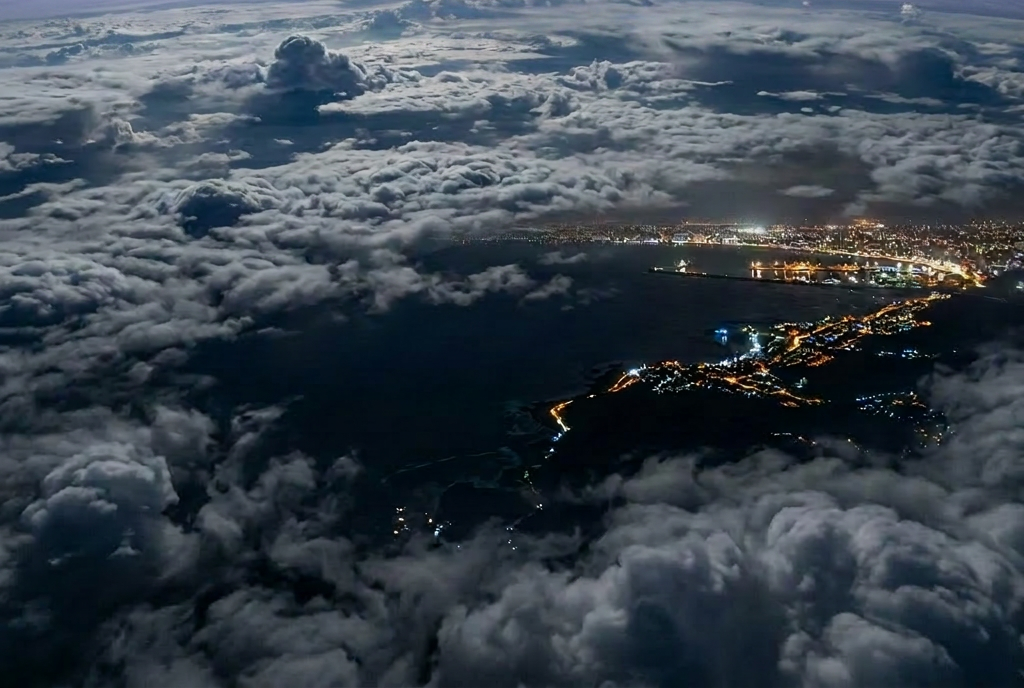
I press my face to the window. Below, through a gap in the clouds, I see the final lights of China: a fishing boat, perhaps, or a coastal highway, or just the faint glow of a village I will never name. Then the ocean begins.
The engines ease. Their sound drops by half a tone as the pilot reduces the climb rate. We have reached our initial altitude: not cruising yet, but climbing more slowly now, the urgency gone. The plane breathes. The cabin hums.
I think of all the takeoffs I have made from Southeast Asian airports. Singapore, Hong Kong, Xiamen. Always the same: the heat, the humidity, the sudden lift. The cities spread like circuit boards. The turbulence that shakes the wings and rattles the overhead lockers. The moment when the land ends and the sea begins: black, infinite, swallowing the horizon.
There is something comforting and familiar about it. It is almost a ritual; a leaving that feels less like departure and more like transformation. On the ground, I am one person: focussed on the departure, gate numbers, flight times, visas. In the air, another. The heat and the lights and the climb rate burn away what I was, and by the time we reach cruising altitude, I have become a traveller again: unmoored, unattached, ready for whatever comes next.
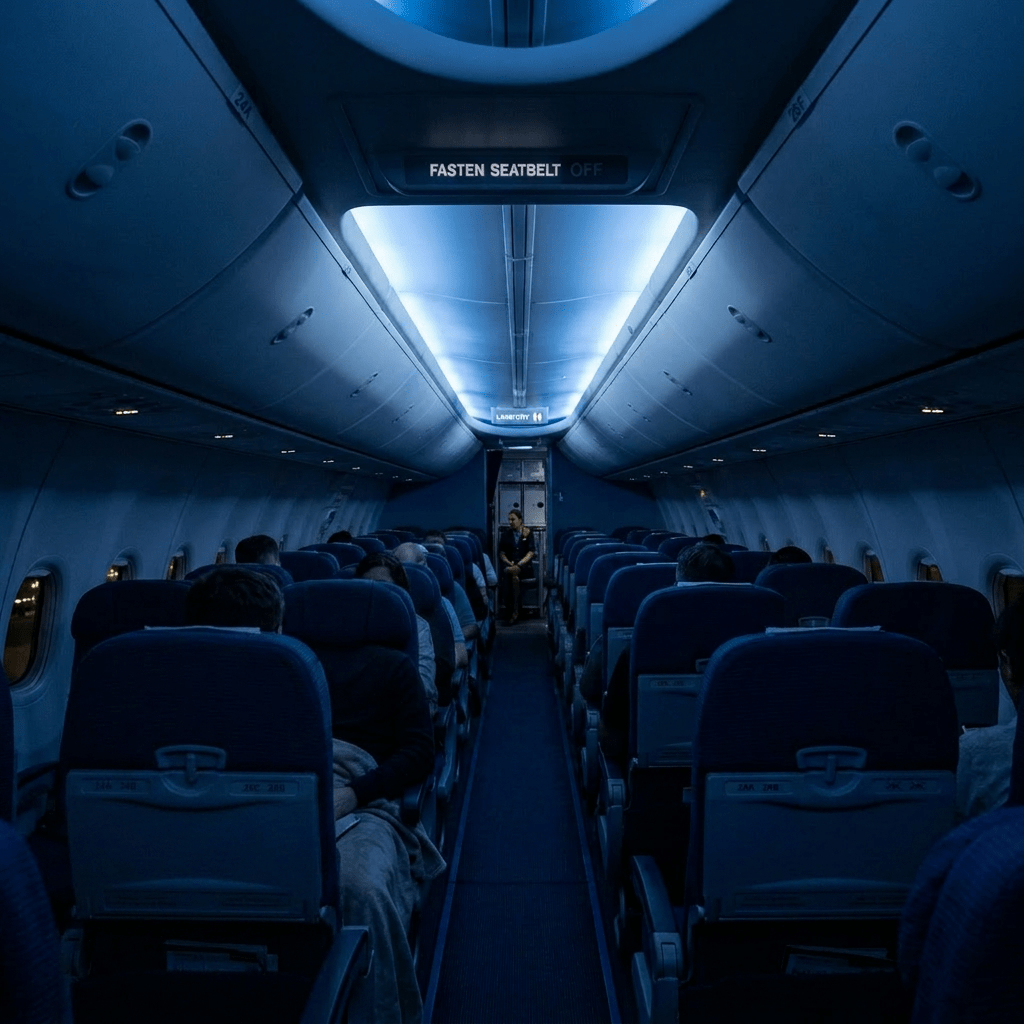
We level off at 37,000 feet. The seatbelt sign dings off for the last time. The cabin lights dim to a deep twilight blue, mimicking night, mimicking peace. Below, the South China Sea stretches to every horizon. No more lights. No more circuit boards. Just darkness, endless and absolute, until dawn breaks somewhere over the Philippines.
I order a glass of water. The flight attendant smiles.
“Nǐ yào qù nǎlǐ?” she asks: “where are you going?”
Home, I say. New Zealand. She nods and hands me the water. Outside, the stars are steady. The engines hum their constant, comforting drone. The woman beside me has fallen asleep, her breath slow and even.
I take out my notebook. The pages are full: temples and egg burgers, tea hills and brick-walled cafes, a girl in green velvet, sandalwood incense, a monk’s woodblock at 4:16 AM. I have written all of it. I have carried it with me, across this country, across this night. Now I close the notebook. I slip it into my bag. I lean back in my seat.
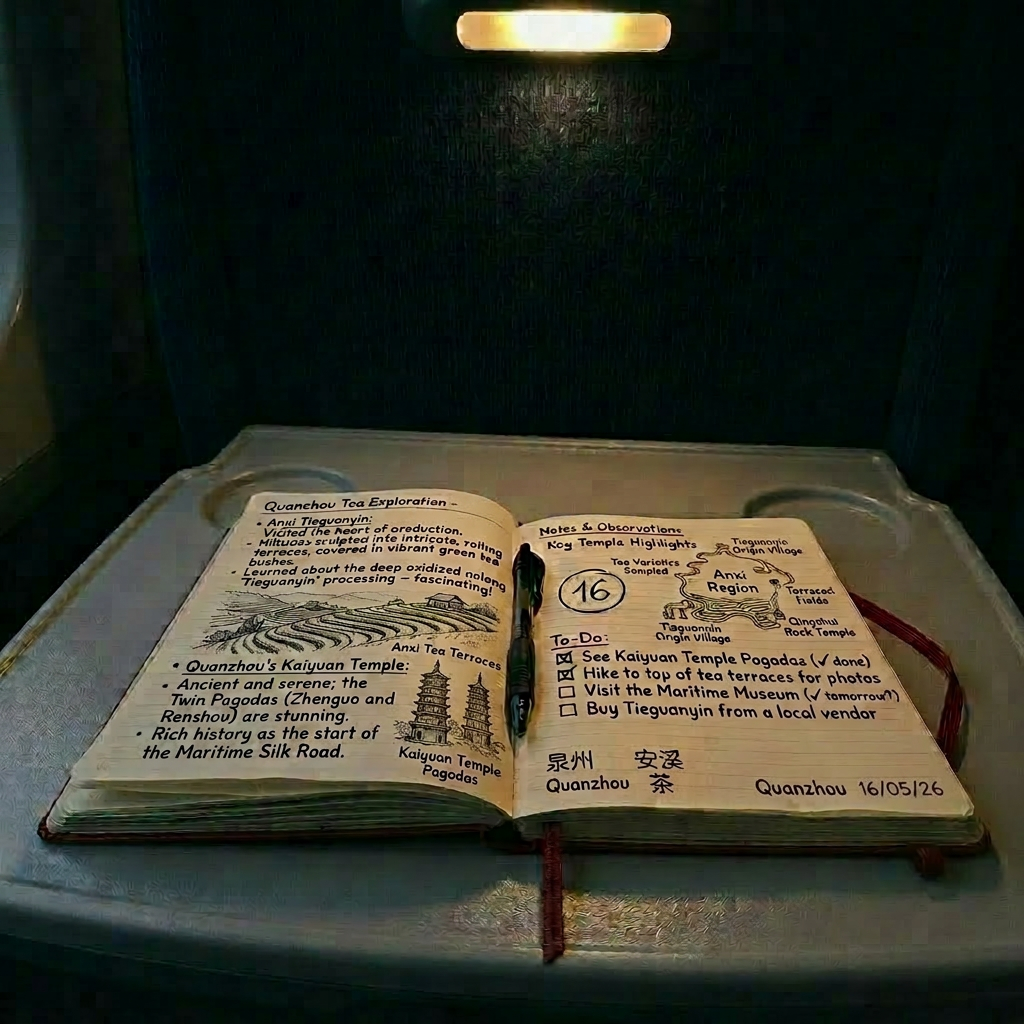
The plane flies on. The ocean passes below, invisible, remote, unreachable. And somewhere behind us, far behind us, China sleeps, its neon signs still glowing, its temples still burning incense, its small worlds still turning in the small hours.
I will miss it. I already do. But tonight, I am flying home. And that, too, is a kind of adventure.
NB: All images in this post are AI-generated

 TravelWriterLife