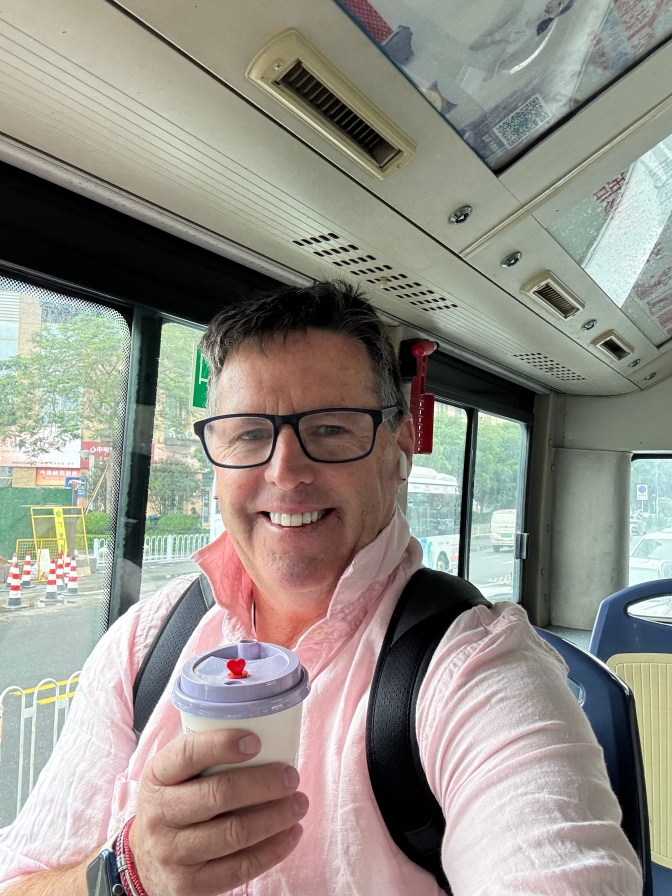
I am on a small bus bound from Anxi back to Quanzhou. The seat is comfortable. The air is clean. The windows are intact. And I was just thinking: how different bus travel in China today is compared to what it was in the early nineteen-nineties.
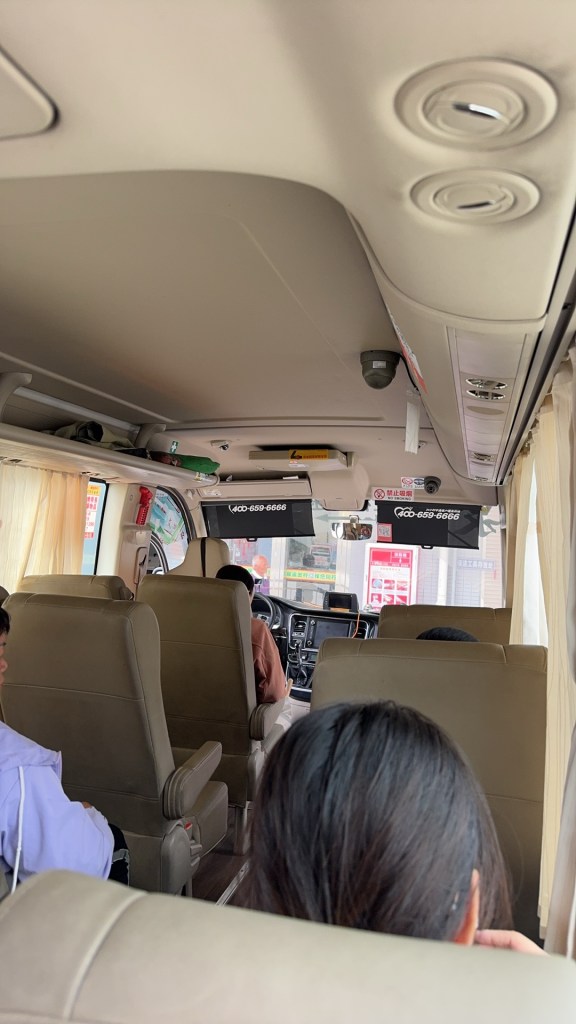
The buses in those days were big, blue rattle-traps. They shook and groaned and complained at every bump. The seats were torn. The floor was sticky. The windows—when they closed at all—leaked cold air in winter and hot air in summer. Pieces of trim dangled from the ceiling. The occasional bolt or screw rattled loose and rolled down the aisle.
And the smoke. Thick, grey, acrid cigarette smoke curling from the driver’s seat, from the passengers’ seats, from every corner of the bus. No one complained because everyone smoked. The haze hung in the air like a second ceiling, and by the end of a long journey, your clothes smelled like you’d spent the night in an ashtray.
The drivers. Those drivers. They wore white gloves; always white, though they were never clean. A cigarette dangled from their lips as they wrestled the oversized steering wheel, shifting gears with a violence that suggested the bus had personally offended them.
They seemed to be, at all times, on the edge of losing control. A horn that blared at everything: pedestrians, bicycles, other buses, the sky itself. A sense that the vehicle was held together by nothing more than stubbornness and the driver’s will.
Dangerously unsafe. That is not an exaggeration. That is a memory.
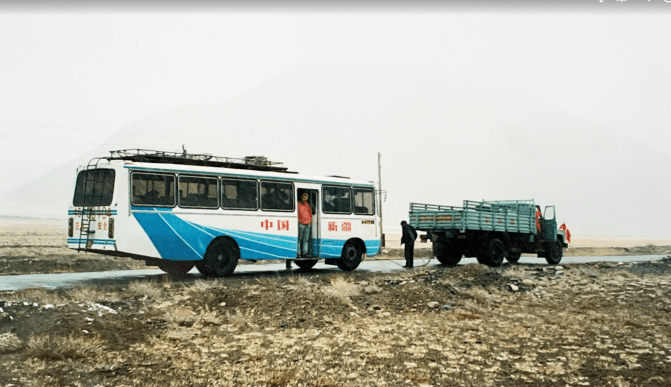
But today, I booked this bus using an app. A few taps on my phone. A digital ticket. A confirmation. No standing in line, no shouting through a window, no wondering if the bus would actually arrive.
The bus is small, clean, modern. The seats are cushioned. The windows are sealed. The air is filtered: no smoke, no haze, no smell of old cigarettes clinging to my shirt.
As the bus leaves the city, a video screen flickers to life. A safety announcement plays: calm music, clear graphics, instructions in Chinese and English. Where to find the emergency hammer. How to use the exit window. The importance of wearing a seatbelt. A seatbelt? On a bus? In China!
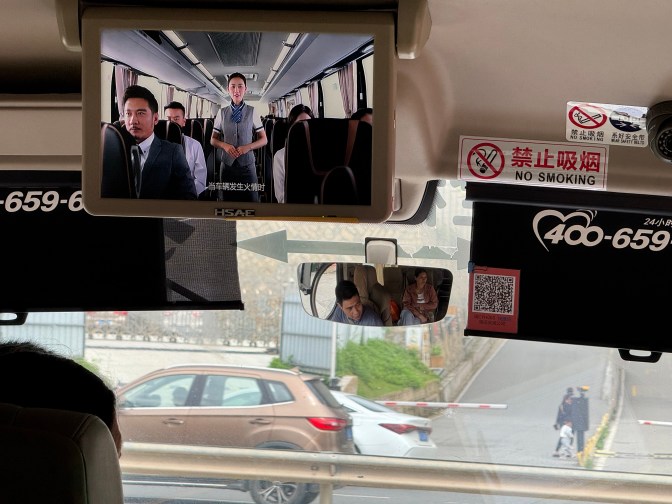
The driver wears a neat uniform. No white gloves. No cigarette. He steers with two hands, calmly, professionally. The bus glides through the traffic. The gears shift smoothly. The horn is used rarely, and only when necessary.
I watch the landscape scroll past: the tower blocks, the bamboo, the hills fading into mist. And I think about how much has changed in thirty years. It is not just the buses, of course. It is everything. The cities, the roads, the people. China has rebuilt itself in the time I have been away. The rattling blue buses are gone. The white-gloved drivers are gone. The smoke is gone.
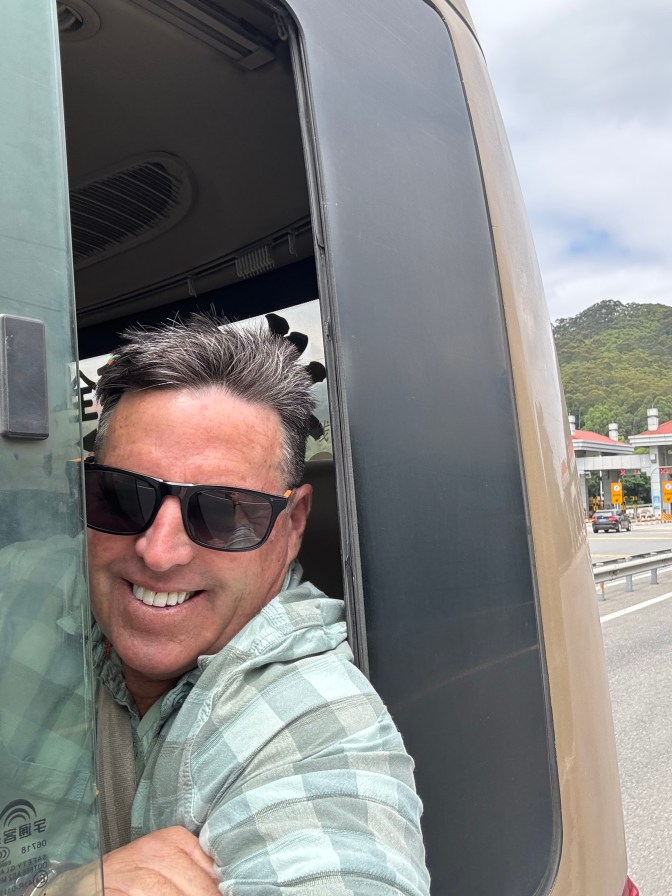
But the journey. The journey is still the same. The sense of moving through a landscape that is still, in some deep way, unfamiliar to me. The small thrill of stepping onto a bus and trusting it to take me somewhere I have never been; or back to a place I know well. That trust is easier now. The bus will not break down. The driver will not lose control. The windows will not fall out. It is safer. It is cleaner. It is, in almost every way, better.
And yet. I sometimes miss the old buses. The danger, the chaos, the cigarette smoke, the feeling that every journey was an adventure, a near-death experience you survived by luck or the driver’s strange grace. Those buses taught me something about China: that it was rough, raw, barely holding together, but somehow still moving forward.
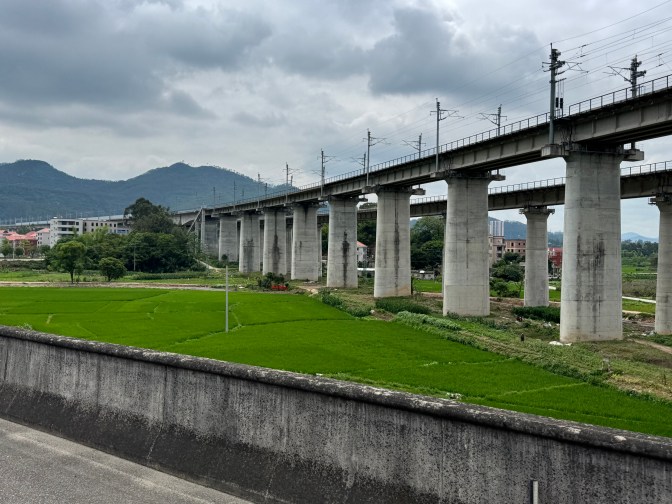
Today’s buses are smoother. But they are also, in some small way, less memorable.
Perhaps that is the price of progress. You lose the stories. The rattles. The clouds of smoke that made you cough and laugh and wonder if you would ever arrive.
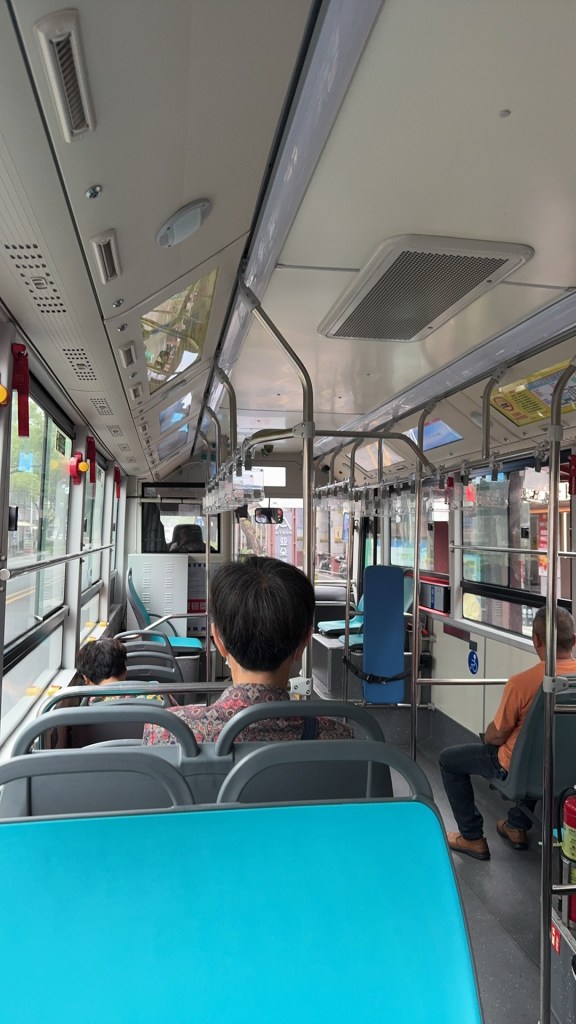
The buses in the cities are equally clean, efficient, and high-tech. You pay with a QR code. A flick of your phone, a beep, and you are on board. No rummaging for coins, no crumpled notes, no shouting across a crowd to the driver. The transaction is silent, instantaneous, invisible.
The destination and the number of the bus are displayed electronically: bright LED letters against the grey urban sky. No squinting at a faded sign, no asking the driver if this bus goes where you need to go. The information is there, clear and legible, as if the city itself wants you to arrive without confusion.
The drivers are friendly. Helpful. They answer questions with patience. They wait for elderly passengers to find their seats before pulling away. They do not smoke. They do not wear white gloves stained with nicotine and diesel. They wear neat uniforms, their hands steady on the wheel, their eyes on the road, their cigarettes—wherever they are—unsmoked.
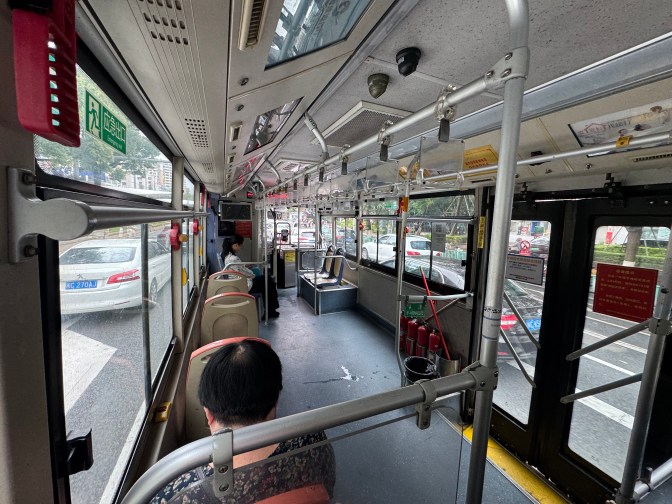
I board a K602 city bus in Quanzhou. I tap my phone. Scan the QR code. The fare is 1¥: twenty-five New Zealand cents.
“请上车” (Qǐng shàng chē), the disembodied voice says. “Please board the bus.”
The driver greets each passenger with a nod and a quiet word. I find a seat beside a window near the back of the bus. As it is spring, the windows are open; in summer, when the heat and humidity are all-pervasive, they would be firmly shut to retain the air-conditioned coolness. I slide the window fully open so I can lean out and watch the city.
The bus glides into the traffic: silent, electric, smooth. Outside, the city flows past: the tower blocks, the neon, the scooters weaving through intersections. But inside the bus, there is calm. Efficiency. The quiet hum of a system that works.
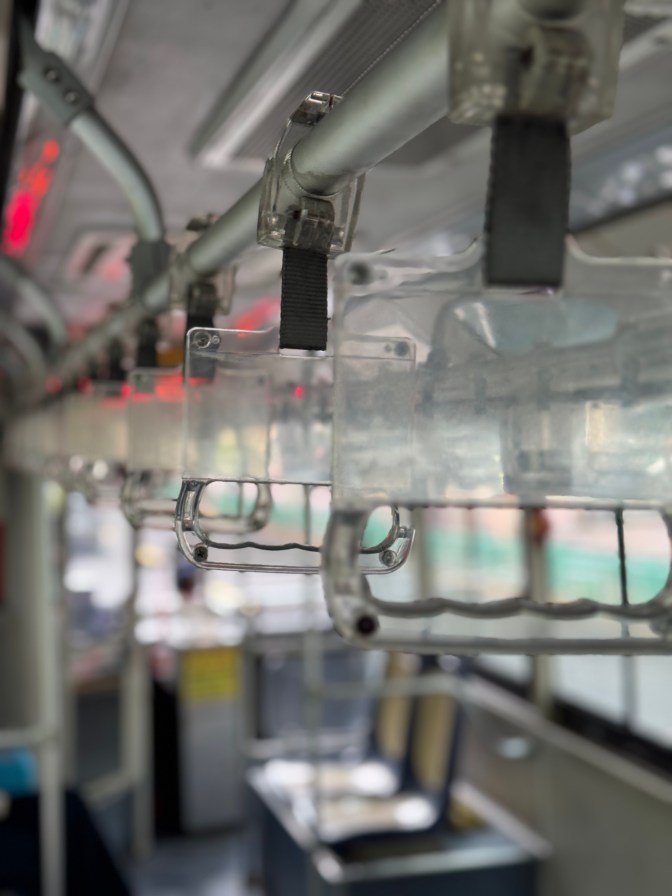
The bus is full; not crowded, not empty, but comfortably full. People sit in their vinyl seats, watching their screens, chatting, or looking out the windows. When someone needs to pass, they say “不好意思” (“Bù hǎo yìsi”): “I feel embarrassed, sorry.” The other person nods, shifts, makes room. No elbows. No sighs. No muttered curses.
At the stops, people queue. Not a formal line, not the rigid queue of London or Tokyo, but a loose, patient gathering. They wait until the door opens. They wait until those getting off have stepped down. Then they board, one by one, without hurry, without friction.
I keep waiting for the old chaos to appear. The shove. The spit. The cigarette lit defiantly, smoke curling toward the No Smoking sign. It does not come. This is not the China I remember from 1992 and 1994. But it is the China I have come to love.
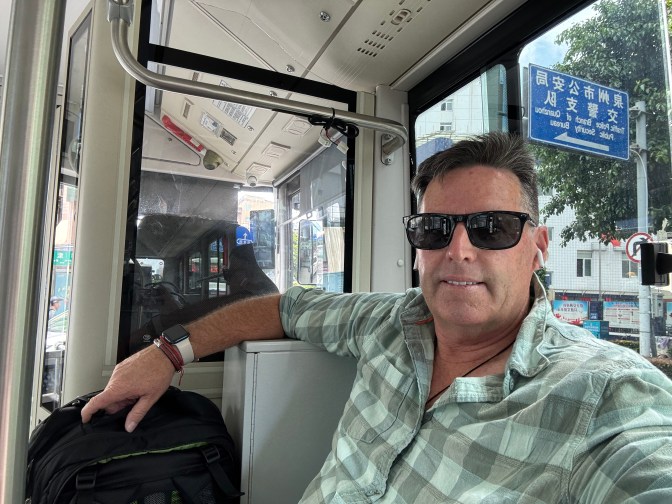
I think about what it must have taken to get here. Decades of public health campaigns against smoking. Decades of education about spitting. Decades of social pressure against the push and the jostle. Not laws alone—though laws helped—but a slow, collective shift in what is considered acceptable. People chose to be different. Or were persuaded. Or simply grew tired of the old ways and decided to stop.
However it happened, the result is this: a bus full of strangers, sitting calmly, riding in silence, treating each other with a courtesy that would have seemed impossible in the early nineties.
It is not a miracle. It is progress. Slow, hard-won, often invisible progress. But sitting here, in this calm bus, with no smoke in my lungs and no spit on my shoes, I feel like applauding.
The bus from Anxi to Quanzhou leaves the serpentine valley of the Xixi River, passes through a long tunnel, then slips along the six-lane highway slung between steep wooded hills. I have actually ridden this bus before. Twice, in fact. In 2024, I came out here from Quanzhou to Anxi just for a look. No reason, really. Just curiosity. Just the desire to see what was beyond the city.

I rode the same bus. From Quanzhou to Anxi. And then from Anxi back to Quanzhou. Same route. Same small bus. Same rear seat. Same window open to the same cool breeze. I did not know, then, that I would return. I did not know that I would sit in this seat again, two years later, with more Chinese in my vocabulary, more stories in my notebook, more understanding of what I am looking for.
But the bus knew. Or the route knew. Or some small god of small symmetries knew, and kept the seat warm for me, and waited. I love these little symmetrical things that I have discovered. A bus route repeated. A shop visited twice, the owner remembering me. A bridge crossed at low tide and again at high tide. A temple found by accident, then found again by intention.
The world is full of these echoes. These small returns. These moments when the past reaches forward and taps you on the shoulder and says, Remember? You were here before. And now you are here again.
Most people would not notice. Most people would ride the same bus without ever realizing they had ridden it before. But I notice. I keep a notebook. I remember where I sat, what I saw, what I was thinking as the hills rolled past. And when I find myself in the same seat, two years later, I feel something I cannot quite name.
Gratitude, perhaps. Or wonder. Or the quiet thrill of a circle closing.
Of course, I am sure not all Chinese buses are like this neat shuttle bus. I am sure that buses in the deep countryside—the real countryside, the places where the roads are still gravel and the villages still have only one shop—are just as rough, just as shabby, and just as jam-packed full of people with their goods as the buses of 1992 and 1994.
The same blue rattle-traps, perhaps. The same torn seats. The same windows that do not close. The same smell of diesel and cigarette smoke and something being eaten in the back.
On those buses, people still carry parcels wrapped in plastic and tied with string. They still bring their vegetables, their chickens, their sacks of rice. They still sit three to a seat designed for two, and when the bus is full, they stand in the aisle, holding the ceiling straps, swaying with the curves.

The driver on those buses may still wear white gloves. May still smoke. May still drive with the desperate, wild-eyed focus of men who has been on the road since dawn and will not stop until dusk.
Those buses exist. I have not seen them on this trip—not yet—but I know they are there. China is too big, too varied, too full of hidden valleys and forgotten roads for every bus to be clean and calm.
So this story is not about all buses in China. It is about this bus. This urban shuttle, with its digital ticket, its filtered air, its precise timetable. This small, bright, efficient corner of a vast and complicated country. The journey is the same. Only the bus has changed.
The other buses—the rough ones, the shabby ones, the jam-packed ones—are still out there. Waiting for the next traveller. Waiting for the next story. Perhaps I will find one before I leave. Perhaps I will climb aboard a blue rattle-trap, hold my breath against the smoke, and feel, for a moment, that I have travelled back in time; feel the strange, terrifying, glorious sensation of not knowing if I will make it to the end of the road.